Mega MGC Coffee's six summer horror-themed drinks passed one million cumulative units within two weeks of launch.
Products and results
The standouts used seasonal fruit:
- Peach fondant yoghurt smoothie
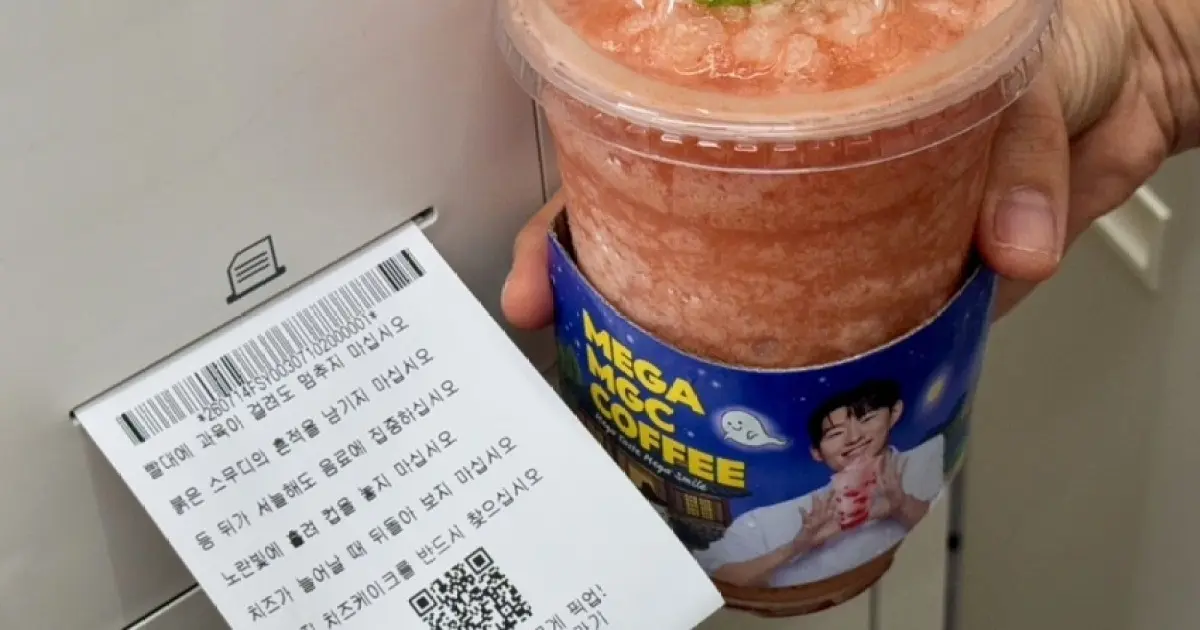
- Fancy tomato smoothie — made in collaboration with Chuncheon City
The receipt did the work
The notable part is not the product but the channel. Printing ghost-story text on kiosk receipts became a talking point on social media.
| Metric | Figure |
|---|
| Views on related posts | 4.9 million |
| Retweets | 19,000 |
| Product video views | 1.9 million |
Mega Coffee credited the launch's success to content produced by customers.
Why a receipt works
A receipt is not ad inventory. That is precisely why three things hold at once.
No media cost. It adds a line of text to paper that was printing anyway.
It reaches only buyers. The content goes to people who already paid, not people who saw an ad — material to brag about lands only with people who have a reason to brag.
It supplies a reason to share. A ghost story invites a screenshot on its own. That is why photos of receipts travelled further than brand-made video: views on related posts (4.9 million) more than doubled product video views (1.9 million).
The shared structure of UGC design
Cases where customer-made content carried a launch recur. What they have in common is that the brand did not make the content — it supplied a reason and the raw material to make it.
Working checklist
- Which of our touchpoints are not ad inventory (receipts, packaging, notifications, delivery messages)
- Can we give customers a reason to screenshot at that touchpoint
- Is there room to build a story into the product itself, as the Chuncheon collaboration did