
Startups모비인사이드
Trainer, Coach, Director: The Three Personas Every Startup Team Lead Must Master
First-time startup team leadership means moving past individual-contributor habits. Here's the trainer-coach-director growth framework.
Jazz and startups look like they belong to entirely different worlds — one is art, the other is business. But they share something decisive: both create new value through creativity and collaboration in an environment where the future can't be fully predicted. A jazz musician throws out an improvised idea in the moment and responds to what everyone else is playing; a startup grows by responding to real-time signals from the market. The market isn't a finished score — it's an improvisation being played fresh every time.
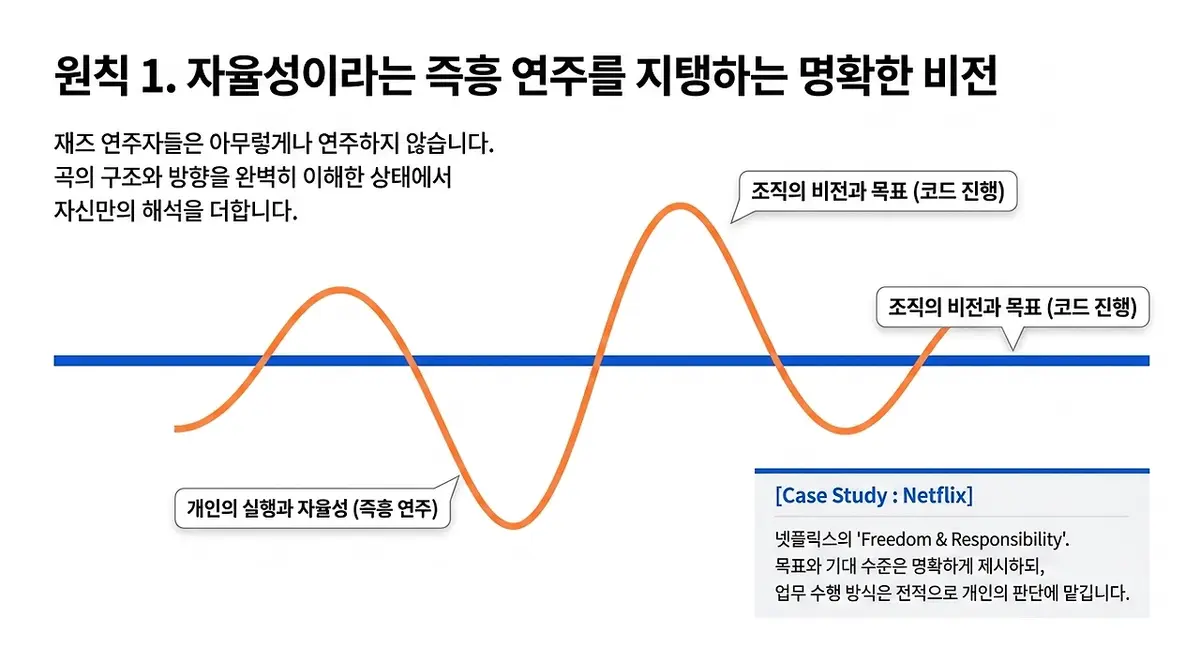
1. Share direction before freedom. A jazz musician plays freely, but only after clearly understanding the song's structure and progression. Netflix's "Freedom & Responsibility" culture works the same way — the goal is stated clearly, but execution is left to individual judgment. If vision is the chord progression, execution is the improvisation played on top of it.
2. Improvisation is a privilege earned through preparation. John Coltrane, famous for free-form improvisation, was in fact one of the most obsessive practicers of harmony and technique in jazz history. Startup autonomy works the same way — freedom without expertise, customer understanding, and problem-solving ability produces chaos, not innovation. Unprepared freedom creates confusion; prepared freedom creates breakthroughs.
3. The best teams listen to each other. In jazz, one musician's solo becomes something else entirely because everyone else responds to it. Slack started as an internal collaboration tool for a game studio — its real value was discovered through close cross-team communication, and it grew into a global collaboration platform. A strong organization isn't full of great talkers; it's full of great listeners.
4. The ensemble matters more than any star player. A great jazz performance is never the product of one genius alone — it comes from teamwork. Google grew not from a founder's individual brilliance but from collaboration among engineers, product managers, and infrastructure specialists. Organizations that trust each other, share information, and share ownership of both failure and success are the strong ones.
5. Turn mistakes into learning. Miles Davis famously said, "there are no mistakes in jazz — only the next note determines whether it was a mistake." Instagram began as a location-based app called Burbn, but by watching how users actually behaved, its team pivoted to photo-sharing and became the Instagram we know today. Innovation comes not from organizations that eliminate failure, but from organizations that convert it into learning.
Jazz and startups both operate where the future can't be fully predicted. Success depends on trust, not control — on a shared process, not a single correct answer. Just as Miles Davis's Kind of Blue was built from minimal structure and maximum improvisational interaction, successful startups grow through fast experimentation, learning, and cross-team collaboration rather than a flawless plan.
Winning startups don't move like a disciplined army or a conductor-controlled orchestra — they move like a jazz band. Members share a common goal, act autonomously based on their own expertise, and constantly communicate and respond to each other. What matters more than a perfect plan is the ability to listen, respond, and build together.
This principle translates directly to running a marketing organization. Campaign environments are becoming more unpredictable by the month — algorithm shifts, consumer reactions, and trend cycles make it risky to force through an original plan to the letter. Instead, share the direction clearly (brand goals and tone) while leaving channel-level execution to individual judgment and real-time data — a jazz band management style. An unexpected A/B test result, or a single failed piece of content, can become the "next note" that shapes your next campaign.
The core shift is moving away from a culture that hides or eliminates failure, toward one that shares it quickly and converts it into learning. Just as Instagram reset direction after Burbn's failure, marketers should watch where users actually respond rather than clinging to underperforming metrics, and be willing to pivot decisively. A single star marketer's instinct rarely beats an ensemble team that listens closely to shared data and insight. If you're building a team structure or campaign process around this kind of adaptive culture, Best Partner's services can help — or explore how other organizations are rethinking culture as community.
Both create new value through creativity and collaboration in environments where the future can't be fully predicted, responding to real-time signals rather than executing a fixed script.
It means sharing a clear direction and goal while leaving execution to individual judgment and real-time responsiveness, similar to how Netflix's "Freedom & Responsibility" culture states goals clearly but leaves method up to the individual.
As with jazz musician John Coltrane, whose free improvisation was built on obsessive practice of harmony and technique, unprepared freedom in a startup produces chaos, while freedom backed by expertise and customer understanding produces innovation.
Instagram began as a location-based app called Burbn; by observing actual user behavior, its team pivoted to focus on photo-sharing, turning an initial misfire into the product that became today's Instagram.
To apply what you just read to your own site, start with a free audit of where things are now.
A strategist replies within 24 hours on business days.
First-time startup team leadership means moving past individual-contributor habits. Here's the trainer-coach-director growth framework.

One founder gave 50 investor pitches over five years and raised zero funding — while doubling revenue nearly every year. Here's what changed.

Reddit Ads Manager is adding a campaign planner that forecasts reach and cost, a 0–100% optimization score and automatic budget shifting. Advertisers scoring 80%+ saw 19.6% lower blended CPA.