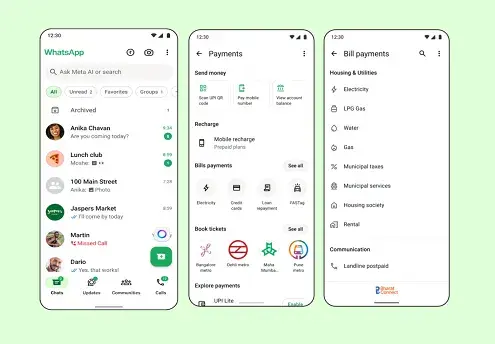
WhatsApp users in India can now pay their bills inside the app. It is another utility function folded into Meta's most-used messaging platform, and another step toward the company's long-running goal of turning WhatsApp into an everything app on the model of China's WeChat.
What is now possible
In WhatsApp's words, the feature makes it easier for people to find, manage and pay everyday household and utility bills within the app. Powered by India's Bharat Connect (BBPS) network, it gives users access to 22,722 billers across 30 categories, including electricity, gas, water, FASTag highway tolls, insurance, and credit card and loan repayments. Bill summaries and overviews of multiple accounts are included for payment management.
WhatsApp users in India can already recharge their phones, book public transport tickets and access citizen services through government-run chatbots in the app. Bill payment builds directly on that utility.
Why Meta is chasing WeChat in an 800-million-user market
WhatsApp is the most used messaging platform in India, reportedly serving more than 800 million local users according to World Population Review. Meta has spent years trying to make it the local equivalent of WeChat, which has become close to an essential service in China for shopping, bill payments and public transport. That utility made WeChat increasingly valuable, and Meta wants the same for its messaging tools, along with the expanded revenue from advertising and service fees that would follow.
Progress has been slow. Take-up of expanded services in Meta's apps has not caught on in the EU or the Americas, and regulatory restrictions in India slowed the company down in the world's most populous country. In June, Meta moved to speed things up by acquiring India-based fintech company Cred and appointing Cred's founder, Kunal Shah, as the new head of WhatsApp. That local knowledge and influence is part of why the payments push is advancing now.
If Meta can establish WhatsApp as the critical app for users in India, it could greatly expand its revenue potential there and reduce its reliance on ad dollars. The company will need to take steady steps on compliance and earn the trust of local authorities, but this could be another advance toward justifying the massive price Meta paid for WhatsApp in 2014.
What it means for brand communication
When a messaging app also holds the payment, the start and end of a brand conversation sit on the same screen. Brands operating in India should plan for scenarios in which the WhatsApp Business API carries a customer from inquiry to purchase without leaving the thread. Account security is the precondition for that, which is why WhatsApp Adds Multiple Passkeys and Full Passwords — Platform Security Is the Floor of Commerce Trust matters here. WhatsApp is not alone in pulling payments in-house; see TikTok Is Preparing In-App Payments for the U.S. — Live Commerce's Missing Piece for the parallel move.