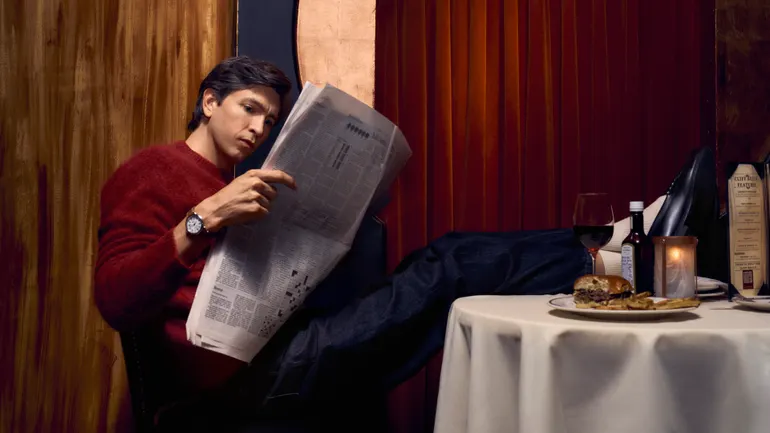
Watch advertising has a formula: close-ups of movements, craftsmanship, heritage, aspirational lifestyle imagery. Detroit design brand Shinola decided not to use it. In "Set the Pace," the brand campaign it launched in July, the watch itself does not appear until the final seconds.
Fifteen Years In, a First Full-Funnel Campaign
Shinola has never run a full-funnel brand campaign since its 2011 founding. That changed when Jonathan Bailey, a veteran of Coach and Tiffany, came on as creative director. The goals: build awareness beyond watch enthusiasts, position Shinola as a culturally relevant brand, and lean into human-first storytelling.
Dana Mosa-Basha, Shinola's director of marketing, framed the positioning bluntly. "When you look at most other watch brands, the advertising can get a little bit more traditional: focused on craftsmanship, heritage, luxury and specifications. Shinola really exists in a white space."
The campaign, built with agency GentleForces, was designed to introduce the Runwell — Shinola's signature timepiece — to a new audience. The central idea is consumers changing their relationship with time.
Why a "Succession" Actor Directed It
The spot stars and was directed by Nicholas Braun, best known as cousin Greg on HBO's "Succession." When Shinola approached him, it specified up front that it was not looking for a spokesperson or an ambassador — not a transaction where a celebrity cashes a check.
Braun proposed directing it himself. Once he had the job, he participated in every creative decision during pre-production, helping shape the script, visuals, styling and even extras casting. "He naturally embodied that curiosity," Mosa-Basha said. "He's very funny without trying, but also very human and approachable, and that authenticity matched the brand."
The result is a 60-second piece some viewers have described as a psychological thriller. It is set in a hectic restaurant, scored to an accelerating watch tick. Braun delivers an emotional monologue that reads as a relationship ultimatum — until the final seconds reveal he is talking to the Runwell.
"I would say 90% of the discussions we had with GentleForces were more about meaning, before the actual visuals of it all," Mosa-Basha said. "We wanted to communicate this message that your time belongs to you. It doesn't belong to anyone else. It doesn't even belong to a watch. It really belongs to the person behind it all, and the watch is just a representation of that."
Designed for Channels, Not Adapted to Them
The most transferable part of this campaign is the order of operations. Shinola did not finish a film and then cut it down for placements.
"We wanted to make sure this is going to be designed to tell a story across editorial, retail, PR, influencer partnerships, paid media, organic and social," Mosa-Basha said. "It was less about adapting to different channels, but really designing all of this content for them from the beginning."
That approach carries into media allocation, with budget spread across upper, mid and lower funnel tactics. Reimagining a campaign for different channels, she argues, is more than cropping and resizing — it has to be integrated strategically from the start, whether the output is the commercial, organic social, or influencer content.
Her closing line is the thesis: "When your storytelling is on lock and working really well, then your performance marketing is going to go a long way."
What Marketers Should Take From It
Pivoting toward brand work is not itself unusual right now — see Rhone's CMO Shifts From Performance to Brand. What separates outcomes is the execution after the pivot.
Celebrity budget can buy craft instead of a name. Shinola bought direction, not an appearance. Whether a talent partner can participate in creative decisions is a negotiable variable, and it changes what the spend returns.
Delaying the product only works if the front half holds. The Runwell can arrive at second 55 because the preceding 55 seconds hold attention. Without that confidence in the creative, withholding the product just wastes reach.
Channel design belongs in planning. Cutting a finished 60-second film into 15 seconds and shooting against a 15-second format from the start produce different assets. The second is also cheaper.
For another read on brands borrowing cultural reference points, see Gap's Fall Denim Campaign Casts an 'Obsession' Breakout.