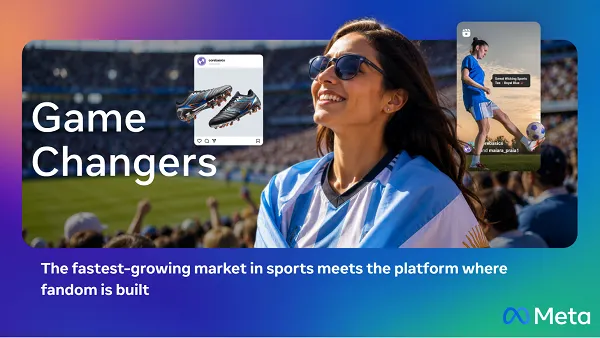
Meta has shared new insights showing rising engagement with women's sports content across its apps. The core argument for brands is that positioning in this category remains unsettled.
The Market Framing
In Meta's words:
"Women's sports is a $3 billion industry growing 4.5x faster than men's sports. And across many leagues, sports and markets, the growth is accelerating simultaneously. What makes this audience different from any other growth story in sports is how it engages: social-first, always-on, and commercially active. Fans follow athletes, not just teams. They show up daily, not just on game day."
The Numbers
Data points presented in video by Nicola Mendelsohn, head of Meta's global business group:
- 128 million people combined now follow the top 10 women athletes on Instagram
- Women's sports power over 20,000 groups on Facebook
- Last quarter, WNBA content reached over 1.2 billion views on Meta, while women's soccer generated 900 million views
Meta also said an increasing share of sports fans are social-first, primarily interacting with sports content on social apps. Judy Toland, vice president of global audience at Meta, said 445 million sports fans engage with brands on Meta every month.
Purchase Influence
Figures from Nicole von Kaenel, Meta's director of global partnerships, are the most directly commercial:
- 68% of sports fans will try a product that their favorite athlete uses
- 76% of sports fans say athlete content directly influenced what they bought
Meta's Argument: The Position Is Still Open
The structural point is the more persuasive part:
"In most sports categories, brand positioning was settled years ago. The partnerships are locked, the associations are built, and new entrants compete on price for diminishing returns. Women's sports is the rare category where position is still being claimed. The brands entering now aren't buying into an existing hierarchy. They're creating it. They're becoming the names fans associate with the sport itself, the ones that shape what partnerships look like and what fan expectations become as the category matures."
Four Takeaways
Keep in mind this is Meta selling its own ad inventory. The structural observation still merits examination.
"Fans follow athletes, not teams" makes this creator marketing, not sponsorship. The grammar to apply is creator collaboration rather than sponsorship rights. Since an athlete's personal audience and always-on content are the asset, year-round content partnerships fit better than season-based impression deals.
Category ownership eventually can only be bought with price. As Meta notes, in categories where positioning is settled, new entrants get pushed into price competition. The value of claiming position is highest now and declines from here.
Redo your audience sizing. As LinkedIn's guidance showed, optimal target size varies substantially by channel and objective. In a growing category, an over-broad target reduces efficiency rather than improving it.
Fold this into peak-season planning. If you are building a holiday calendar, weigh it alongside the early-setup recommendation in Meta's holiday marketing guides.
Bottom Line
By Meta's account, women's sports is growing 4.5x faster than men's, its audience engages social-first, and athlete content measurably influences purchase. Most importantly, the brand hierarchy has not been fixed yet — which is Meta's argument for why the cost of claiming a position is lowest right now.