The old Meta levers — stacking lookalikes, layering interests, splitting dozens of ad sets — matter far less now that Meta's AI finds the right people on its own. That moves the optimization work to the one thing advertisers still fully control: creative. And as veteran social advertiser Akvile DeFazio argues at Search Engine Land, the common mistake is thinking creative diversity means more ads. It means giving Meta fundamentally different ways to deliver the same message.
Meta's new creative diversity metric
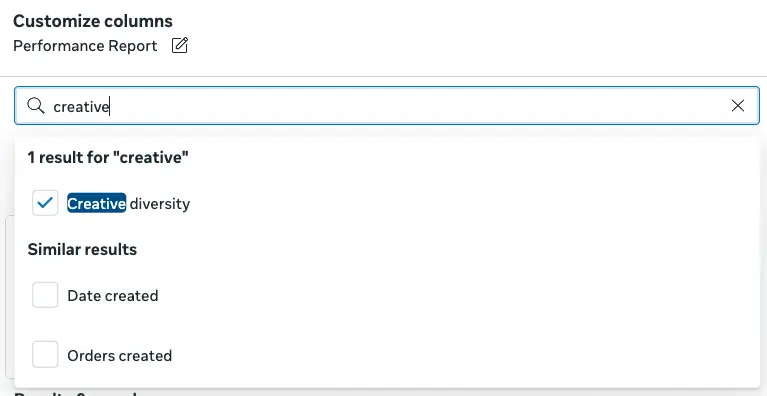
Earlier this month, Meta added a creative diversity metric to Ads Manager reporting (Columns > Customize columns > Creative diversity). Labeled "in development," it estimates how visually diverse your images and videos are, rated Low, Medium, or High — designed to flag when creatives get too similar, reduce fatigue, and push advertisers toward more visual variety. The telling detail from DeFazio's own accounts: campaigns she considered highly diverse — statics, videos with varied hooks and people, UGC, partnership ads, boosted organic, carousels — rated Low across the board. Early-stage quirk or stricter-than-expected thresholds, either way the signal is clear: Meta now treats creative diversity as a core optimization variable.
Twenty ads can still be one creative
If all 20 ads share the same product image, opening shot, spokesperson, and message, the algorithm sees 20 slight edits of one creative. Meaningful variation comes from different dimensions: hook, creator or spokesperson, visual style, messaging angle, offer, customer pain point, emotional appeal, format.
Start with the hook
The first seconds decide whether someone stops scrolling. Keep the body of the video and swap the opening — "POV: you finally found a moisturizer that doesn't leave your skin greasy," "Three mistakes almost everyone makes with their skincare routine," "I wish I knew this about my skin before turning 40" — and the same asset reaches people with different motivations and different familiarity with your brand.
Then go beyond format
Past the image/video/carousel mix, the strongest accounts layer founder videos, UGC, testimonials, creator partnership ads, educational content, unboxings, reaction videos, meme-style creatives. Every added dimension gives Meta more patterns to find — which hooks pull which people, which creators resonate with which demographics — and builds a deeper pool to rotate before fatigue sets in.
Our take: rebuild the workflow from "an ad" to "a set"
The practical shift is in production. If your workflow produces a handful of ads a month, restructure it around retelling one winning story ten ways. Plan shoots so a single creator delivers multiple hooks, captions, CTAs, aspect ratios, lengths, and product-first versus creator-first edits — one shoot becomes a full creative set. Tooling is moving the same direction: variation keeps getting cheaper to produce, as we covered in Edits Adds Folder Management and Image-to-Video — Meta Ships Almost Weekly.
One caution: don't make the diversity score itself the goal. If you multiply creatives and CTR improves while conversions stay flat, you're optimizing the wrong thing — the gap between metrics that look good and outcomes that are good is exactly what we unpacked in When Cheap Clicks Look Like Efficiency — Paid Media Optimization Working Against You. Diversity is learning material for Meta's algorithm, not the outcome itself.