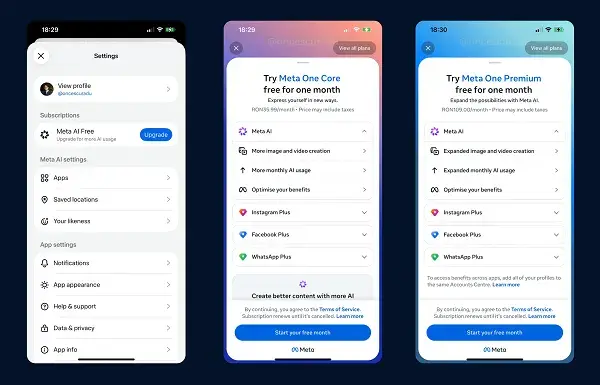
Meta has rolled out two new subscription tiers for its AI tools — Meta AI Core and Meta AI Premium — spotted by app researcher Radu Oncescu. Both offer expanded access to Meta's AI features, including more image and video generation capacity, and bundle access to the Facebook Plus, Instagram Plus, and WhatsApp Plus profile verification packages. Premium had reached some users back in May; Core adds a mid-priced option for people who want more than the free tier but not full access.
Why subscriptions, why now: the $600B question
The context is straightforward. Meta has committed more than $600 billion to AI infrastructure in the U.S. alone over the next three years — spending that demands a visible path to return. Subscriptions are the most direct revenue pipeline available. The complication: so far, Meta's AI tools haven't driven much demand as standalone products.
The internal picture is messier
According to Reuters, Meta's internal reality diverges from its public AI narrative. Earlier this year, staff pushed back against a plan to replace up to 60% of the company's workforce with AI agents and systems. Internal posts cited by Reuters show AI lifted code changes 220% year over year — but changes delivering new or upgraded features to actual users grew only 36%. Employees also flagged reliability problems with AI-sourced code: technical and security incidents, including service disruptions and possible data leaks, rose 40% year over year, with June's breach of 20,000 Instagram accounts among them.
Read together, Meta's AI subscriptions look less like monetizing proven value and more like an experiment to bridge the gap between enormous investment and unproven demand. The wildcard remains a genuinely useful AI agent — if Meta ships one, the picture changes.
What marketers should watch
Nothing changes in ad accounts today, but three signals are worth logging. First, monetization pressure and ad automation grow from the same root: the harder Meta pushes for AI payback, the more paid and packaged AI features advertisers should expect. Second, bundling verification into subscriptions accelerates the shift toward verified accounts as the baseline of commerce trust. Third, 220% more code versus 36% more shipped features is a warning for any organization measuring AI adoption by output volume — output and outcomes are different metrics.
Meta is also carrying weight beyond the balance sheet. The legal exposure we covered in Meta's Trial Comes Down to Two Claims — Is Addiction a Condition, and Did Meta Know? is still unfolding, and at the macro level, Why No New Giant Has Emerged in the AI Era — the Reverse Industrialization Thesis argues that massive AI spend hasn't yet guaranteed anyone a winner's position. The subscription push is Meta's monetization card played in the middle of that uncertainty.