The internet had Google. Mobile had its own set of winners. So who is the AI era's Coupang, its KakaoTalk, its YouTube, its Netflix, its delivery app? Nothing comes readily to mind. There are candidates, but no name that feels like it took the era.
Lee Jong-dae, who runs Datable and Vibe Media Lab in Korea and has worked with some 200 brands including Coca-Cola, L'Oréal, and Samsung Electronics, offers an answer that differs from the usual "it's still early." His argument is that no such winner will emerge, structurally. He calls the pattern reverse industrialization.
Commuting is a 200-year-old exception
The argument starts two centuries back.
We treat going to a company as natural — leaving in the morning, returning at night, belonging somewhere. But this habit is only about 200 years old. For thousands of years before it, most people worked at home. The loom was at home, the forge was attached to the house, the field was next door.
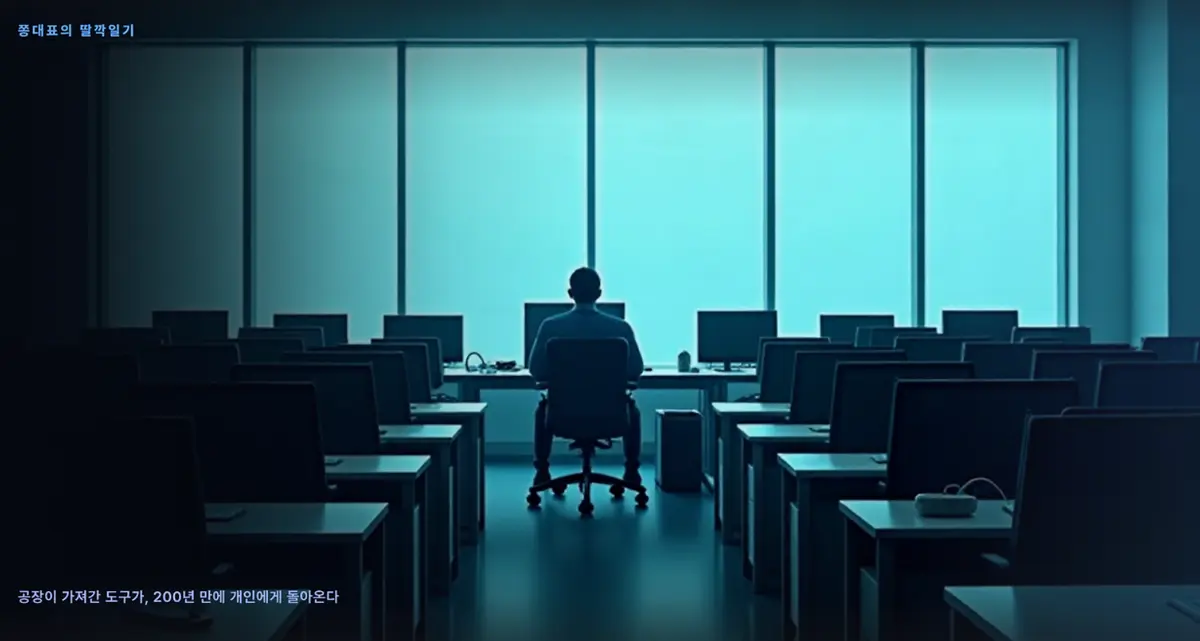
The Industrial Revolution changed that. More precisely, machines got too expensive and changed it. Household looms were replaced by large factory machines that no individual could buy. People lost their own tools and had to go where the tools were. That is what commuting is. The Luddites smashing machines were people resisting the loss of their tools.
The sequence is telling. The structure that required humans to stand next to machines came first; Britain's Factory Acts came later to patch the problems that structure created. Technology set the shape and institutions followed. Fixed start times, gathering in one building, the very concept of belonging to an employer — all of it emerged from sharing expensive machines.
The internet and mobile never touched this
"But the internet changed everything," you might say. True. The question is what it changed.
The internet changed distribution. Mobile changed access. Letters became email, stores became apps. The screen changed completely. Behind the screen, nothing did. Servers stayed expensive, developers stayed necessary, and so people still had to gather at a company. The price of tools did not fall.
That is also why new winners appeared. The screen people spent their time on was replaced wholesale — PC web to an app in your hand, the entire user experience rebuilt. And AI? We use the same search box and the same shopping apps. When the screen does not change, the existing owner keeps winning. There is no seat for a new giant.
What changed instead is the price of intelligence
The real shift landed on tool cost, not on screens.
A taxi driver's mental map of Seoul used to be expensive technology. Only the person holding that map could do that job. Navigation made it free. The knowledge inside doctors', lawyers', and accountants' heads is now on the same path.
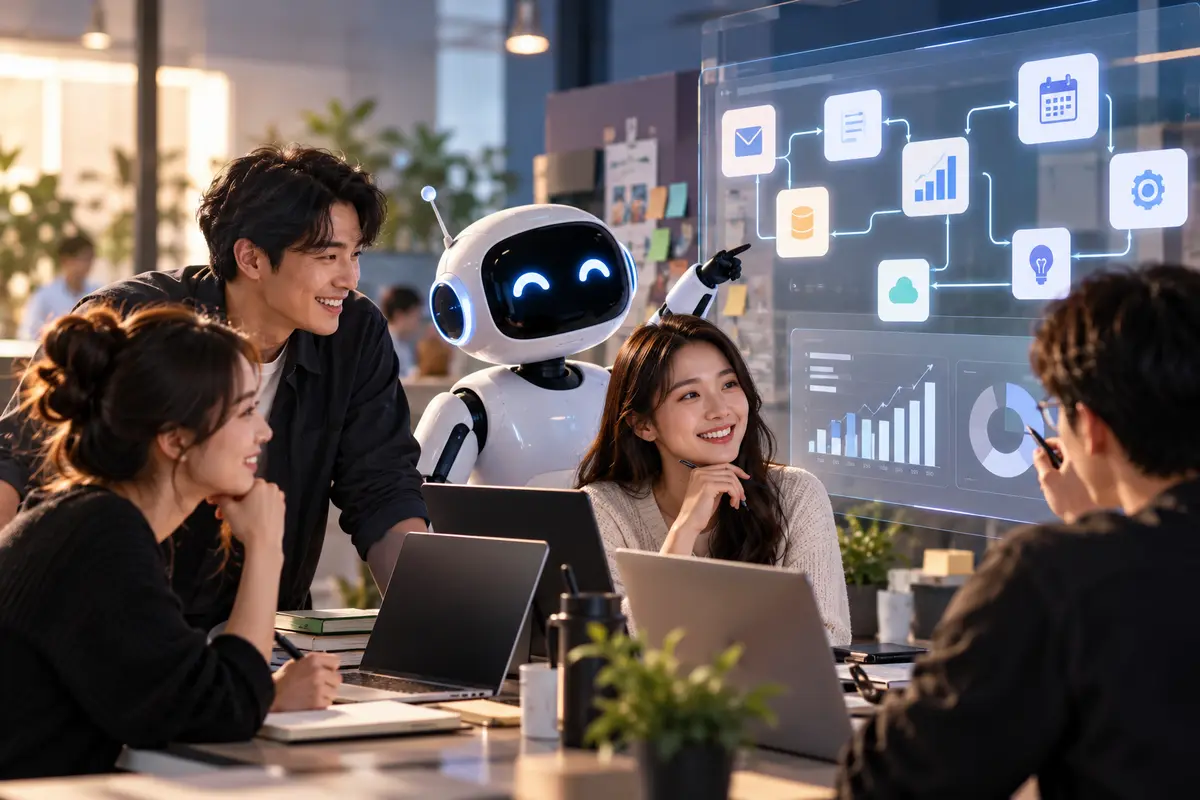
Work that took five developers now takes one person. Things that stalled because you could not hire a designer simply get done. Translation, editing, analysis, customer response — tasks that used to require hiring have come down to tooling.
Two hundred years ago, tools got expensive and people went to the factory. Now tools got cheap and the factory is optional. The direction reversed. That is reverse industrialization: not a new event, but a 200-year-old one running backward.
Three objections, and the answers
"It's only a tool — humans still make the judgments." True. And the same was said during the Industrial Revolution: machines spin the thread, but people decide what garment to make. That was also true, and in the meantime where people worked and who they belonged to changed completely. Judgment surviving does not mean structure survives.
"Big companies still win, don't they?" A fair objection. Money still concentrates in large companies and a few players hold the infrastructure. But how they grow has changed. Growing used to mean hiring. Now companies grow while shrinking headcount. So the question may not be companies versus individuals. Companies keep winning while the seats inside them disappear — a less comfortable picture, and one that implies the riskiest position is not being outside a company but believing that being inside one is safe.
"Solo operators are still rare exceptions." Also true. People generating large revenue with no employees remain outliers, and behind each visible one are ninety-nine invisible ones. But the existence of the exception is itself the signal. Twenty years ago it was impossible — server costs, developer salaries, and distribution formed a wall an individual could not clear. That wall is lower now, which creates the condition for exceptions. When conditions change, frequency follows.
The one thing worth counting
The suggested practice is small: count something.
How much of what you do right now would be priced outside your company?
Some work only functions inside. Knowing your company's approval chain, being fluent in your internal systems. Useful, non-portable. Other work carries a price anywhere: being able to build, to sell, to judge. That ratio is the safety margin.
The method is simple. Write down what you did over the past month, and mark each line with whether someone else would pay for it. Below half, start raising it. Above, there is nothing to worry about. Raising it is not exotic either — go deeper on the portable parts of your current job, or start something small you have not tried. Starting used to cost money. The premise of the argument is that the cost has fallen a lot.
For marketers specifically
Two implications.
On the team side: content production, design, translation, research, and reporting — work previously scaled by headcount — is moving into tooling. If so, competitiveness shifts from how many people you have to what you have accumulated. That tool adoption alone does not create a gap is the same argument in What Socar and Samjjeomsam Learned the Hard Way.
On the individual side: if AI lowered the cost of accessing knowledge, what remains valuable is knowing what to ask rather than knowing the answer. The same problem from another angle is in They Closed the Search Box.
The author is careful to say this is not a prediction. It is an observation that what happened 200 years ago and what is happening now point in opposite directions. How far this runs, and where it stops, he says he does not know. The question he leaves is simpler: where are your tools right now — at the company, or in your hands?