Backlinks have been a confirmed Google ranking factor for years. Yet you have probably seen ChatGPT pull information from a site with no domain authority and no organic traffic. LLMs clearly do not weigh links the way Google does. Even so, a Semrush study found a strong correlation between the quality of a site's links and its visibility in AI search.
Backlinks still matter for both SEO and AEO. Acquiring them comes with caveats: low outreach reply rates, no control over how other sites link to you, resource limits, and the inevitability of link decay.
After six years of link acquisition work across 90+ SaaS brands, one conclusion holds: link building, linkable assets, and digital PR work best when they support one another.
How the Three Differ
- Link building involves asking for links — guest posting, broken link restoration, converting brand mentions into links. There is an explicit ask.
- Linkable assets are content that attracts backlinks naturally. You do not ask; you earn them through the appeal of the content.
- Digital PR is built on a story that grabs attention. You ask outlets to look at the story, not to give you a link — and links follow from newsworthiness.
Link building and digital PR both require proactive outreach, but the ask differs: links versus coverage. Linkable assets can earn links on their own, though promoting them through digital PR significantly increases both volume and quality.
Don't Carry the Same Measurement Bar Across
Link building success has traditionally been measured by followed link count and the quality of linking sites (domain authority, organic traffic). Holding linkable assets and digital PR to that same bar is short-sighted.
A brand mention in a top-tier outlet covering a relevant topic can be more powerful than a standard followed link. That is especially true in AI search, where one study found AI Overview visibility correlates with brand mentions at 0.664 versus 0.218 for backlinks. It is likely why outreach now sometimes requests brand mentions carrying no link at all.
Where Link Building Fits
Of the three, link building has the highest probability of driving links to commercial pages, because the explicit ask gives you a degree of control. Tactics like guest posting even let you shape context and anchor text, within editorial approval.
Scale is the problem. Google's link spam policies condemn both link buying and excessive link exchanges. If you have found a scalable link building approach, it probably violates those guidelines. Based on the 2024 Google Search document leak, the algorithm appears to devalue poor backlinks or ignore them entirely — strengthening the case for fewer, higher-quality links.
In practice that narrows the use case: point link building predominantly at landing pages and converting BOFU blog posts, since linkable assets and digital PR struggle to deliver those.
Linkable Assets: the Set-and-Forget Layer
Linkable assets split into self-earning assets that attract links on their own and PR-promoted assets you actively pitch.
Easy-to-produce self-earning formats include:
- Free tools — a domain name generator, a mortgage calculator
- Top lists of people, companies, or software in an industry
- Templates and checklists, such as an SEO audit template
- Statistical articles based on third-party data — collections of stats from other companies
These earn links as long as they gain visibility through rankings or passive distribution to an email list or social following. They make poor PR outreach material, though.
The Ceiling on Self-Earning Assets
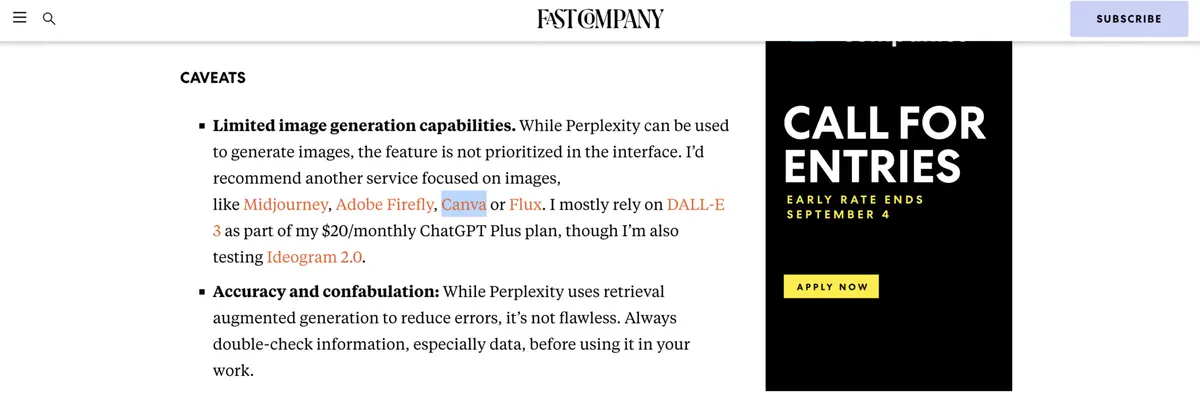
Canva's business name generator is genuinely useful and earned close to 2,000 followed links from unique domains. None came from a reputable media outlet. That does not mean tools cannot earn media links — but a tool usually supports a story a journalist is already writing rather than being the story. Canva's image generator appeared in Inc.com and Fast Company that way, as part of a broader AI piece.
Third-party statistics hit the same limit. They work well for natural links because tracing a data point to its original source is hard, so writers default to linking the first current stat they find. But you cannot pitch it, because the data is an aggregation, not yours.
Self-earning assets are cheap to produce and scale reliably. Build several across different topics to widen the net, and give each an initial push with guest posting or broken link building to help it rank. Kept current, they deliver links for years.
The catch: self-earning assets mostly link to themselves. They do not carry links to commercial pages. The workable middle ground is internal links from the asset to related commercial pages, so converting pages inherit part of the link equity.
Digital PR and Its Unpredictability
Digital PR can promote an original linkable asset, but it also covers expert commentary, a founder interview, or a distinctive take on something in the news. Whatever the story, it needs something that interests journalists and their audience. Links from digital PR typically point to a linkable asset or the homepage.
It scales, because a successful campaign can be syndicated hundreds of times. That is also where its biggest flaw sits: results are hard to predict. Even a seasoned PR professional cannot guarantee coverage — a well-executed study can earn zero backlinks.
The upside is that a digital PR story does not have to be a single push. Successful campaigns can be updated and re-pitched over time. A campaign that flops can find traction with a different angle or a tie to something in the news.
Controlling Cost
Campaign spend varies widely even with first-party data. Research based on your own product usage data needs only analysis and visual assets. A large survey can run into thousands of dollars.
A blended approach — first-party, third-party, and open data together — usually produces a strong methodology at reasonable cost. In one SaaS example, a statistical asset built on recent third-party data and enhanced with Semrush and Google Trends data required no dedicated budget, yet earned more than 50 links from unique domains, including Entrepreneur and Shopify, because it interpreted available data in a new way.
For surveys, take a small niche sample and layer in free sources — Google Trends, online reviews, government statistics, social media APIs — to add angles. Gusto surveyed 1,000 U.S. workers on AI-related job anxiety, then used Google Trends for state-level insight instead of running a statistically significant survey per state. That page has links from more than 40 unique domains.
Wiring the Three Together
As AI search share grows, off-page work has to be read holistically. The goal is quality links plus becoming the central authority on a topic and being consistently mentioned in relation to it.
For a hypothetical time tracking tool:
- Link building kickstarts a linkable asset — a guest post about team productivity links to your "50 productivity statistics" page.
- The linkable asset supports commercial pages — internal links run from that statistics page to the product landing page.
- A self-earning asset becomes a PR story — you pitch media on how much time workers spend answering emails, using your tool's internal data.
- Digital PR creates new link building opportunities — you contact outlets that covered the story without linking and request the link.
- The PR story becomes an evergreen self-earning asset — it keeps earning links long after outreach ends.
Measure It in Four Views
- Referral traffic and revenue from links
- Correlation between links acquired and page performance in rankings, traffic, AI visibility, citations, and revenue
- AI visibility and citations of your linkable assets
- Overall brand visibility and citations, split by topic and market
The ultimate goal is to own a topic: when someone writes a well-researched piece on a subject central to your brand, you already hold every resource they might need.
For content requirements that earn AI citations, see LinkedIn Publishes an AI Citation Playbook; for backlinks used as a weapon, see A Judge Let an SEO Sabotage Lawsuit Over Toxic Backlinks Proceed.