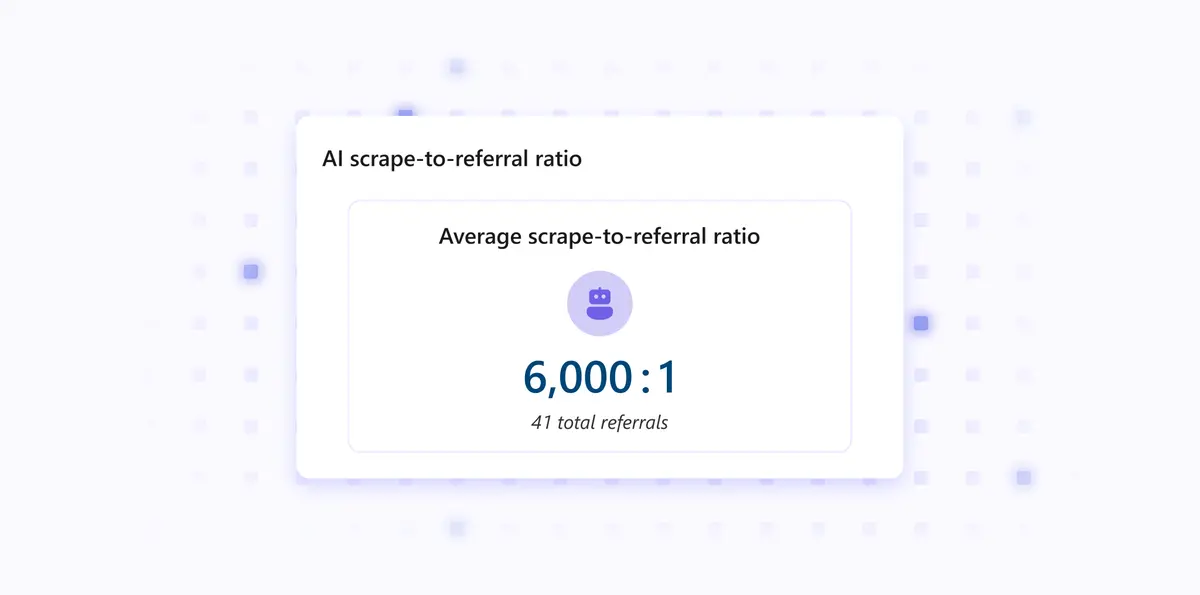
Microsoft Clarity added an AI Scrape-to-Referral metric. It expresses, as one ratio, how much an AI bot extracted from your site versus how many visitors it sent back.
What it calculates
The core is a new AI Scrape-to-Referral Ratio card in the Bot Analytics report. It compares AI scrape activity against referral traffic in a single metric so you can judge whether AI platforms return value as visits rather than only extracting content.
In the example graphic Microsoft published, one AI tool sent 41 referrals to the site, which works out to roughly a 6,000-scrapes-to-1-referral ratio against its crawl activity.
What ships alongside it
Operator-level breakdown
A ranked list of referring operators separates AI sources that send traffic back from those with heavy scrape activity and limited referral return. Since the decision you actually need to make is which bots to allow, this breakdown matters more than the top-line figure.
Mapped-domain safeguards
Ratios are calculated only across correctly mapped domains, preventing misleading rollups when CDN and Clarity coverage do not align. When AI bot data and referral traffic data cover different domains, Clarity surfaces context explaining how that coverage gap affects the ratio.
Direct path to session recordings
You can click from referral insights into the Recordings tab with filters already applied for the selected AI referral source. That moves the analysis past top-line counts to whether those visitors scroll, engage, convert, or leave immediately.
Where to find it
Open Bot Analytics in the Clarity AI Visibility Dashboard, review the Scrape-to-Referral Ratio card, then check the coverage context to confirm mapped domains align across your connected data sources. Selecting a referral source from the card opens recordings filtered for that source.
How to use the number
Site operators have been stuck on one question: is it worth letting AI crawlers access and use my content? There is now a figure attached to that judgment.
There is no universal target ratio, though. The answer depends on the site, the business and the purpose. For a publisher monetizing on ad impressions, scrapes without referrals are pure cost. For a site whose goal is brand awareness, being cited inside an answer carries value on its own, and a low referral figure may not justify blocking.
So read this metric alongside visibility and citation data rather than in isolation. For a way to organize access, visibility, traffic, demand and revenue as separate layers, see A 5-Layer Framework for Measuring AI Search Performance. For the same extraction-without-return dynamic escalating into an industry-level dispute, see 300 French Newspapers File a Complaint Over Google AI Overviews.