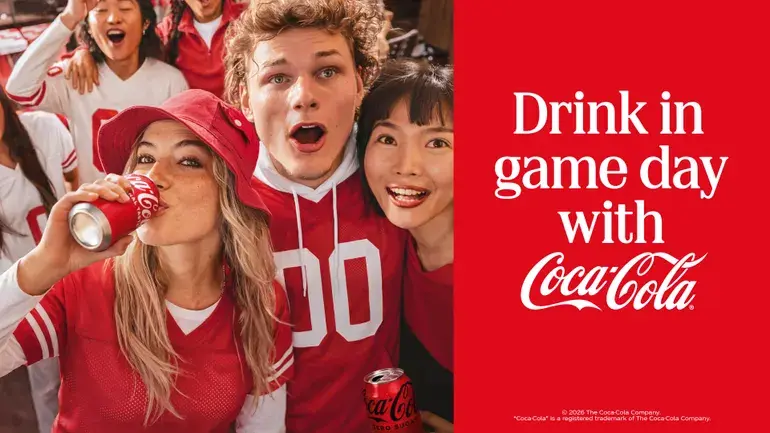
Coca-Cola is revving its "Fan Work Is Thirsty Work" platform back up for fall football, with a campaign spanning TV ads, social content, personalized packaging, and a first-time fantasy sports integration. It follows Coke being named the first-ever title sponsor of college football's Bowl Season last November under a multiyear deal.
The campaign's three pillars
Campus creators and a 74-stop tour
The social-first core: creators at partner colleges producing content around games and tailgates, backed by a 74-stop campus tour bringing locally inspired experiences. New 30- and 15-second "Scream" spots — fans roaring at stadiums, at home, on job sites — carry TV, and Coke takes a presence on Fox Sports' Big Noon Kickoff. WPP's bespoke Coke unit Open X developed the creative, led by VML.
A first fantasy sports tie-up
Coke's first partnership with Yahoo Sports College Fantasy Football targets fans who track their teams all season long. Game viewing is a weekend event; a fantasy roster is a daily habit — which makes it a mechanism for season-long brand touchpoints rather than game-day bursts.
Packaging for 25 teams
Custom packaging for 13 college and 12 pro football teams rolls out in select markets. Scanning unlocks team-focused experiences and chances at tickets, merch, and gift cards — the package doubling as shelf media and a digital gateway.
Why college football
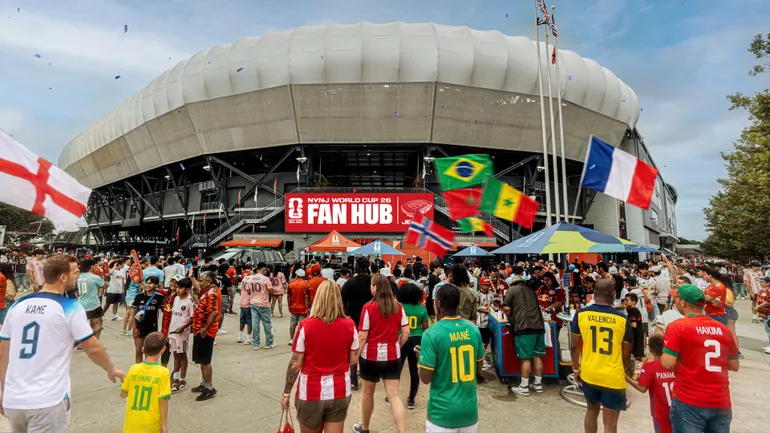
The competitive map explains the bet: Pepsi is an official NFL partner, so Coke concentrates on the collegiate side and splits the fall window instead of fighting head-on. There's also a proven template. The platform launched around March Madness in 2024 and has expanded for three straight college football seasons, and Coke's World Cup playbook this summer — anthemic ads plus locally personalized activations — contributed to 5% Q2 volume growth (the metric's best in 17 years excluding pandemic recovery) and over 9 billion views on digital and social.
Our take: the sponsorship is the asset; creators are the compounding interest
Two structural lessons. First, buy the big right once (the Bowl Season title), then stack low-cost touchpoints on top — creator content, fantasy, packaging — so the rights get worked all season. The collegiate sports market this strategy leans on is itself industrializing fast, agency structures included, as we covered in Publicis Builds an NIL Joint Venture With Travis Kelce — Targeting a Fragmented $4.5B Market.
Second, treat the season as a repeatable brand asset, not a one-off campaign. Extending the same platform for a third year is the same grammar as sister brand Fanta turning Halloween into owned IP — see Fanta Turns Halloween Into IP — Inside the Haunted Universe and Its 18-Month Build. Instead of inventing new creative every year, you accumulate equity in a moment that reliably returns. Any brand with a recurring seasonal peak can borrow the structure.