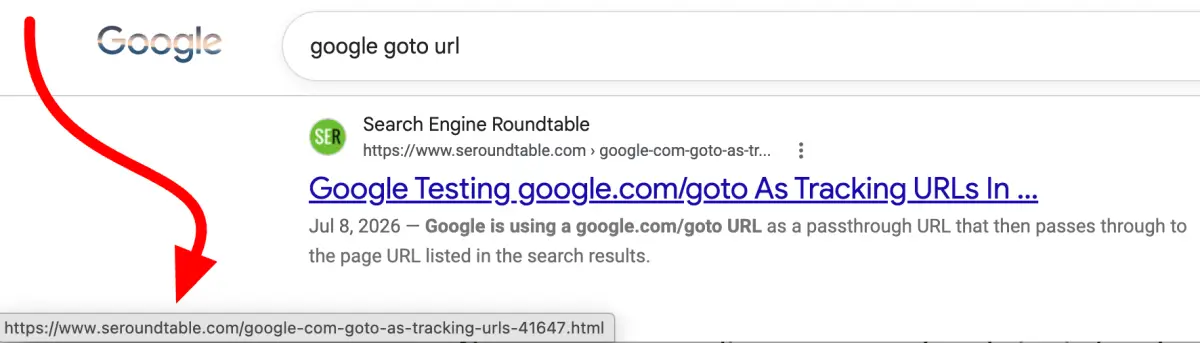
Google has confirmed it is rolling out "goto" URL redirects on the links in its search results. Where clicking a result used to show the page's full URL and take you straight there, clicks now hop through google.com/goto?url=[hashURL] before landing. A Google spokesperson framed it as routine defense: "We have a long history of deploying technical measures against evolving forms of abuse, and we regularly take steps to protect our services and users."
Officially anti-abuse; practically anti-scraping
Technically, the change makes it harder for third-party tools, services, scrapers, and AI engines to harvest Google's search results. Companies like SerpAPI — which Google sued over scraping, losing its latest motion — are the obvious targets. The rollout is moving fast: Derek Perkins of Nozzle reported seeing "nearly a 100% rollout across several residential IP providers." Google had been testing the change for a couple of months.
For searchers, the impact is close to zero — mainly the loss of previewing a full URL in the browser status bar before clicking, though Google still displays the URL under the snippet title. One caveat: if a site harbors a hack or phishing exploit, the redirect could complicate things, though Google is generally quick to purge such pages from results.
What marketers should take from this
The practical exposure is concentrated in third-party data. Rank-tracking tools build their datasets by collecting search results, and the redirect hits that pipeline directly. If your ranking data looks off in the coming days or weeks, ask your tool providers about their mitigation plans. Search Console should be unaffected — it's Google's own data — so when third-party numbers and Search Console diverge, trust Search Console.
There's a bigger picture too. This move is part of Google tightening control over search results data in an era when AI engines scrape SERPs for answer material: search data is an asset, and Google is raising the cost of access. Large-scale ranking studies — the kind behind Has Google Demoted Listicles? A 60,000-Query Study Says Yes — but Only Surgically — operate downstream of this collection environment. And Google keeps reshaping the SERP itself, as with Google AI Mode Gets Link Carousels for Developing Topics — Will Clicks Come Back?. In a period when both the display surface and the measurement pipes are shifting, the durable habit is triangulating: third-party tools, Search Console, and your actual traffic and conversions together.