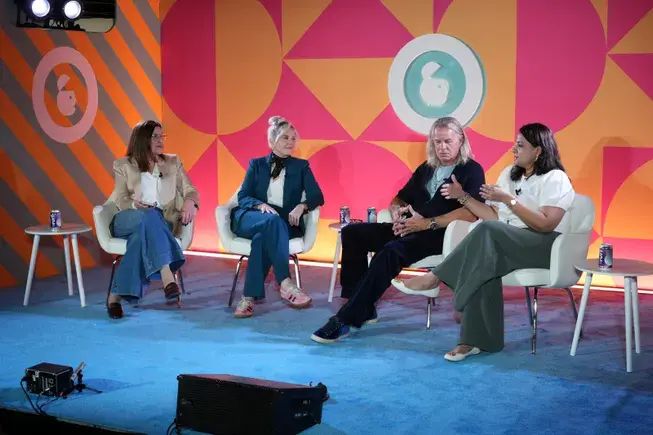
Many brands still treat Gen Alpha marketing as a problem for the next decade. Speakers at Advertising Week New York argued the opposite. The cohort numbers around 2 billion consumers worldwide and is forecast to carry $5.46 trillion in economic impact by 2029.
Here are five takeaways from brand marketers, agencies and platforms at last week's Gen Alpha sessions, as reported by Marketing Dive.
1. Treat Gen Alpha as the household CMO
Youth marketing has traditionally meant persuading parents. Gen Alpha — generally consumers aged 14 to 16 and younger — is changing that.
- According to DKC, Gen Alpha already commands more than $100 billion in direct spending power.
- It influences 42% of household purchases.
"Gen Alpha have been deemed the household CMO because they have so much influence," said Emma Witkowski, VP of media solutions at WildBrain, owner of the Teletubbies brand. Brands waiting until these kids are teenagers are missing both a short-term and a long-term opportunity.
2. Respect their identity — don't call them the AI generation
Research from GWI and Razorfish shows more than one-fifth of Gen Alpha uses AI every day. Yet they resist being defined by it.
"Gen Alpha and Gen Z do not want to be labeled the AI generation," said Donna Tuttle, VP of marketing and communications at Whataburger. Instead of broad age segments, Whataburger runs a social account that works as a "Museum of Art" for fan creations. Tuttle believes that kind of human, community-driven content also helps brands surface in AI answers: "AI is crawling for anything that's human."
3. Use creators to get through AI's invisible layer
Razorfish found 14% of Gen Alphas use AI to discover brands. Channan Sawhney of Church & Dwight described the shift as marketing to humans and to machines at the same time: "How do you convince the invisible layer to let you go through to who's on the other side?"
Optimize model by model
Walmart's Sparky and Amazon's Alexa draw on different sources, so optimization differs. Marketers need to know where each assistant gets its information.
Creators feed both kids and AI
Much of the information relevant to Gen Alpha comes from creators on Roblox and YouTube. An influencer reaching this audience also shapes what AI tells everyone else.
4. Skip trend-hopping and invest in IP
The nonsense meme "six-seven" was beloved by Gen Alpha until parents and brands killed it. Bryce Adams of WPP Media's The Goat Agency pointed to microdramas and other emerging IP as a better route: license credible IP and partner with creators who have cultural permission your brand lacks. "You may not have a studio, but you have budget, consumer data and a POV."
5. Don't overlook co-viewing
Witkowski called co-viewing "the most undervalued audience segment in advertising right now." Family viewing has moved to YouTube and streaming, but fragmented measurement has made advertisers forget it. WildBrain joined a Coalition for Innovative Media Measurement taskforce to build co-viewing metrics. Adams recommended opt-in environments such as high-quality creators and podcasts.
What this means for marketers
- Speak to the kid inside family campaigns. For dining, travel and electronics, the child often picks first.
- Segment by passion, not age. Build participatory spaces around games, fan art and characters.
- Plan AI visibility alongside creator strategy. Creator content becomes raw material for AI answers — a dynamic we covered in ChatGPT Ads vs GEO.
- Build IP instead of borrowing memes. For the older cohort's version of this lesson, see Gen Z Marketing Lessons From Smirnoff and Hinge.