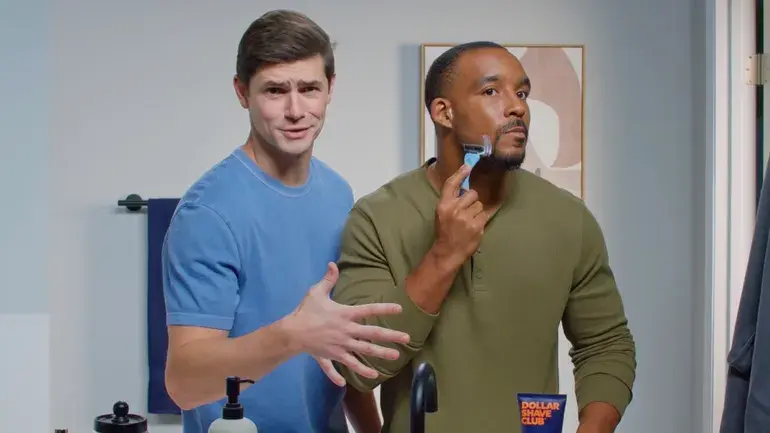
Dollar Shave Club launched “Perfectly Good Is Perfect” on Oct. 20, an omnichannel campaign that aims its trademark anti-B.S. voice at a new target: the pursuit of perfection, both in grooming and in shopping for a razor.
The creative: skewering self-optimization culture
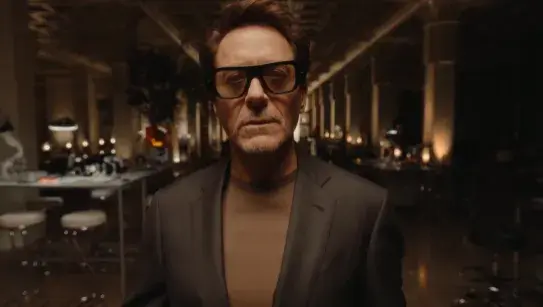
The 30-second hero video opens on a spokesperson in an ice bath, using a Shake Weight, holding a green smoothie and wearing an infrared mask — all icons of self-optimization and the looksmaxxing trend. He then walks through a bathroom set to present a razor lineup matched to different shaving habits.
The insight is the rise of perfectionism, including psychological research showing college students feel more pressure to be perfect than ever. The brand tied that to the sense that personal care has become exhausting and expensive, with some shoppers trading down to cheaper disposable razors. “It’s perfectly good to use a two-blade if you’re looking for a comfortable, cost-effective shave; a four-blade for someone that shaves every couple days; or a six-blade for that everyday shaver,” said Chief Brand and Innovation Officer Laura Higgins.
Channels and stunts
- Connected TV, YouTube, Meta and TikTok, with social activations throughout the month.
- A “Red-ish Carpet” stunt gave regular people celebrity-style interviews in “perfectly good” cities such as Cincinnati and Knoxville, Tennessee.
From scattered launches to one creative platform
Since private equity firm Nexus Capital Management acquired it in 2023, the brand has run AI-powered campaigns this year around America’s 250th anniversary and its viral Ball Spray product. “For the last six months, we’ve had a spattering of campaigns that haven’t necessarily been connected,” Higgins said. The new concept “will be what ties us together across all the new product launches, and it will be omnichannel.” Phase two will bring in the women’s line and extend the “Hairbernation” social campaign.
Where AI is used — and where it isn’t
The campaign was made in-house with real people in front of and behind the camera. AI handled quick visual gags, such as the spokesperson holding up six fingers for the six-blade razor, and helped the brand and agency partner Humanaut explore visual directions, cutting production to about two and a half months.
- Not for the concept. “We didn’t need [AI] for the concept, but it helped us push on different areas,” Higgins said.
- Not for shaving in action. The technology still can’t render it convincingly.
- Guardrails through templates. A solid brand book and a channel-by-channel tool kit accompany every campaign.
Takeaways for marketers
- Reframe value as “enough.” Instead of leading with price amid softer quality perceptions, the brand makes a cultural argument for good-enough. For another example of trading vague claims for concrete promises, see Why Omaha Steaks Dropped Vague ‘Quality’ Claims.
- Update your AI rules campaign by campaign. The brand grew more selective within months of its July AI video. Deciding where AI does not belong is part of quality control — especially as platforms push back on low-quality output, as covered in Platforms Are Building Slop Antibodies.
- More launches demand a bigger idea. Product-by-product campaigns scatter brand memory; a platform gathers it.