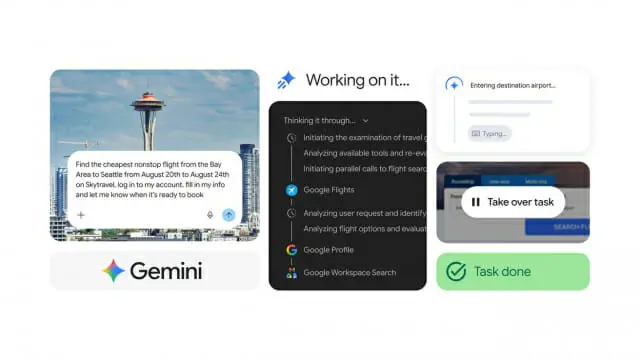
Google announced on July 30 that it has connected Gemini Spark, its personal AI agent, to Chrome's Auto Browse feature.
What changed
Spark previously operated inside a remote browser managed by Google. It can now control the desktop Chrome on a user's own machine. With permission, it uses logged-in accounts and saved passwords to carry out tasks such as booking apartment viewings or researching and starting flight bookings.
Safeguards
Google said it introduced prompt injection defenses and designed the agent to hand sensitive actions such as payment back to the user rather than completing them itself.
Availability
Auto Browse itself shipped for Gemini in Chrome in January 2026. The Spark integration is US-first and desktop-only. Separately, Spark access expands to AI Pro subscribers in more than 160 countries.
What it means for web and marketing teams
An agent driving a logged-in, real browser means some of your visitors are no longer people but agents acting for people. Three consequences follow immediately.
Conversion path design
The agent hands off before payment. So comparison, selection and cart assembly happen agent-side; the decision happens human-side. Whether your product information is machine-readable now determines whether you make the shortlist at all.
The bot classification dilemma
You need a policy for automated activity arriving from a legitimate, logged-in browser. Blocking outright turns away real customers' delegates; ignoring it makes abuse harder to separate.
Security surface
An agent that reads web content while holding saved credentials widens the blast radius of prompt injection. For the commerce implications, see When the AI Assistant Fills the Cart, and for governance questions, How an AI Polity Begins.