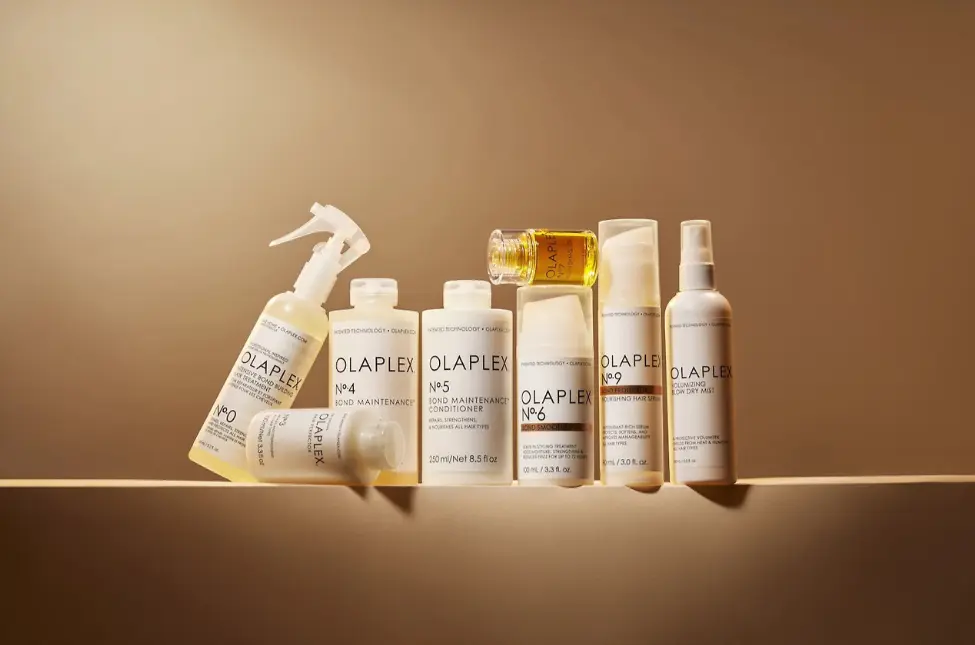
The movement that began in Dean Christal's garage was never going to be quiet. It was a direct challenge to the barrier the beauty industry had accepted as fate for decades: hair damage.
Just as Steve Jobs built Apple in his parents' garage, Dean prepared in a garage to change the shape of the hair industry.
The problem: "beauty requires destruction"
Growing up in a family hair business, Dean knew the pain point precisely — hair going brittle, snapping, and dissolving during chemical services like perms and colour.
The industry paradigm was clear: to get mysterious blonde or dramatic colour, you willingly sacrificed hair health. The old maxim "beauty is pain" had been distorted on the salon floor into "beauty requires destruction."
Bleaching in particular was chemical violence against hair. Stylists knew the cold sweat of watching a client's chemically saturated hair stretch like elastic and then snap.
The alternatives from large incumbents were temporary illusions — coating the surface with silicones and oils. Dean wanted a cure that prevented the fundamental destruction inside the hair.
Chemists trespass into cosmetics
Dean didn't set out to invent a new category. He started by trying to develop another silicone-based hair oil to rival the market-dominating Moroccan oil.
Everything changed when he met Dr. Craig Hawker, a chemist at UC Santa Barbara. Hawker and his colleague Dr. Eric Pressly were authorities in polymer science and materials engineering with no connection to the beauty industry.
To them, hair wasn't a lump of protein. It was a precise structure bound by countless chains called disulfide bonds. Strong alkaline agents sever those bridges and the whole structure collapses.
The two scientists formed a hypothesis in a single day: create a new molecular link to reconnect the broken bridges.
"Isn't it solved by placing one new molecular bridge between the broken bonds? It's the same principle as reinforcing a bridge when its span breaks."
While incumbent beauty labs obsessed over fragrance, texture and immediate feel, these two focused solely on the organic chemistry of hair bonds — a paradigm shift from varying a cosmetic recipe to redesigning molecular structure.
Chemistry, not magic
From that hypothesis came Olaplex's core ingredient, bis-aminopropyl diglycol dimaleate.
Rather than coating the surface with silicone, it penetrates inside the hair, folds itself between broken sulphur bonds, and sacrifices itself to bind both sides — a cast for a broken bone, a needle mending a torn net.
Olaplex ended the market of emulsifiers that merely made hair look temporarily better.
The miracle was proven on the salon floor first, as stylists mixed the liquid into harsh bleach and watched hair emerge not damaged but stronger.
Olaplex opened a multi-billion-dollar market with a single ingredient and a single patent. Scientific function filled the gap that marketers' adjectives never could.
The direct approach that won Hollywood
The market had been betrayed and consumers were tired — many brands had promised miraculous hair regeneration and delivered exaggeration.
Instead of shopping for adjectives at an agency, Dean took the direct route: carrying sample bottles to legendary Hollywood colourist Tracey Cunningham.
Tracey handled hair for Gwyneth Paltrow, Jennifer Lopez and Kim Kardashian. Pushing a half-baked product on someone like that was career suicide.
She tested it on a client the very next day. Normally five or six rounds of harsh bleaching leave hair crumbling like straw. With Olaplex mixed in, the hair emerged with healthy elasticity and shine as though nothing had happened.
"Dean, what is this? This is magic! I will never do a colour service without this bottle again. My star clients will never sue me over melted hair!"
That one sentence from a master practitioner changed the market more than any campaign copy.
Riding the Instagram wave
Olaplex's growth mocked the marketing grammar of the beauty giants — instead of billions in traditional media, it rode social media. Instagram in 2014, just emerging and maximising visual impact, was the perfect stage.
Stylists worldwide voluntarily shared before-and-after photos, and shine and recovery visible without filters captured consumers instantly.
Clients in salon chairs began holding up their phones demanding "do my service with the product from this feed." Demand was forcing supply rather than supply creating demand — a complete market inversion.
| Milestone | Result |
|---|
| Four months after launch | 7,000 salons worldwide |
| Six months after global distribution deal | 100,000 accounts, tens of millions in revenue |
A startup stirring beakers in a garage became, within a year, a predator threatening the beauty conglomerates.
The patent war with L'Oréal
In 2015 L'Oréal approached about an acquisition, and during due diligence Olaplex shared core patents, undisclosed formulas and trade secrets.
Negotiations collapsed — and soon afterwards L'Oréal brands released products containing hair-protection ingredients similar to Olaplex's core mechanism.
| Year | Ruling |
|---|
| 2019 | A Delaware federal jury found patent infringement and trade secret misappropriation, awarding about $91 million |
| 2021 | The federal appeals court fully reversed, ruling for L'Oréal |
The appeals court held the information Olaplex claimed as trade secrets was already public or failed legal protection requirements. The award was voided and the litigation ended in settlement.
Failing to secure the win damaged Olaplex's defences: the exclusive legal barrier against similar products from followers had effectively collapsed.
2023: crisis through the same channel
Ironically, the crisis spread through the social media that had grown the company.
- Claims of hair loss and scalp damage spread rapidly, and 28 consumers filed a class action
- Lilial (butylphenyl methylpropional), used as a fragrance, was classified as a reproductive toxicity concern and banned across the EU
Olaplex immediately shipped a reformulated version without the ingredient and released hundreds of pages of clinical testing data. The court dismissed the suit for lack of causal evidence that Olaplex alone caused the damage.
Legally cleared, but the market had already turned cold. The stock fell nearly 90% from its peak.
Worse, co-inventor Dr. Eric Pressly left to launch his own brand, Epres — so Olaplex now competes with the person who understands its technical DNA best.
Henkel's acquisition
Olaplex's response to crisis was a return to fundamentals: new leadership, scaled-back influencer promotion, restored ties with the stylists who are the core stakeholders, and re-persuading consumers with clinical data rather than adjectives.
In March 2026, German chemical and beauty group Henkel announced it would acquire Olaplex for $1.4 billion.
Some called it a fire sale against the tens of billions in valuation at its 2021 IPO. But Henkel focused on the intrinsic value of the hair-bonding technology hidden behind slowing results and reputational damage — combining it with global distribution and capital to restore trust quickly and expand premium haircare dominance.
Olaplex's 12 years prove there are no permanent winners or losers. Its history was itself a process of connection: fusing science and beauty, extending the professional salon into everyday life, and combining with global capital amid a trust crisis to build a platform for recovery.
What marketers should take from this
Without functional advantage, marketing cannot fill the gap. A single ingredient and a single patent opened the market — for another brand that grew without ad spend, see How Brands Sell Without Ad Spend.
Make your first customer a professional, not the public. Validation from Tracey Cunningham alone outperformed an ad budget; in a B2B2C structure, the practitioner is both distribution and media.
Don't engineer UGC — give people a provable result. Before-and-after photos spread because the difference was visible without a filter, not because of campaign design.
Decide in advance what due diligence may see. Similar products followed the collapsed L'Oréal talks, and the appeals court found the trade secret protections unmet — the most operational lesson here for technology companies.
The channel that builds you also breaks you. Instagram grew Olaplex and carried the hair-loss controversy the same way.
Manage regulatory risk at the ingredient level. The EU Lilial ban was outside marketing's control yet struck the brand's identity of "safe science" directly.
Crisis response meant returning to substance — fewer influencers, restored stylist relationships, published clinical data. For another beauty brand sidestepping category convention, see Rare Beauty Reaches for Greek Mythology.
Adapted from a Brunch article introduced by Mobiinside.