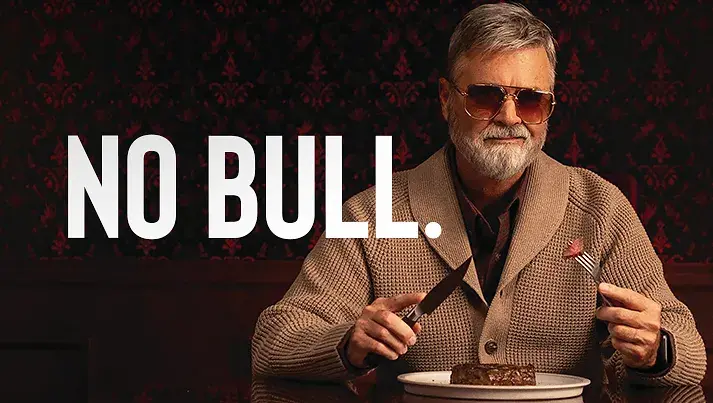
Words like “gourmet” and “quality” are easy to use and say almost nothing. Omaha Steaks, the 109-year-old American meat delivery company, dropped that kind of vague brand messaging in September with a “No Bull” campaign built on specific proof. Roughly two weeks after launch, conversion rates rose 46% and social media mentions climbed 130%, according to the company.
Inside the No Bull campaign
The campaign spans TV, radio, YouTube, podcasts, paid social and influencer partnerships. The 30-second spot opens with a voice-over telling viewers that if they think Omaha Steaks is just their grandpa's steak company, they should think again, and closes on “Real craft, real simple. No bull.”
No Bull follows “America's Table,” which launched in June as the brand's first national ad. Narrated by Kevin Costner, it placed Omaha Steaks at the dinner table during moments such as both World Wars, the Great Depression, the moon landing and the COVID-19 pandemic. Having built credibility with history, the brand took a lighter, more playful tone to reach younger consumers.
Turning “quality” into facts
Three proof points instead of adjectives
Angie Kubicek, senior director of growth marketing, said busy consumers shouldn't have to guess what a brand means by quality. Omaha Steaks had long relied on savings, promotions and words like “gourmet.” Now quality means three things: U.S. sourcing, strong aging and butchers who hand-cut the products.
Why origin matters right now
U.S. beef and pork distributors don't have to disclose country of origin unless they add the voluntary USDA “Product of USA” label. In September, the administration announced plans to import about 660 million pounds of lean beef trimmings over 90 days at reduced tariffs to lower grocery costs. Internal insights also showed many customers care where their meat comes from, so the brand made its U.S. sourcing as clear as possible.
Fixing the experience, not just the message
Since the start of 2025, Omaha Steaks has cut delivery time from more than six days to about two, with same-day delivery in nearly 50 markets, and simplified shopping so people can quickly pick the right products.
It hasn't abandoned loyal customers either. Direct mail still works for people turned off by AI who prefer something they can touch, and longtime customers can still phone in orders. The No Bull ad also ends with a promotional offer, because discounts remain a strong motivator.
What this means for marketers
Use evidence, not adjectives
Every competitor says “premium.” Pick three facts that prove your product's quality and repeat them consistently across ads, product pages and social. Gen Z is quick to spot inflated claims. For another brand reaching younger audiences through voice rather than data, see How Poppi Keeps Its Cultural Marketing Fizz Without Over-Relying on Data — The ‘If It’s Not F Yes, It’s F No’ Rule.
Win new customers without closing old doors
Targeting younger buyers doesn't mean cutting legacy channels. Omaha Steaks used social and creators for new customers while keeping mail and phone orders for loyal ones. When you change your message, change the operations that prove it, such as delivery speed and checkout, at the same time.