Sometimes contrarian brand positioning comes from what a company refuses to do. In February 2026, Anthropic ran its first Super Bowl ad for its AI assistant Claude, and the core message was a promise: no ads. The campaign went on to win the Film Grand Prix, the oldest and most prestigious category, at Cannes Lions 2026. Drawing on a column from Korean marketing lab Somako, here are three brands that sell “not doing.”
Claude: “Ads are coming to AI. But not to Claude”
The spots follow a pattern. A young man asks a muscular trainer how to get a six-pack fast; after some plausible advice, the trainer suddenly recommends height-boosting insoles with a discount code. The trainer is an ad-supported AI chatbot played by a person. Each spot ends with “Ads are coming to AI. But not to Claude” and “Keep thinking.”
The timing was sharp: market leader ChatGPT had just announced it would introduce ads. The spots never named a competitor, but OpenAI CEO Sam Altman publicly called them dishonest, which only proved the ad had hit a nerve. Cannes Lions film jury president Pelle Sjoenell described it as an ad about where ads shouldn't exist, an AI making fun of AI and a challenger taking on the market leader.
Patagonia: “Don't Buy This Jacket”
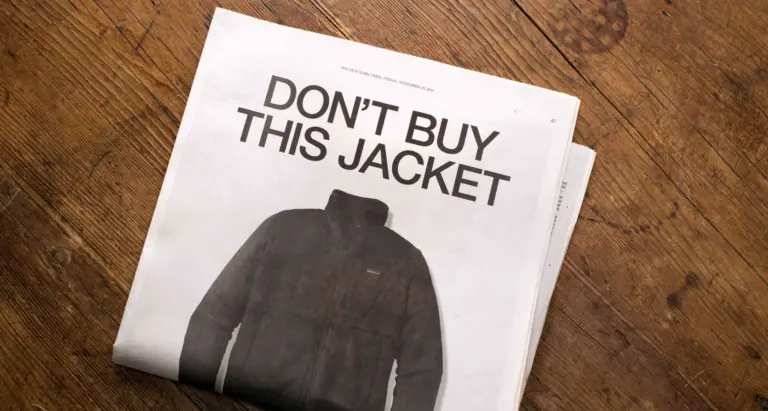
On Black Friday in November 2011, Patagonia ran a full-page New York Times ad with a photo of its own jacket and the line “Don't Buy This Jacket.” It explained the water, energy and waste behind a single jacket and asked people not to buy what they didn't need, and to repair, reuse and recycle instead. Because the message risked sales, people believed it.
MUJI: the brand without a brand
MUJI's name means “no-brand quality goods.” It started in 1980 as a Japanese supermarket's private label with 40 products. When rivals competed on flashy logos and heavy packaging, MUJI removed logos, simplified packaging, cut unnecessary processes and said plainly that its products were cheap for a reason. Today a logo-free beige storage box reads instantly as “very MUJI.”
Three conditions for contrarian positioning
- Drop an industry default: no ads in AI answers, no sales push on the biggest shopping day, no big logo on the product.
- Accept a visible cost: ad revenue, Black Friday sales and logo premiums were given up. People judge sincerity by the price paid, not the words.
- Signal that you're on the customer's side: ad-free answers, discouraging needless buying and not charging for a logo all read as “we put your interests first.”
What this means for marketers
Find your category's accepted annoyance
As competition heats up, brands keep adding features, perks and messages. First, list what everyone in your category does by default that customers quietly dislike. A credible promise not to do it can be your sharpest differentiator.
Repeat the promise until it becomes an asset
A one-off “we won't” is forgotten. Patagonia and MUJI held the same stance for decades. For more on how repetition builds brand assets, see Why Korean Travel App Yeogi Eottae Has Used the Same Jingle for Six Years — Building Brand Assets Through Repetition.