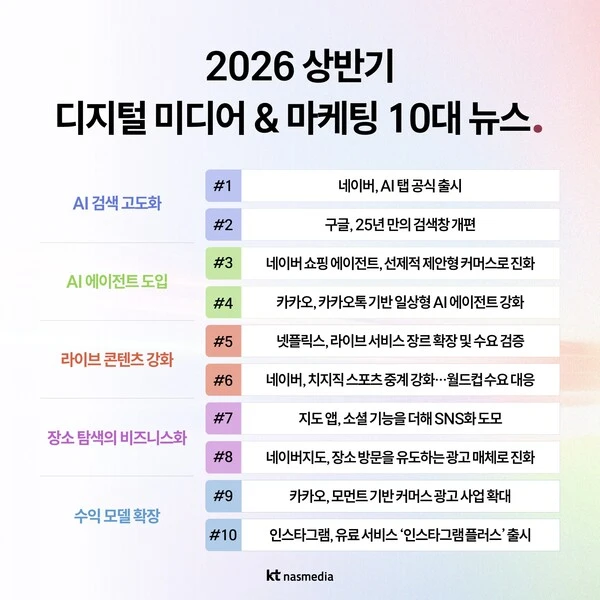
KT Nasmedia's "H1 2026 Digital Media & Marketing Report" forecasts that AI digital advertising will reorganize Korea's ad market across three layers at once: where ads appear, how they are operated, and how inventory is bought.
The Groundwork Laid in the First Half
The first half of 2026 set the stage. Naver and Google both strengthened action-oriented AI search — results that let users act immediately rather than just browse — while AI agents began appearing inside shopping and messaging apps. Live content and map features also grew more sophisticated, widening the touchpoints where user behavior and dwell-time data accumulate.
AI Digital Advertising's New Frontier: The Answer Box
The defining shift for the second half is what the report calls the "ad-ification" of answer boxes. Areas like AI Briefing, which summarize answers to a query, are emerging as a brand-new advertising surface. Ad operations are becoming increasingly automated, and video buying consolidated through DSPs (demand-side platforms) is expected to expand. In response, KT Nasmedia says it plans to launch its own DSP product, nap dsp plus, within the third quarter.
In practice, this means the center of gravity in AI digital advertising is moving from "ranking at the top of search results" to "getting your brand and products reflected inside the answer an AI generates." At the same time, answer accuracy, ad-disclosure transparency, and privacy protection are becoming shared industry challenges.
What This Means for Marketers
The optimization target is no longer just keyword rank — it is now "content credible and structured enough to be cited in an AI answer." Organizing product and brand information so AI systems can reference it cleanly is becoming the next layer of SEO fundamentals, building on ideas like topical authority in AI search and GEO-focused content positioning.
As automation and DSP-based buying expand, brands also benefit from reducing manual, channel-by-channel operations in favor of a unified, data-driven operating structure. Teams looking to rebuild their channel strategy around AI digital advertising can review Best Partner's services for support.