Tech/AI모비인사이드
OpenAI DevDay 2026 Recap — ChatGPT Becomes a Shared Workspace for People and Agents
OpenAI DevDay 2026 introduced the always-on agent Dots, GPT-6.1 Sol and ChatGPT Spaces. A recap of the shift from model races to work platforms.

AI transformation (AX) is now on most companies' agendas, but the hard part was never adopting a tool — it's making it stick in real day-to-day work. Buzzvil's marketing team published an "AX series" documenting how they changed the way non-developers work with AI, without a single big-bang system rollout.
The author's message is simple: you don't need to build a sophisticated agent. What matters most for a non-developer is lowering the very first barrier to entry as far as possible. That leads to a four-step, no-code AI workflow anyone can follow.
Step 1 — Turn documents into HTML. The lowest barrier and, in the author's words, the best first experience. Drop data like a CSV into a folder and ask an AI tool to "turn this data into an HTML slide deck," and reports, proposals, or plans generate automatically as HTML — no code, no PowerPoint.
Step 2 — Build a team knowledge base (KB). A knowledge base is essentially a private notebook the AI can reference — frequently used materials, recurring Q&As, and team-specific terminology collected in one place. This turns individual know-how into a shared asset and keeps tone consistent, for example by maintaining a single document of "our team's working rules."
Step 3 — Build an "AI teammate." Using a tool like Claude's project feature, without installing any code, teams can build a RAG-style assistant that checks internal materials before answering — like an open-book exam, giving "our team's" answer instead of a generic textbook one. It can even auto-post a daily performance dashboard to Slack.
Step 4 — Package know-how as a one-line-install plugin. Individually accumulated know-how packaged as a Skill or Plugin and published to an internal marketplace means a colleague can install in one line what took someone else days to figure out. Buzzvil currently runs about 20 internal plugins, and the author frames AX's real purpose as closing this kind of gap between people.
Buzzvil has already run its first company-wide AI hackathon pairing developers with non-developers, and teams like Ad Product now maintain their own KBs that accumulate work automatically.
The message for marketing practitioners is that AX is a habit, not a big project. Without dedicated engineering headcount or a large budget, real transformation can start by turning a repetitive task into an HTML report or writing team knowledge into a single document. In an environment like marketing, where data and know-how are typically scattered across individuals, using a KB and plugins to turn tacit knowledge into a shared asset is a direct lever on team-wide productivity.
The bottom line is execution over polish. As the author's closing advice puts it, the next presentation you build — try asking for HTML instead of a slide deck. That one small step is often the fastest way for a non-technical marketer to get comfortable working alongside AI. If your team needs help designing AI-driven marketing workflows, Best Partner's services can help — and for a related look at how organizations are restructuring around AI, see our piece on Notion's four-stage AI-native enterprise roadmap.
No. Buzzvil's guide proposes a four-step, no-code path — starting with turning documents into HTML reports using an AI tool, with no code required at any step.
It's a shared repository of frequently used materials, recurring questions and answers, and team terminology that the AI can reference, turning individual know-how into a team-wide asset with consistent tone.
It's a RAG-style assistant, built with a tool like Claude's project feature and no code installation, that checks a team's own internal materials before answering — giving answers in "our team's" voice rather than generic ones.
By packaging accumulated know-how as a Skill or Plugin and publishing it to an internal marketplace, so a colleague can install in one line what originally took days to build — Buzzvil currently runs about 20 such plugins internally.
To apply what you just read to your own site, start with a free audit of where things are now.
A strategist replies within 24 hours on business days.
OpenAI DevDay 2026 introduced the always-on agent Dots, GPT-6.1 Sol and ChatGPT Spaces. A recap of the shift from model races to work platforms.
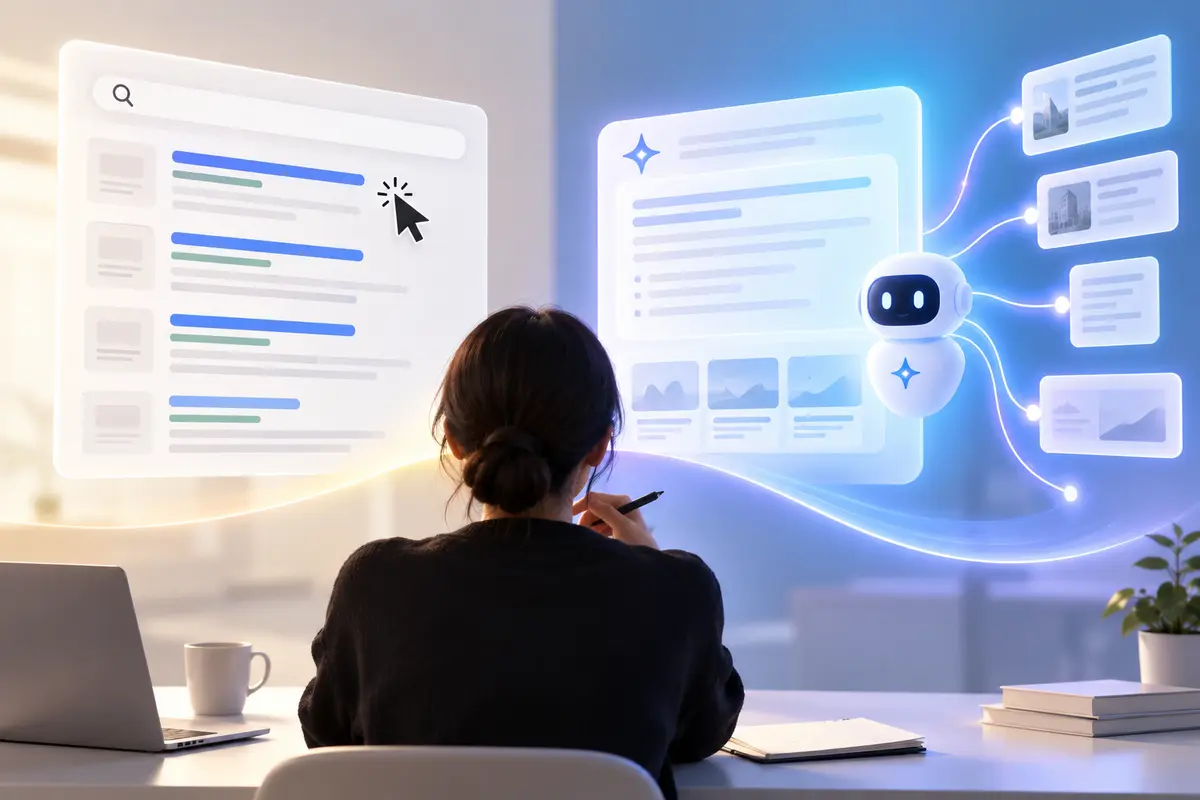
Zero-click GEO explained from TBWA's observations: 68% of U.S. Google searches end without a click, so extend existing SEO content into AI citations.
Claude Fable 5.1 improves coding and research while cutting cache costs, reducing false safety interventions, and introducing regulatory watermarking.