When every business has access to the same AI tools, the same insights, and the same recommendations, every marketing pitch risks sounding identical. That is the question Adobe set out to address by interviewing 850 U.S. small business owners and solopreneurs about how they use AI tools and how they view branding in the AI age.
What the Research Found
Most SMBs are using AI tools. How they use them is the interesting part.
- Almost half of SMB owners heavily edit AI-assisted content before publishing.
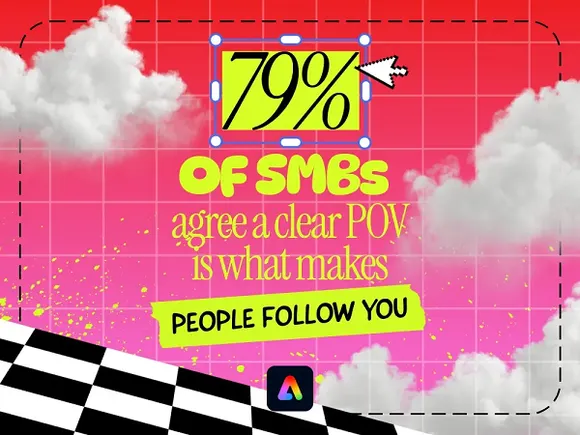
- 79% agreed that having a clear point of view is not just good branding — it is what makes people follow them.
- About one in three would rather post nothing than publish something that does not sound like them.
- 56% agreed that when everyone has access to the same tools, the edge goes to whoever has the best taste.
- 63% said they second-guess their own design and content decisions.
Adobe's Conclusion
The report's core line: "When everyone has access to the same digital tools, the edge goes to businesses that apply their taste and point of view to their branding and marketing."
Customers choose small businesses for who they are, not just what they sell, and SMB owners are especially conscious of how their brand is perceived.
And Yet 63% Doubt Themselves
The most revealing tension in the data sits here. 79% agree that point of view matters, while 63% second-guess their own decisions. They know the differentiator is a point of view, and they do not trust their own.
Adobe's recommendation targets exactly that gap: establish a core mission or purpose statement first, as a reference point that produces consistency and clarity across content creation.
It also specifies an order:
- Define why your products or services matter to customers.
- Then work out how to communicate that in promotions.
Reversed — starting from expression — you lose the standard that would let you judge between the plausible options AI produces.
Putting It to Work
- Treat AI drafts as inputs to editing. Nearly half of SMBs already do. The real question is what you edit against, and the answer is the mission statement.
- "Don't post what isn't us" has a cost. One in three is paying it. Decide as a team where you sit between posting cadence and voice consistency.
- Taste is a manageable asset. If 56% see taste as the competitive edge, then maintaining brand guidelines and a reference archive is competitive management, not housekeeping.
For a look at treating tone and point of view as an explicit design object, see Designing a Personality for an AI.
As tools level out, judgment is what is left. Adobe's conclusion is not new — but 850 responses put numbers on it.