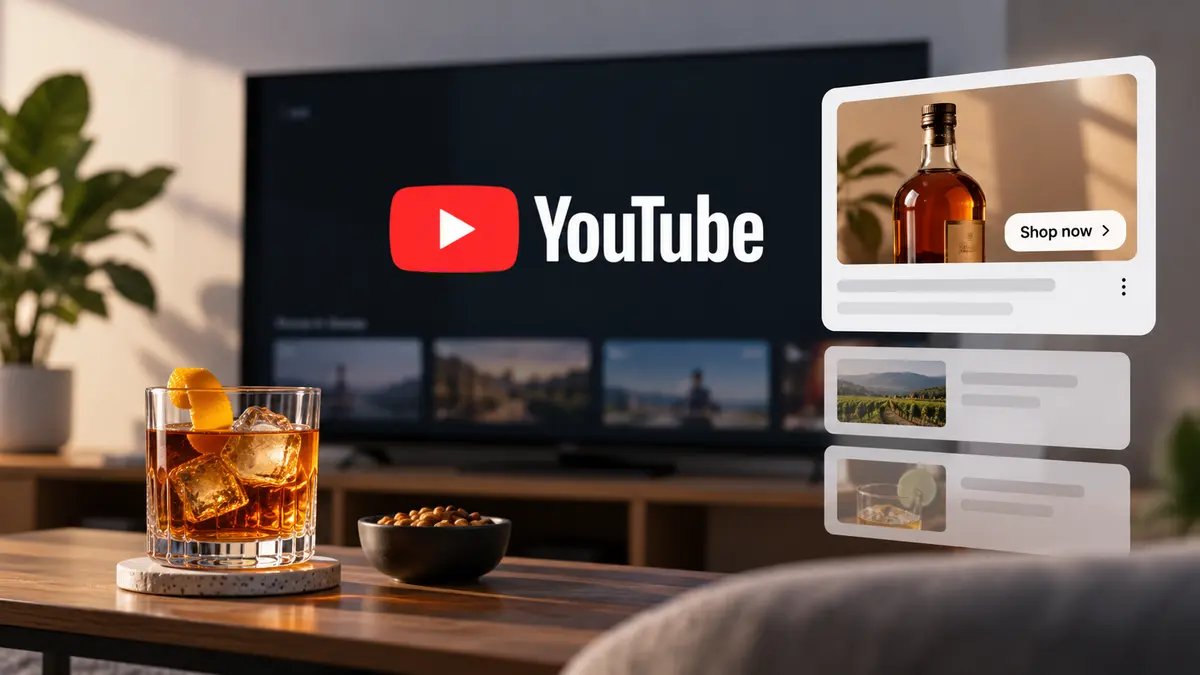
Google will allow advertisers to run personalized alcohol ads across YouTube inventory beginning Oct. 30, in markets where local laws permit. Alcohol has until now been a category limited to non-personalized advertising on YouTube. The policy update extends personalization to alcohol, alcohol-related products and alcohol alternatives. Here is what changes and what does not.
What is changing
Google says it is updating its personalized advertising policy for YouTube in response to growing advertiser interest, emerging categories, and improvements to its controls and data protections. Eligible alcohol advertisers will be able to use personalization when reaching audiences on YouTube rather than being limited to non-personalized campaigns, which gives them more control over who sees their ads.
Three product groups are covered:
- Alcohol
- Alcohol-related products
- Alcohol alternative beverages
The third item matters. Non-alcoholic beer and zero-proof spirits, a fast-growing category as drinking rates fall, are explicitly included. For how far that market has moved, see The No-Alcohol Beer Leader Hires a New CMO — Built on a 90-Year Low in US Drinking.
Not a global rollout
Personalized alcohol advertising will remain unavailable in Egypt, India, Indonesia and Poland under the October update. Everywhere else, the condition is that local law permits it. All alcohol ads remain subject to Google's existing advertising policies and applicable local regulations.
The guardrails that stay in place
Google says its protections around sensitive targeting are unchanged.
- Advertisers still cannot target people based on health information related to alcohol, which falls under Google's Health sensitive interest category.
- Age restrictions continue to apply, sensitive categories remain restricted, and Google does not personalize ads for minors.
- Users can manage what they see through My Ad Center, including choosing topics and brands they want fewer ads about.
YouTube only, for now
The immediate change is specific to YouTube. Google said it will share more information as additional surfaces become available. The updated policy takes effect Oct. 30, with availability determined by local regulations and Google's country-level advertising policies.
What advertisers should do
Check Google's country-level policy for each market you sell in before planning around the date, since local law is the gating condition. Alcohol alternative brands can move fastest: with the category explicitly named, there is now a basis for testing interest-based targeting to adult audiences on YouTube. For traditional alcohol brands, the practical gain is tighter audience control within the same age and sensitive-category limits that already applied. Once targeting is settled, the creative still does most of the work; Google Published YouTube Creative Guidance — a Human Voice Is Worth 12% in Conversions summarizes what Google itself recommends.