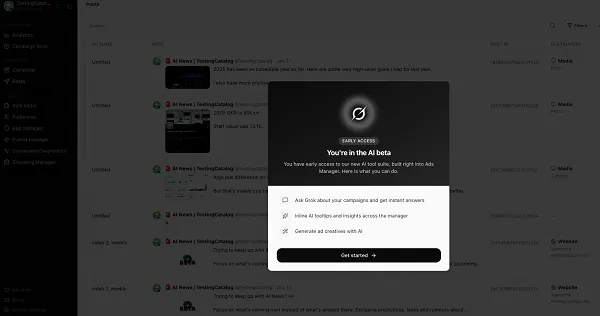
X (formerly Twitter) has begun beta-testing a new Grok AI ad automation feature inside its Ads Manager platform that connects xAI's chatbot Grok directly to the ad-creation flow. With this update, advertisers can ask Grok directly for advice on their advertising strategy and approach.
What the new feature does
The update includes in-flow tooltips that guide advertisers through the campaign-building process, offering step-by-step guidance as they build ads and generate creative — meaning advertisers can follow AI guidance directly inside the platform instead of hunting through a separate manual.
The bigger vision: fully automated advertising
This integration lines up with a direction Elon Musk has previewed before. Musk has said "the ultimate vision is for Grok to eventually enable fully automated advertising on the platform" — including ad-safety review and content matching. The Grok integration is being read as a step toward "agentic ad creation," where AI builds campaigns directly based on a systematic understanding of platform audiences and customer response patterns.
Building on X's 2024 ads overhaul
This announcement extends the rebuilt Ads Manager platform X launched in April 2024, which the company at the time called "the biggest advertising system update in company history," emphasizing improved understanding of user interests and the ability to match ads to real-time app trends. X says it can analyze profile and activity data across more than 550 million users to automatically match personas aligned with user tendencies and interests.
What this means for marketers
The key shift is a lower barrier to entry for running ads. Grok guidance and in-stream creative generation let small businesses and SMB advertisers launch campaigns without dedicated staff or an agency — which could expand the advertiser base and intensify competition in the self-serve ad market. But "full automation" doesn't automatically guarantee performance. AI-suggested audiences and creative are a starting point; human review of brand safety, targeting fit, and performance data is still necessary.
This also confirms a broader pattern — platforms embedding their own AI into ad tools, following Meta's Advantage+ and Google's Performance Max — is now taking hold at X too. Marketers should experiment with each platform's AI automation tools in parallel, while keeping strategic decisions like budget allocation and creative direction under internal control.
If you're navigating AI-driven ad automation tools across platforms, Best Partner's services can help you build a strategy that balances automation with control, or get in touch to discuss your approach.