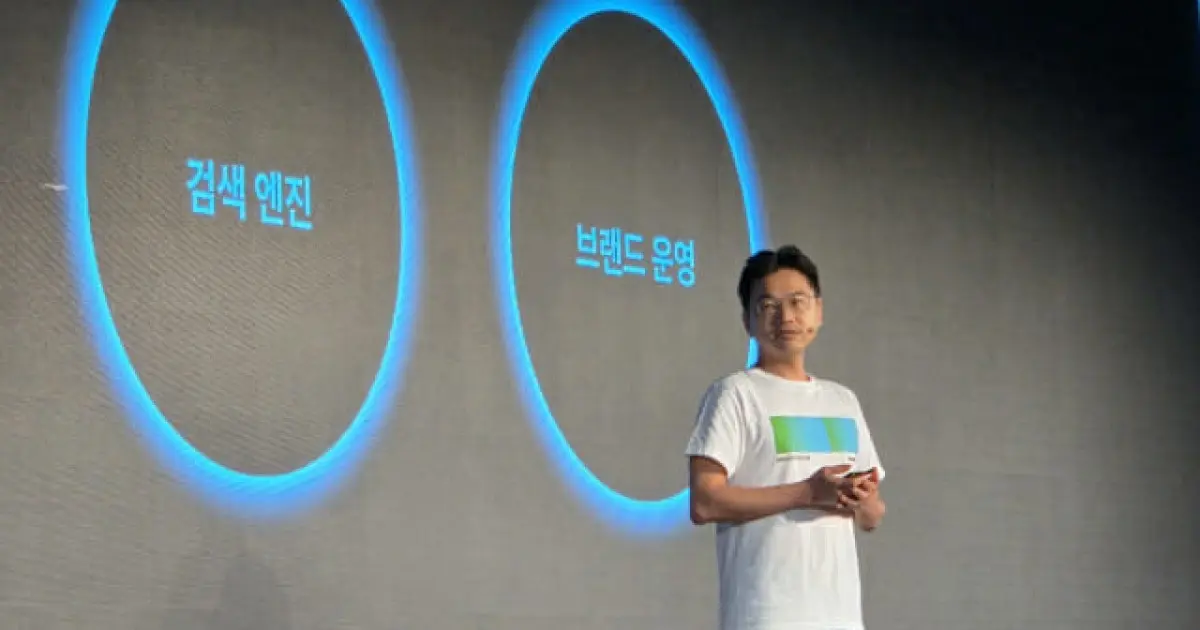
Changes in the marketing environment are eroding the efficiency of the performance marketing that underpinned the old growth formula, while the influence of search-engine-driven visibility weakens — shifting how brands grow.
That was the diagnosis offered by Kim Tae-oh, Chief Product Officer at Imweb, a Korean commerce platform, speaking at BrandCon in Seoul. His proposed next growth axis: "deep commerce."
Discovery has moved
How consumers find brands is changing along two lines:
- Increasingly sophisticated AI queries
- Growing influence of UGC and creator channels such as blogs and communities
One figure conveys the scale: creator-related marketing accounted for more than 20% of US online holiday season sales last year.
Which means mentions off your own site play a decisive role in brand visibility. However finely you tune owned channels, discovery increasingly happens elsewhere.
The same structure appears in AI search. Research showing models preferentially search brands they already know is covered in AI Models Search for Familiar Brands 3.2x More Often. Accumulated off-site mentions are what make a brand one the AI knows.
AI absorbing execution work
The operational shift is more direct. According to a case cited in the presentation, AI absorbing execution work reduced a conversion rate optimisation team from six people to one.
How you read that number matters. Framed as headcount reduction, it is a cost story. The argument being made was different.
The more execution is automated, the less execution capability differentiates. If anyone can run equivalent A/B tests and page optimisation with the same tools, advantage cannot be built there.
What remains: data and people
Kim's conclusion is direct. Ultimate competitiveness comes from the data a company holds and from human capability — judgment and ideas.
- Data: customer understanding nobody else possesses
- People: the ability to judge what is good, and to generate ideas
As AI takes over execution, the logic goes, the value of deciding what to execute rises. That is the basis for the claim that depth is the next growth axis.
Takeaways for marketers
Do not diagnose falling performance efficiency as an account-level problem. The reflex when ROAS declines is to adjust creative and bids. If the discovery path itself is relocating, there is a hard ceiling on what account optimisation recovers.
Add off-site mentions to your measurement set. Creator marketing exceeding 20% of holiday sales means it is a channel, not an experiment. For the Korean market picture, see Q3 2026 Influencer Marketing Trends.
Do not transplant the CRO headcount case directly. Six to one is a specific instance, and outcomes vary with organisational size and maturity. The transferable point is shifting the ratio of execution work to judgment work.
Define your data asset concretely. "Our data is our advantage" is a common claim, but writing down what data competitors genuinely cannot obtain usually produces a short list. Lengthening that list is the practical starting point for deep commerce.