The day vibe design got a name
On March 18, 2026, Google Labs product manager Rustin Banks announced a full overhaul of Google Stitch with an unfamiliar workflow: don’t start with wireframes. Start by describing the business goal, the emotion users should feel and reference examples, then explore many directions quickly and narrow down. He called it vibe design, and outlets including The Register, TechRadar and Fast Company put the phrase in headlines within a day.
Practice was already heading there. In a 2024 survey of about 10,000 freelance designers by 99designs by Vista, 52% said they used generative AI tools, up from 39% a year earlier. The term descends from “vibe coding,” coined by Andrej Karpathy in February 2025. Code has an instant referee — the compiler or a failing test — while design quality still has to be judged by people, which is why the idea took another year to reach design.
What Stitch changed
An infinite canvas and a design agent
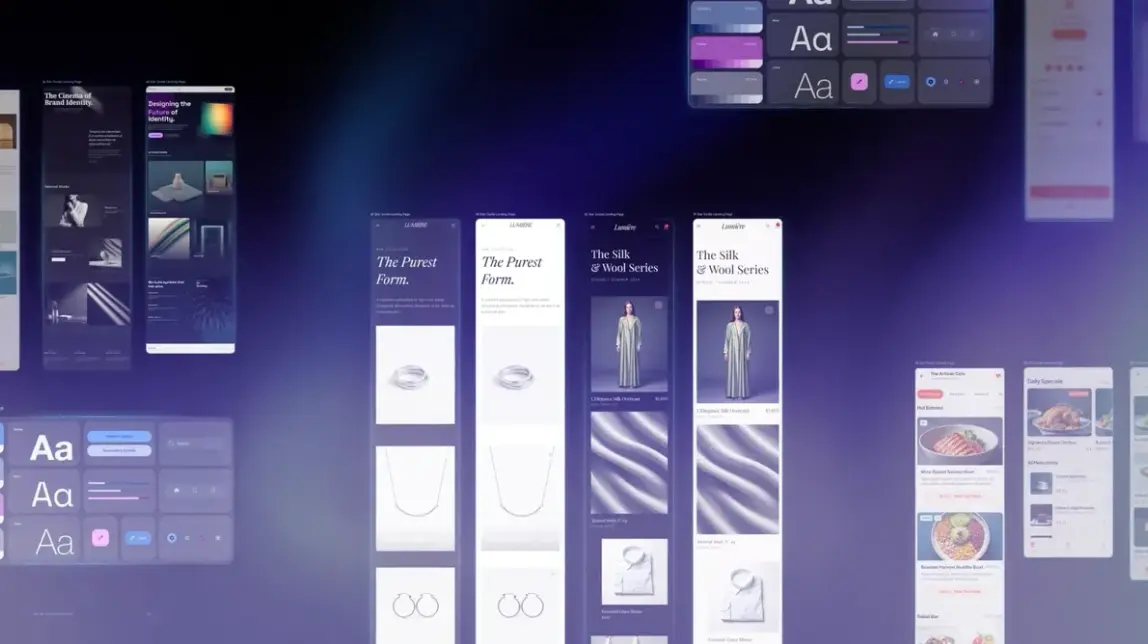
Stitch launched as a Google Labs experiment in May 2025, turning text or sketches into UI screens and front-end code. The overhaul centers on an infinite canvas where screenshots, code snippets, text and competitor screens serve as context. A design agent reads the whole project and generates several directions at once; static screens become clickable prototypes; and an MCP server and SDK let other agents call Stitch.
Real-time design
At Google I/O in May 2026, Stitch changed again: generation now streams onto the canvas as it happens. Designers can interrupt and redirect mid-generation, use voice as a constant input, co-edit with others and publish directly to the web through Netlify.
The cost of a mockup collapsed
When three mockups took two days, meetings debated which three to make. When twenty take minutes, meetings debate which to keep. Design studio Eleken reported that some phases that once took five to ten days now take an hour with AI — while stressing that what compresses is execution speed, not expertise.
What works and what doesn’t
Strengths: escaping the blank canvas, generating variations in color, density and tone, drafting multi-screen flows like onboarding or checkout, and persuading stakeholders with clickable screens.
Weaknesses:
- Precise edits are hard, which is why “delta prompts” that target only what should change have become a technique.
- Output converges on the average — dashboards look like dashboards, hero sections look like hero sections.
- Edge states such as empty values, overflowing text or lost connections don’t exist unless requested.
- Accessibility isn’t guaranteed, and the free tool caps monthly generations.
Many teams now split the work in three: exploration in Stitch, building in tools like v0, Lovable or Bolt, and final polish by people.
What designers keep: judgment
Vibe design doesn’t take the job; it reallocates time from making to choosing. Choosing requires explainable criteria rather than taste — what this user needs at this moment, what emotion the brand promised, which metric the screen should move. The same criteria produce better prompts and better selections, echoing the argument that a designer’s value in the AI era comes from judgment, not production.
There’s a risk, too. The wireframing grunt work that trained junior designers’ eyes is exactly what got automated. Spend saved time generating more and you only get more to choose from; spend it on user research, flow redesign and critique and it converts into judgment. Real-time generation also removes the pause where second thoughts used to happen. Just as verification is the missing step in vibe coding, design teams need to build deliberate checkpoints into the flow.