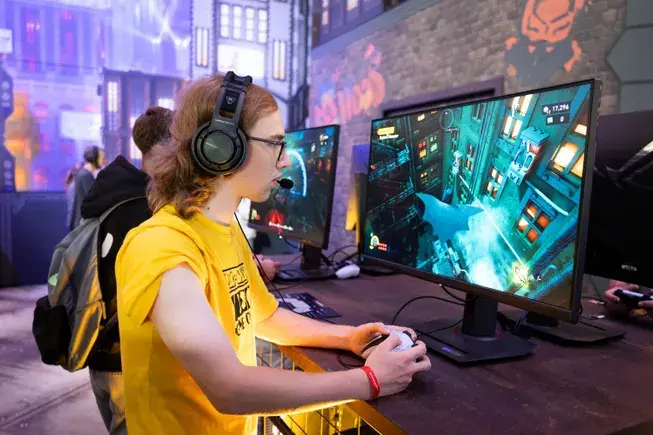
Gaming advertising has been stuck on the same refrain for years: a huge, highly engaged audience, and ad dollars that don’t follow. Despite 3.6 billion players worldwide, gaming still commands only a fraction of ad budgets. At IAB PlayFronts in New York on Sept. 17, platforms, marketers and developers dug into why.
1. Audience size is no longer the question
Two-thirds of Americans aged 5 to 90 game at least an hour per week, per 2026 data from the Entertainment Software Association, and gamers rarely use a second screen while playing.
IAB SVP Cintia Gabilan said the conversation is now about practicality: how to explain gaming to senior leaders, where it fits in the media plan and how measurement works. She compared it to connected TV, where Americans spend about 20% of media time but only about 7.7% of media spend goes. Gaming has the same shape of problem, just earlier on the curve.
2. Mobile gaming is the cornerstone
According to Zynga’s Marian Thomas, about 62% of mobile gamers are Gen Z or millennials, 82% are heads of household and 54% are parents.
Interactive and rewarded video ads are the core formats. Because players get something in return, they create positive brand experiences and stronger attention. But WPP Media’s Benjamin Chua warned that overloading players quickly turns engagement into annoyance.
3. Picking one game is over
“There are more games than ever, and more good games than ever,” said Overwolf CMO Shahar Sorek, so selecting a single title for a target audience no longer works. Players move across titles, and plans must move with them. “2.4% of [media] spend against 67% of the country playing every week, it’s not a stable equilibrium,” he said.
4. Measure what happens after play
Many senior marketers still see gaming as an experiment or a risk. Sorek’s advice: don’t measure whether they clicked during playtime, measure whether it changed what they did afterward. H&R Block’s Andy Martinson noted that programmatic, in-game display and interactive games all measure differently, so brands should decide what matters first.
5. Is the money missing, or hidden?
Are Twitch activations gaming or social? Are gaming creator deals funded by gaming budgets or influencer budgets? Some gaming spend may simply sit in other line items. Either way, Martinson argued, “[Gaming] is new, it’s cheap, which is the best possible thing for a market.”
What to do with this
More brands are treating gaming as an always-on channel rather than a one-off stunt, as Panda Express has on Roblox and Fortnite. If you’re starting out, test rewarded formats with frequency caps and agree up front on post-exposure metrics such as brand search or site visits. That makes the internal case far easier.