As AI search grows, 'which brand does the AI mention first' is becoming a new competitive metric. According to data recently published by Semrush, topical authority still matters — a lot — in AI search, and once a brand earns category ownership, it tends to hold onto it.
Category owners are still rare
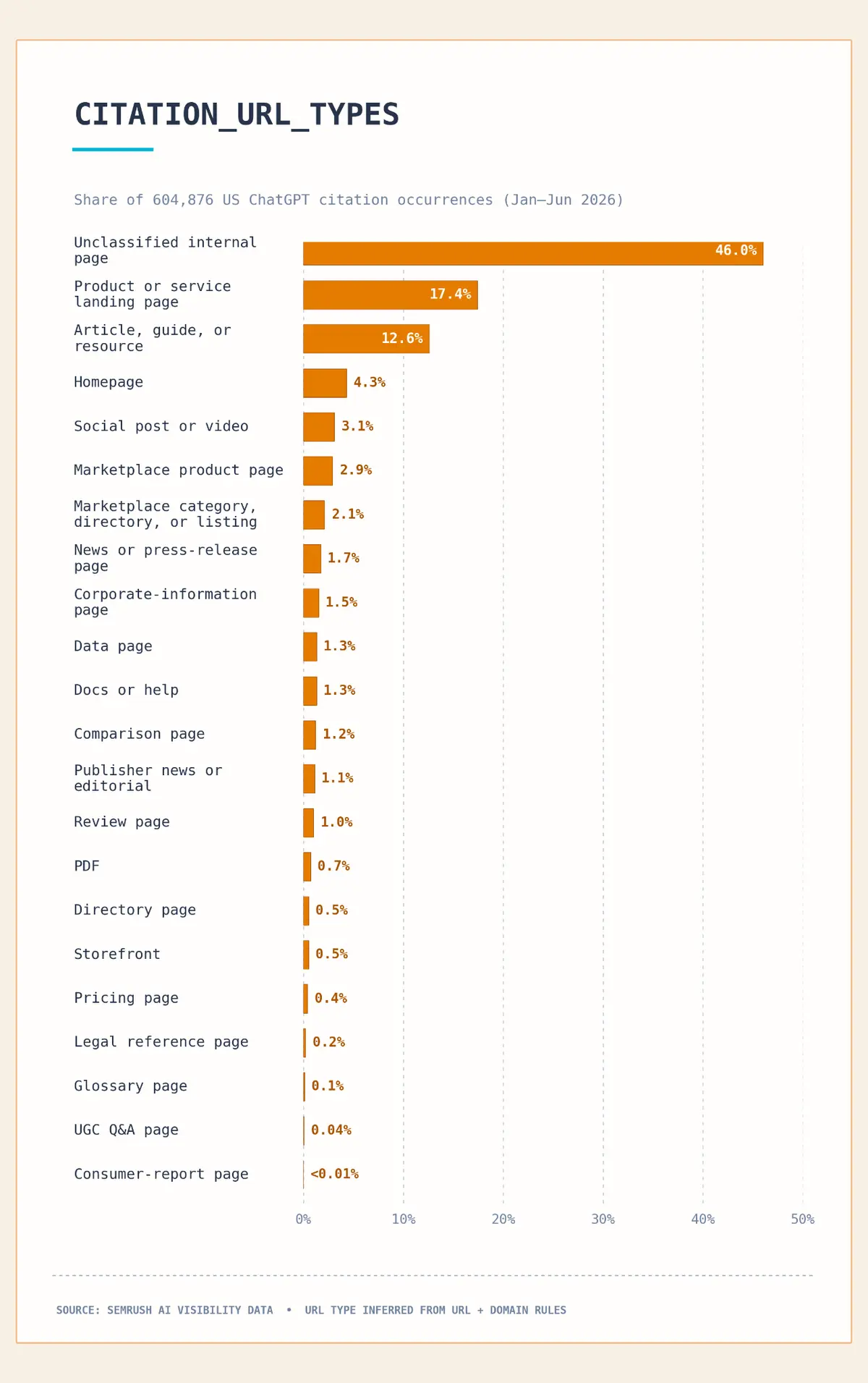
Semrush analyzed 1,094 US categories, five prompts per category, using monthly ChatGPT snapshots from January through June 2026 — covering more than 220,000 domains, 50,000+ brands, and 600,000+ citations. The study found that only 15.2% of categories have a clear owner, while 53.7% remain open fields with multiple contenders. More strikingly, 89.3% of estimated AI-search demand sits in categories that still have no clear owner. A category owner is defined as the brand with the highest share of mentions, appearing in at least four of five prompts, with at least a 5-percentage-point lead over the runner-up.
Mentions matter more than citations
One counterintuitive finding: the most-cited domain was rarely the most-mentioned brand — only 20.8% of the time — while the most-mentioned brand was cited at least once 69.9% of the time. In other words, brand mentions drive AI recommendations more than citation frequency does. Category owners also showed 55.7% higher brand search volume, 48.4% higher organic traffic, and 52.5% higher authority scores than their nearest competitor, and retained the top spot in 90.4% of month-over-month comparisons. Leadership is more fragile, though, when the gap is thin — switching leaders had a median lead of just 1.3 points, versus 2.9 points for leaders that held their position.
What brands should do
Rather than chasing broad content coverage, Semrush recommends owning narrow, specific categories. Its example: instead of targeting "finance" broadly, a payroll software company should build content around W-2 deadlines, contractor classification, payroll-tax errors, overtime rules, and state registration — the exact questions it wants to be known for. Ownership concentration also varies sharply by industry: retail leads at 61.6%, while legal has no clear owners at all.
Practically, this means defining the 10-20 categories most tied to your business, and periodically testing five representative prompts per category — definitions, comparisons, alternatives, use cases, and buying questions — to see where you show up and where competitors do but you don't. Closing those specific gaps with better positioning, comparison content, and credible coverage is the next step. To build an AI-search strategy for your brand, explore Best Partner's services or get in touch.