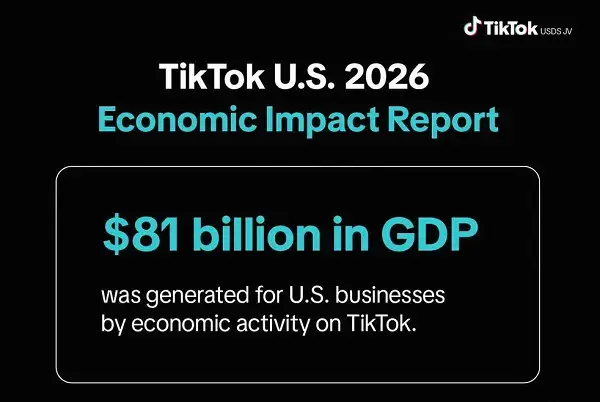
TikTok published a report, conducted by PF Global, on its impact on the U.S. economy. The TikTok economic impact report says the platform helped generate more than $81 billion in economic value for U.S. businesses. It helps to know how that number was built before using it.
How the report was built, and what $81B means
The study drew on 11,123 U.S. adults and more than 5,000 U.S. businesses, over half of them SMBs. PF Global says its GDP calculation starts from an estimate of how much businesses spend on TikTok promotions, using third-party market data and a revenue-to-GDP ratio weighted across advertiser-facing industries. As the original coverage noted, the value is an estimate based on estimates rather than actual contribution data. That does not invalidate the findings, but it frames what the figures can represent.
SMB and live shopping numbers
Of businesses surveyed, 69% said TikTok is essential and 83% of those using it said it matters for attracting customers and supporting growth. Ninety-three percent said promoting on TikTok increased their sales, 75% said they had commissioned creators for paid promotion, and 80% said TikTok helped them scale operations.
Live is a highlight: TikTok says TikTok Shop averaged nearly 595,000 live shopping sessions per month in the U.S. in 2026, with live-driven sales up 92% year over year. The report also estimates $14 billion in additional spending driven by discovery across tourism, retail and hospitality, plus 3.6 billion hours of informal learning in 2025.
How to read it
The original coverage saw the report as a continuation of TikTok's campaign to stay in the U.S., which looks less necessary now that its U.S. arm has been sold to a consortium of local business leaders. Even so, it is a useful snapshot of the platform's footprint.
For marketers, the detailed figures are more useful than the headline. Test whether live shopping and creator partnerships actually convert in your category using your own data, and treat the report's numbers as hypotheses. For a Korean-market view of the creator-led shift, see Shoppers Follow People, Not Search: Creators Are Becoming the Seller in Korean Commerce. If you need help running short-form and social channels, our services page is the place to start.