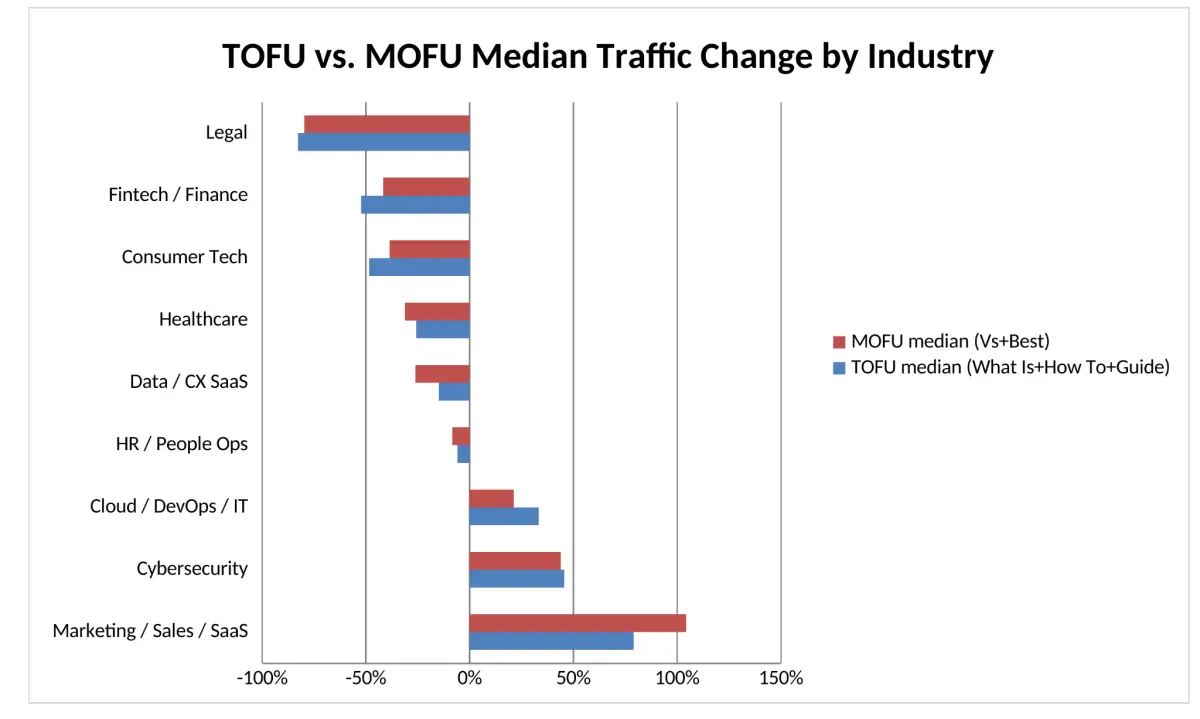
HubSpot data shows publishing frequency tends to correlate with higher traffic — but "every content strategy eventually reaches a point of diminishing returns." A growing number of case studies show that content pruning, not more publishing, is what actually moves the needle.
The paradox: traffic went up after deleting content
Accounting software company QuickBooks deleted more than 2,000 pieces of content, and traffic increased 20%, driving more than 70% more lead signups. Product onboarding tool Userpilot deleted nearly 25% of its content and hit its highest-trafficked month yet. Both cases undercut the assumption that less content means less performance.
Why indexing is breaking down: the crawl budget trap
Google is increasingly discovering pages on established sites and simply choosing not to index them. SEO analyst Raghunath Sabat identifies five contributing factors: limited crawl budget, too many URLs to crawl, low site priority, low-quality content, and insufficient internal links. Google's crawl budget is set by "crawl capacity limit and crawl demand" — when a site is bloated with low-value pages, fewer resources go to the content that actually matters.
How to run a content pruning audit
Four concrete steps stand out. First, audit URL-level traffic, conversions, and ranked keywords over the past 12 months using a tool like Screaming Frog, then classify each page as keep, consolidate, refresh, or delete. Second, reframe your KPIs to track whether content appears in AI search summaries and whether that drives conversions. Third, allow three to six months before judging the results of a pruning pass. Fourth, prioritize substantive, in-depth content over sheer publishing volume.
The takeaway for marketing teams
If your blog has years of accumulated posts, chances are a meaningful share are dragging down crawl efficiency rather than adding value. Running a quarterly content audit — and being willing to delete, not just archive — is now a legitimate SEO growth lever, not just housekeeping. For help building a leaner, higher-performing content strategy, explore Best Partner's services or get in touch.