Capturing attention in the first three seconds of a social ad is still table stakes. But as platform algorithms increasingly optimize for watch time and engagement signals, the real challenge has shifted: holding attention all the way to the end, not just at the hook.
Attention Gets You Noticed. Curiosity Keeps You Watching.
Akvile DeFazio, founder of social ad agency AKvertise, draws a sharp line between attention and curiosity. Attention is the moment someone notices your ad; curiosity is the reason they stop scrolling and stay. Too many creative strategies obsess over the hook and lose sight of everything that happens after it.
Three Tools for Building Curiosity
Open loops create an information gap viewers want to fill themselves. High-performing creative doesn't just interrupt the scroll — it creates a gap people actively want to close.
Storytelling replaces the rush to pitch the product with a conversational unfolding of information.
Gradual reveal delays the obvious conclusion and shows transformation instead of listing features, giving viewers a reason to keep watching.
What the Algorithm Rewards — and 'Yapper Ads'
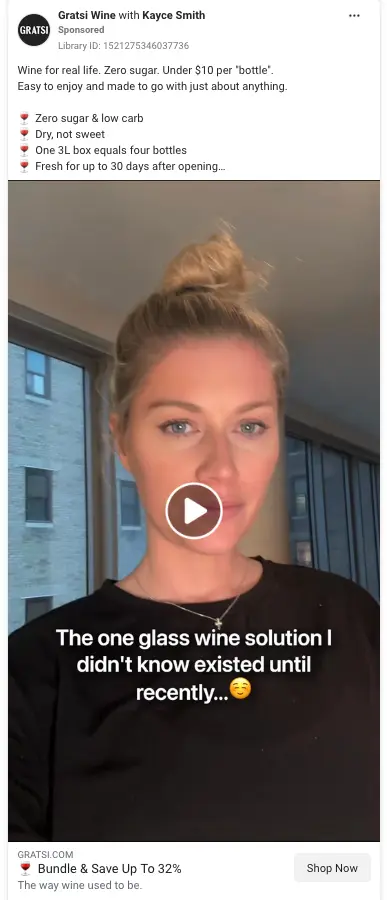
Platforms increasingly track watch time, meaningful engagement (saves, DM shares), completion rate, post-view clicks, and replays. That shift has put a spotlight on "yapper ads" — long, loosely produced, conversational creator content that breaks conventional best practices (unscripted, rough, product mention delayed) yet performs well. DeFazio points to Gratsi Wine's collaboration with creator Kayce Smith as an example.
Curiosity Is Not Clickbait
Clickbait withholds information without meaningful payoff. Curiosity rewards attention by eventually answering the question in a satisfying way — the ad has to deliver on its promise, or trust erodes. In practice, this means deliberately engineering open loops: surprising statements, unexpected outcomes, and relatable problems as engagement hooks, a conversational rhythm for authenticity, and a fresh point of interest at every transition.
What This Means for Marketers
As AI makes targeting more precise and more accessible than ever, the one lever advertisers still fully control is creative strategy and production. As DeFazio puts it: "The algorithm can decide who sees your ad, but you decide whether it's worth watching." The creative brief should ask two questions, not one: "How do we stop the scroll?" and "Why would someone want to keep watching?" Track completion rate and save/share metrics as KPIs, and analyze drop-off points beyond the first three seconds to verify your open loops actually work.
Building creative that holds attention start to finish is where Best Partner's services can help — reach out to discuss your next campaign.