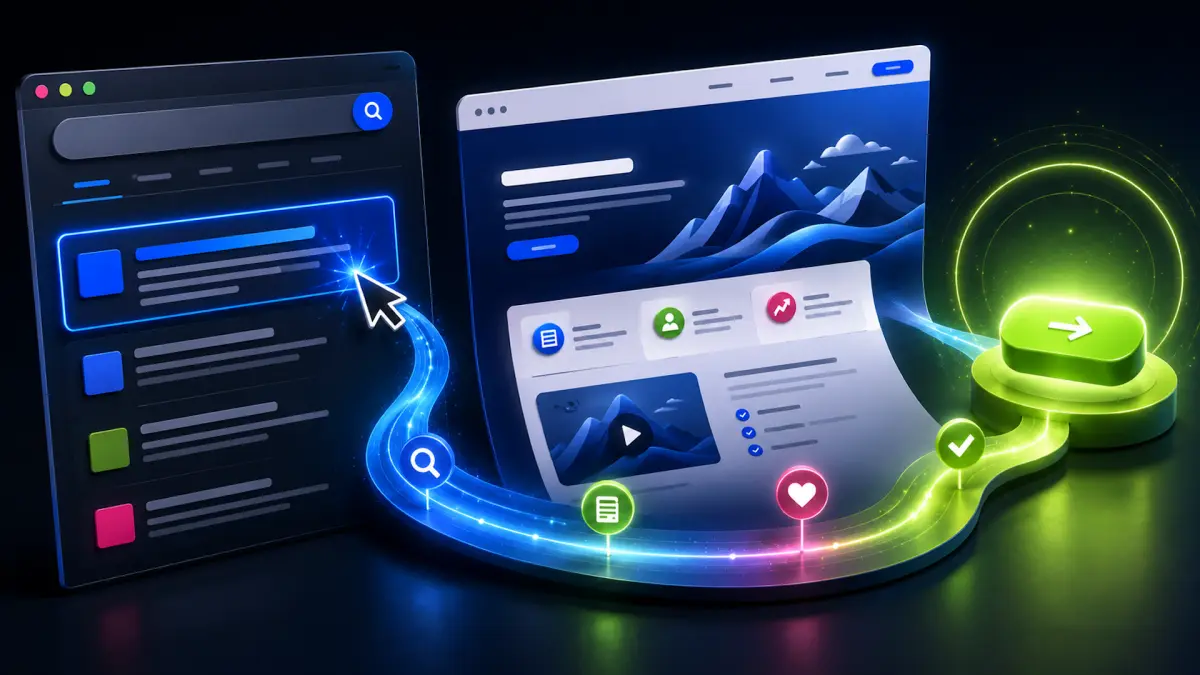
There's an old habit in SEO: getting people to the website is the job, and whatever happens next belongs to sales. A Search Engine Land piece by Natasha Post argues that habit is now a liability. Around 68% of traditional searches end without a click (per Semrush), and AI Overviews and LLMs resolve informational queries in-platform. When a click is that scarce, winning one and then losing the visitor before conversion is wasted work.
The symptoms of traffic without conversions
Post lists the telltale patterns. Vanity metrics rise but revenue doesn't. Landing pages rank but get weak click-through. Time on page is low for well-ranking URLs, and visitors never scroll below the fold. Blog traffic grows with no lift in visits to product, pricing, or services pages. Any of these means your content is stalling users mid-funnel.
Optimize for traffic and conversions together and different numbers start moving: demo and trial requests climb, return visitor rate and branded search volume grow, and organic starts showing up in GA4's assisted conversions.
Designing for what happens after the click
Know your ideal customer in specifics
Listen to sales calls, read reviews, and put the language customers actually use — their words, their worries — into the content. Content that speaks to one person, not everyone, is what makes a brand feel like it understands the problem.
Make the next step obvious
Use clear CTAs and repeat them at logical points. If a visitor has to scroll around to figure out how to act, you've likely lost them. Cut friction in both copy (jargon, inflated language) and forms.
Let people act without reading everything
Scannable headers, a TL;DR up top, and structure that lets a skimmer find the one passage they need. Most visitors don't want to read a long page — they want to confirm you can solve their problem and see the next step.
Our take: SEO that can't connect to conversions loses the budget fight
The real message here isn't tactical — it's about how SEO gets judged. As clicks get scarcer, leadership evaluates SEO on pipeline contribution, not sessions. The illusion that cheap volume equals efficiency has already been dismantled on the paid side — see When Cheap Clicks Look Like Efficiency — Paid Media Optimization Working Against You — and the same logic is now reaching organic.
Conversion contribution should drive prioritization too. A pile of optimization tasks is not a plan; sequencing the work that moves business outcomes is. If that line feels blurry, read Your SEO Roadmap Is Probably a Backlog — the SCOPE Test That Separates Them. Traffic reports alone won't carry an SEO program much longer.