Nongshim’s Banana Kick, a classic Korean snack, saw related online searches rise by up to 325%, and it wasn’t driven by a big media budget. It came from the brand’s reply to a home video a parent posted. The case, shared by Korean marketing research group Somaco on Mobiinside, shows the step most user-generated content (UGC) strategies skip.
A video most brands would have scrolled past
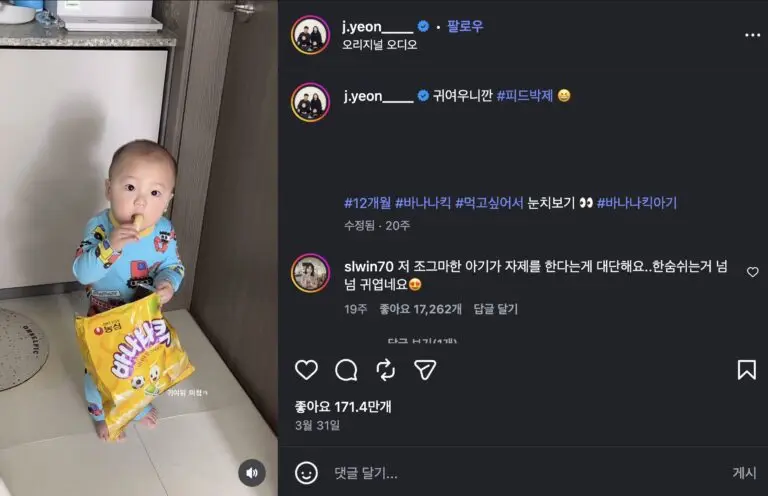
The clip showed a toddler hugging a Banana Kick bag almost as big as their body, leaning back as if someone might take it. Nobody paid for it or asked for it; it was an ordinary family evening.
Oh Young-joo of Nongshim’s snack marketing team spotted it while searching the brand on social media on the way to work and didn’t let it go. Nongshim made a custom giant bag taller than the child (about 80 cm), filled with roughly 20 retail bags’ worth of snacks, sent it, and filmed the child’s reaction.
The number that matters: search
The first video passed 26.7 million views on Instagram. But the more important figure was search: related online searches jumped by up to 325% during the campaign. People didn’t just laugh; they typed the product name into a search bar.
The cost structure matters too. The original video was made voluntarily by a consumer, and Nongshim’s spend was mostly the cost of making and sending one giant bag. No media was bought for reach.
The real cost of UGC is the reply
It’s well established that consumers trust peer content. Citing Meta data, Batcrew reports UGC-based ads average a click-through rate 2.4x that of brand-made content.
Yet most UGC strategies stop at monitoring: collecting mentions, screenshotting reviews for reports, counting organic mentions. Nongshim went further. Consumer content becomes an asset not when a brand finds it, but when the brand replies.
Reply with a memory, not volume
“Rather than just sending a few boxes of snacks, I wanted to give the child a gift they’d remember,” Oh said. A volume-based reply is just a giveaway; people say thanks but don’t post again. A reply built around that person’s moment makes them create again. The question to ask isn’t how much to send, but whether the recipient will want to film it.
Put numbers on the response
“A heartwarming campaign” won’t win next quarter’s budget. Nongshim’s case holds up because it measured a behavior: search. Korean fashion company LF saw a similar effect when it ran its YouTube channel directly, growing new subscribers 64% year over year and lifting visitor-to-subscriber conversion 84%.
Set up three measures before you reply:
- Brand search volume before and after the reply
- Number of follow-up posts consumers create
- Traffic coming from that content
What to try tomorrow
- Review last month’s consumer posts about your brand and pick one where a reply would make the creator want to post again. Pick for genuine emotion, not view count.
- Plan a one-line reply tied to something specific the person did or said.
- Record today’s brand search volume before you act. Without a baseline, you can’t prove the lift.
For more ways to turn creator content into paid assets, see Pinterest Lets Brands Promote Creator Pins Without a Prior Sponsorship Deal. For choosing the right partners, read Influencer Selection Is About Choosing the Conversion Context, Not Just the Person — Five Checks for IMC Campaigns.