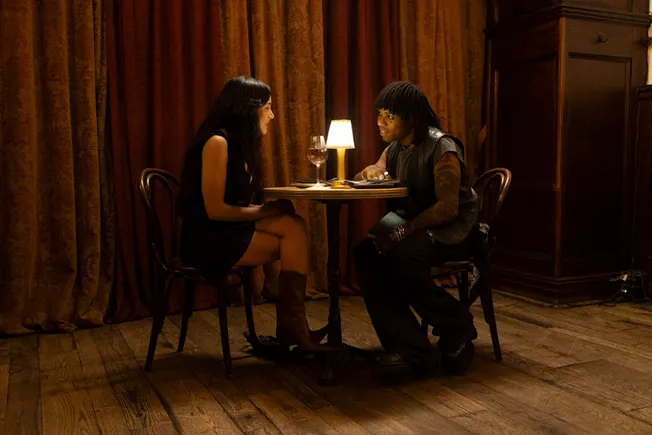
Nuuly, the clothing-rental brand under Urban Outfitters, released its fall 2026 campaign as a 12-part microdrama called "Heart on My Sleeve." The notable decision is not the format. It is that the brand is not the protagonist.
What They Made
- Format: 12 episodes, roughly 12 minutes of total runtime
- Lead: Wally Baram, who broke out on Prime Video's "Overcompensating," playing an art teacher hunting for a wedding date
- Cast: Charles Hsu, Chine Ikoro, Tara Raani, Khial Watson, Jean-Luc, and Quentin Nguyen-Duy
- Director: Milky Tran
- Agency: Dayna's House, an independent shop specializing in social marketing. First engagement with Nuuly, produced in a matter of weeks
- Distribution: TikTok, Instagram Reels, and YouTube Shorts
- Schedule: batches of three episodes from Monday through August 25
Wardrobe comes from brands Nuuly carries — Lioness, Collina Strada, Frankies Bikinis. The scripts also plant Easter eggs only subscribers recognize, like a romantic partner dropping the brand's distinctive return bags at the post office.
Why the Brand Sits in the Background
Kirsten Henri, senior director of creative and content at Nuuly, is blunt about the diagnosis: "Consumers are fatigued with brands selling hard at them. … I think that the speed and the amplification of advertising now makes it really congested."
So the series is not about Nuuly. It is about dating, with Nuuly present in the frame. Dayna's House studied online culture closely to make the dating observations land as recognizable rather than written-by-committee.
Founder Dayna Carney frames the format's advantage this way: "Microdramas provide a unique opportunity to really create a sense of world building for your customer and for your audience online and through a social-first capacity."
Structured for the Algorithmic Feed
The most transferable decision is editorial. Microdramas surface at random in algorithmic feeds, so episodes have to work from any entry point.
Henri says each episode "can exist on their own, and they were specifically written, shot, and edited to make that possible." Every episode opens with a "previously on" recap, and each batch of three follows a familiar story arc.
Trailers and sponsored social posts support the run, and the cast — many with established followings — amplifies it. Carney's line is the sharpest summary: "Content is king, but distribution is wherever you can get it."
How Success Gets Judged
Nuuly grew revenue nearly 35% year over year for the three months ended April 30, and the brand, founded in 2019, turned its first profit last year. Awareness is the headline metric for this campaign, but Henri is watching shareability more closely.
"If someone watches all 12 episodes — it's 12 minutes — I'll be thrilled. But if they watch one and it blows their mind and they send it to somebody, that's also a win as far as I'm concerned."
Three Takeaways
Production speed is the format's real advantage. Twelve episodes came together in weeks. No conventional advertising cycle moves that fast, and that speed is what allows cultural relevance. It rhymes with the observation that AI now runs the entire short-form pipeline, making trust rather than production the scarce input.
The KPI is forwarding, not finishing. Getting one episode sent to a friend beats getting twelve watched. That choice determined how the scripts and edits were built.
Brand presence and brand affection can run in opposite directions. Nuuly kept the product as natural set dressing and used insider details to reward existing subscribers. This only works when you know precisely who you are talking to — a point echoed by research showing mothers outrank creators in Gen Alpha brand choice.
Bottom Line
Branded entertainment rebounded hard in 2026, and microdramas are the fastest-settling format within it. The lesson from Nuuly is not "make a drama." It is design the story structure around how feeds actually consume content.