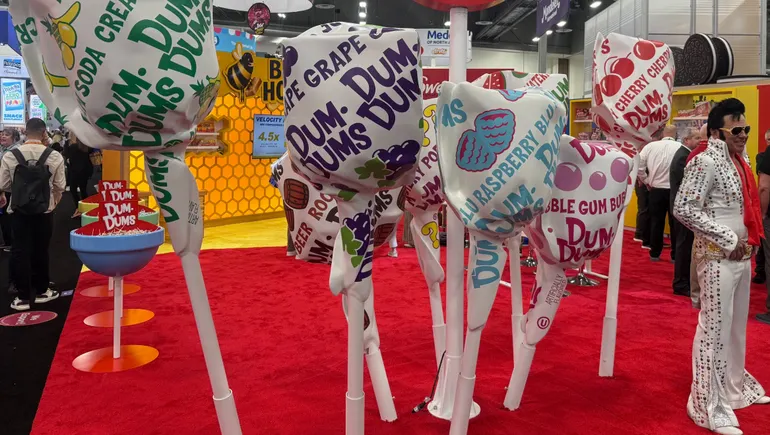
Spangler, the 120-year-old, fourth-generation family company behind Dum Dums lollipops, has built a distinctive market position through nostalgia marketing — not by launching new brands, but by acquiring and reviving candy brands with deep historical roots.
Buying heritage instead of building it
In a candy market worth $55 billion and growing 3–5% a year, Spangler focuses on acquiring struggling or bankrupt candy brands — most with more than a century of history. That heritage is an asset competitors cannot easily replicate. Dum Dums, acquired in 1953, now produces 2.3 billion lollipops a year and sits at bank counters, schools, and barbershops nationwide. Candy Canes, added a year later, account for roughly half of all U.S. production. Bit-O-Honey's revenue jumped 50% after a 2020 rebrand, Sweethearts returned to its original recipe and classic flavors, and the nearly 200-year-old Necco Wafers has been kept intentionally unchanged.
Selective modernization is the core of Spangler's nostalgia marketing
Spangler's approach can be summed up as selective modernization. According to VP of marketing Evan Brock, a brand's nostalgic legacy "makes it very difficult for a competitor to come in and take that space." For Bit-O-Honey, that meant new packaging, a less juvenile mascot, a softer bar, and more almonds to appeal to adult consumers. For Necco Wafers, after confirming consumers valued its authentic nostalgia as-is, Spangler changed almost nothing. Sweethearts shows how tradition and timeliness can coexist: a "Split Rent" message alongside classic phrases turned into a Valentine's Day talking point. As Brock put it, "other marketers would do anything to get this kind of nostalgia."
What marketers should take from this
The lesson is that nostalgia is not just sentiment — it is a defensible brand asset. A century of accumulated brand memory is a moat that no amount of competitor budget can replicate overnight. Reviving a brand consumers already remember can be as valid a growth strategy as building one from scratch.
Equally important is the discipline of deciding what to change and what to protect on a brand-by-brand basis: modernize boldly when expanding to a new audience (Bit-O-Honey), and leave well enough alone when the original is the value (Necco Wafers). Before any brand refresh, identify exactly what consumers love about the brand first — then scope the change accordingly.
For help auditing your brand's heritage assets before a refresh, explore Best Partner's branding services.