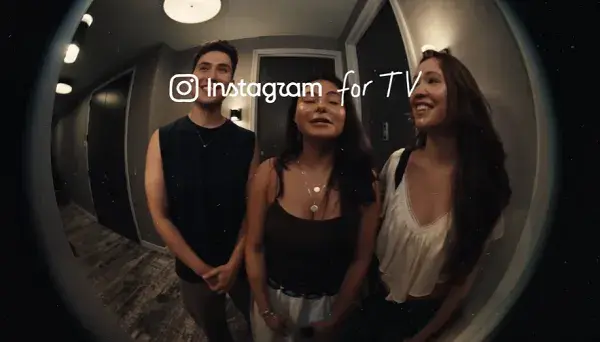
Instagram has launched a promotion for its revamped connected TV app, fronted by creators showcasing the communal side of watching Instagram on the big screen. As reported by AdAge, creators Ameya Okomoto, Vikram Thanigaivelan, and Carson Gillaspia each demonstrate a different use case — watching Reels with friends, following fitness content in the living room, and sharing recipe and travel content. The framing is deliberate: Instagram on TV as a shared viewing experience, not a solo scroll.
Why TV, why now
Instagram shipped its revamped CTV app for Amazon Fire devices in December, then expanded to Google TV and Samsung Smart TVs. Now comes the awareness push — and the numbers behind it are solid. Google has said connected TV accounts for 15% of all U.S. Shorts viewing, and Instagram's own short-form format, Reels, now makes up 50% of all time spent in the app. The bet: consumption habits proven on the phone will extend to communal viewing on the bigger screen.
The push goes beyond promotion. Instagram is encouraging creators to produce episodic microdramas and live creator shows for its upgraded TV feed — pre-seeding the content categories a TV context favors.
What marketers should take from this
The signals are stacking up that short-form's next battleground is off the phone. YouTube is expanding 24/7 creator channels — see YouTube Expands Stations — Every Creator Gets a 24/7 Channel — and TikTok is physically leaving the device for bars, gyms, and campus screens (TikTok Content Is Heading to Bars, Gyms, and Campus Screens — Out of Phone Adds Six European Partners). When three platforms point the same direction, short-form consumption is splitting into two contexts: solo vertical viewing and communal horizontal viewing.
For content teams, the implications are concrete. First, co-viewing defaults to sound-on — a different grammar than caption-dependent feed editing. Second, the living room favors follow-along categories: fitness, recipes, travel — exactly the use cases Instagram chose for its promotion. Third, note that episodic microdramas are named as priority content for the TV feed; the vertical drama market's steep growth — documented in Microdrama App Downloads Grew 95.5% in Six Months — and Advertisers Grew 132% — is a format Instagram now wants on television. With CTV ad products not yet built out, this is the window to prototype big-screen, sound-on versions of your vertical content.