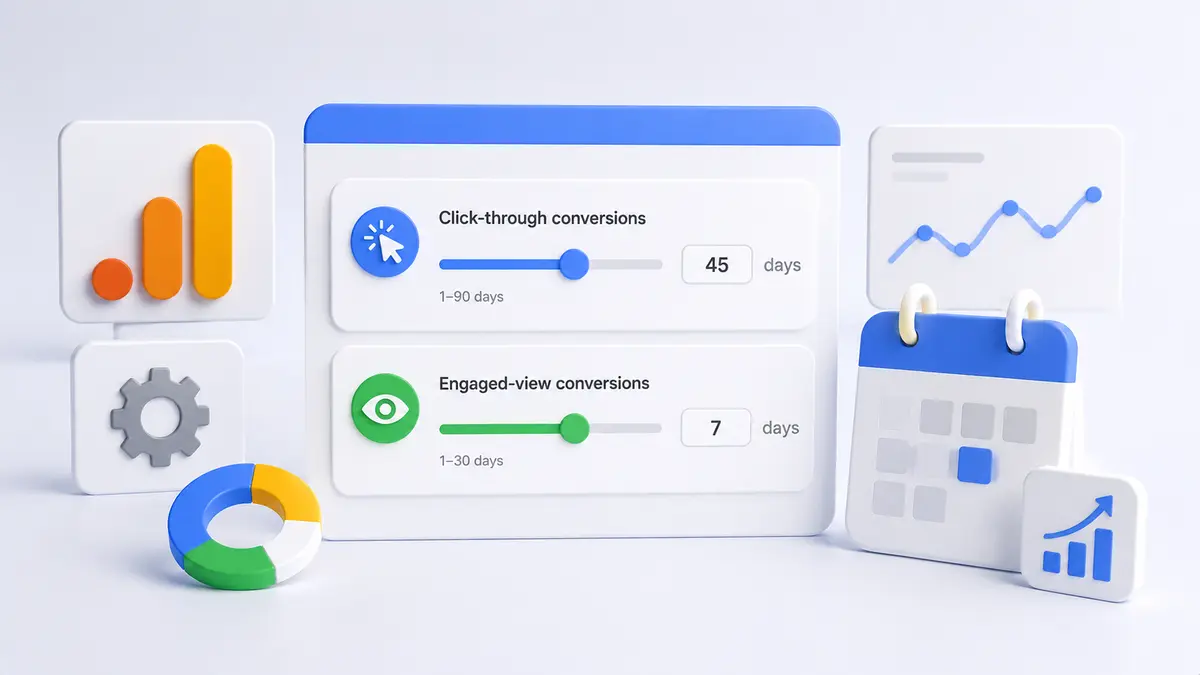
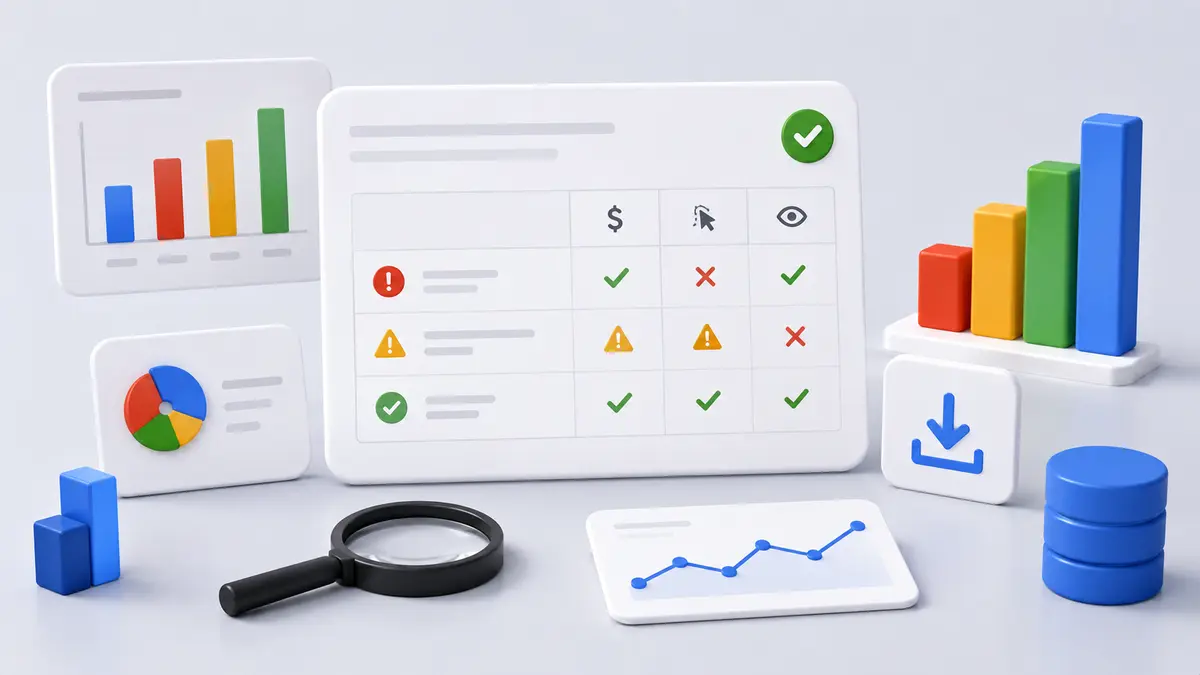
Google Analytics now lets advertisers set conversion lookback windows to any integer value instead of choosing from a fixed list. The change applies to both click-through and engaged-view conversions.
What changed
The configurable ranges are now:
- Engaged-view conversions (EVC): any value from 1 to 30 days, replacing a fixed 3-day window.
- Click-through conversions (CTC): any value from 1 to 90 days, replacing preset options of 1, 7, 14, 30, 60 or 90 days.
The settings live in Google Analytics under Advertising > Conversion management > Settings, and are also available in the linked Google Ads conversion management interface.
Why this moves your numbers
A lookback window decides how many days after an ad interaction a conversion still gets credited to that ad. Change the window and campaign performance looks different — without anything about the campaign changing.
The distortion presets created
The problem with fixed options was the gap between real sales cycles and the available choices. A B2B product with a 40-day average evaluation period had to pick 30 or 60. Pick 30 and you drop a meaningful share of genuinely attributable conversions. Pick 60 and you absorb conversions the ad had nothing to do with. Neither is right, and advertisers were forced to choose anyway.
The 3-day engaged-view window was tighter still. Anyone converting four days after watching simply fell outside the count.
What to do with it
Measure the real cycle first. Widening a window makes performance look better. To avoid mistaking that for improvement, check the actual distribution of days between first touch and conversion before you set a number.
Log the change date. Data before and after a window change is not directly comparable. Without a recorded change date, this resurfaces months later as an unexplained jump.
Judge channel by channel. Brand search and top-of-funnel awareness campaigns do not deserve the same window. One global value is convenient, not accurate.
The larger context: attribution itself is shifting
Finer control over lookback windows is a genuine improvement. It sits, however, inside a measurement model built on clicks and views that is losing coverage. As Only 1.1% of News Publisher Visits Carry an AI Referrer shows, referrer-based measurement barely registers journeys that pass through AI systems.
Tuning attribution windows improves accuracy inside the paths you can measure. When the unmeasured paths grow, that accuracy stops standing in for the whole picture.