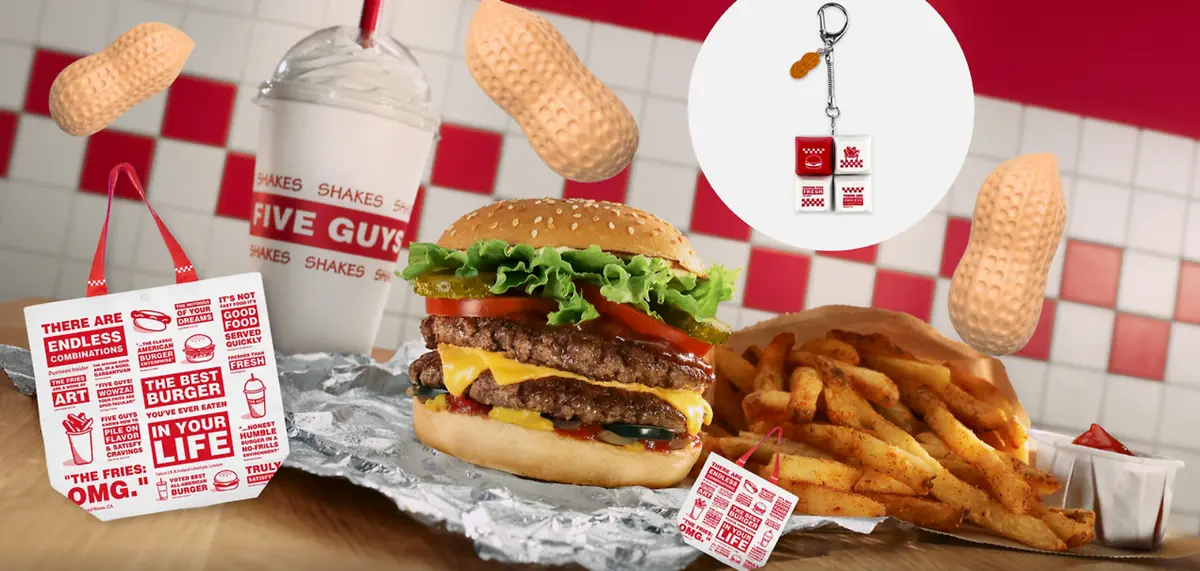
When Five Guys opened its first store in Seoul's Gangnam district in 2023, the average opening-day wait hit six hours. Most global chains entering Korea tweak menus for local tastes. Five Guys' brand consistency strategy was the opposite: change nothing.
What stayed exactly the same
- Foil-wrapped burgers, overflowing fries and free peanuts
- The red-and-white interior and in-store music
- Build-your-own toppings: first-timers usually start with the "All the Way" combo, then create their own as they return
The Yeoju outlet store became a destination, drawing visitors from Gangwon, Chungcheong and southern Gyeonggi. The promise that Five Guys tastes the same everywhere became a reason to travel.
Consistency takes work
"Change nothing" turned out to be the most labor-intensive choice.
- About a year to find Korean potatoes that met the brand's standard.
- Fry calibration twice a day to match frying conditions to the potatoes.
- Secret shoppers visit every store twice a week — where many chains do it quarterly — and strong results earn staff incentives.
Local merch, given — not sold
Each store gets its own local goods — keycap keyrings in electronics-hub Yongsan, tarpaulin shopping bags at the Yeoju outlet, a squishy peanut toy for students in Daechi. None are sold; they're opening-day gifts. The merch becomes a souvenir of having been there, not a revenue line.
What global brands can learn
The lesson from FG Korea CEO Kim Nam-ki's approach is that consistency is an investment, not a default.
- Before expanding, list what you will never change — then fund it.
- Manage consistency with inspection cadence, not slogans.
- Add small, local touches that give each location its own reason to visit.
For more on how consistent brand assets compound, read Heinz Was Recognizable From a Fry Box Alone.