This week, Korea's marketing industry was shaken along two axes: review trustworthiness and AI advertising. An ecosystem built on consumer trust is now facing regulatory and technological pressure at the same time — and the pattern has implications well beyond Korea.
A Massive Fake Review Bust Signals the End of Easy Viral Marketing
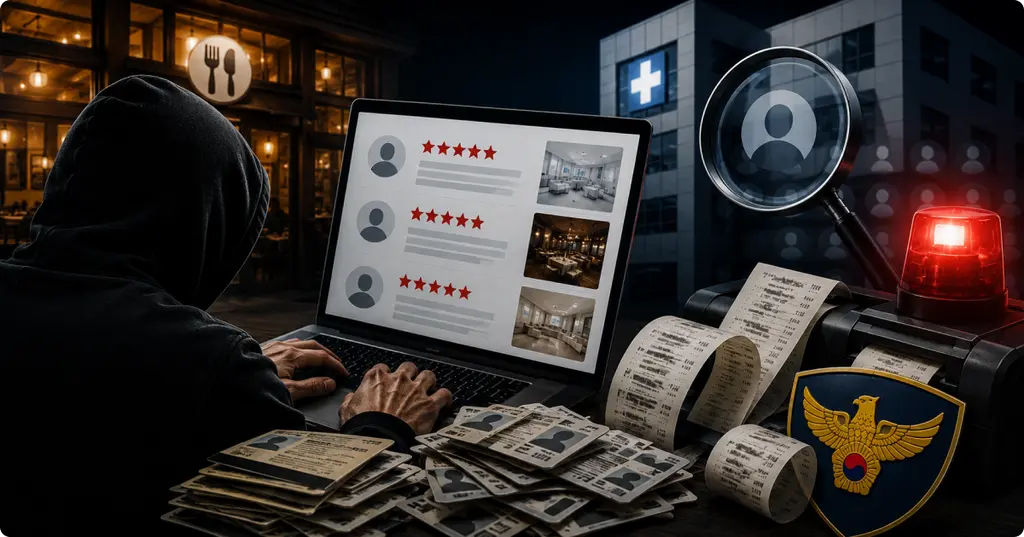
Busan police referred 24 people — including an ad agency's CEO, staff, and advertiser clients — for prosecution over organized fake reviews on Naver. From October 2020 to this January, the group used roughly 37,000 stolen accounts and receipts to post 28,886 fake reviews for restaurants and clinics, collecting 1.9 billion KRW from around 700 advertisers. It's a stark warning for any business that leans on review-based viral marketing: manipulated social proof is now a direct legal liability, not just a reputational risk.
Naver Launches AI-Powered Ads With Limited Advertiser Control
Naver kicked off a 12-week "Blogger Discovery" campaign to reinvigorate its blog ecosystem, and — more consequentially — began showing "ADVoost Max" ads inside its AI Briefing search results on the same day. The AI automatically decides copy, placement, and CPC, and advertisers cannot apply excluded keywords; they can only set a budget cap. The industry concern: brand ads could appear next to negative or unrelated context, with no way for the advertiser to prevent it.
Regulation and Platform Shifts Reshape the Landscape
Korean regulators are reviewing restrictions on under-14 sign-ups plus limits on recommendation algorithms and infinite scroll — changes that would force global platforms like Instagram, TikTok, and YouTube, which rely on dwell-time-based ad exposure, to rethink their operating models. Meanwhile, Netflix has set a $3 billion ad-revenue target for the year, its ad-tier monthly active users have surpassed 250 million, and Korean streamers are countering with cheaper tiers and free content as the competitive axis shifts toward ad monetization capability.
What This Means for Marketers
The throughline is a loss of control. The fake-review bust shows that shortcuts for short-term viral wins are now a direct legal exposure — marketers need to audit any agency's review-generation practices and shift toward genuine customer experience and organic reviews. The rise of AI-placed ads, where advertisers can't fully control placement or context, makes brand-safety monitoring and budget-defense strategy essential. And as AI search fragments into "everyday" and "expert" verticals, winning visibility increasingly means producing structured, trustworthy content that AI can cite — not just optimizing keywords.
To build a brand-safety-first marketing approach, explore Best Partner's services or reach out.