The publisher changes Instagram collaboration performance
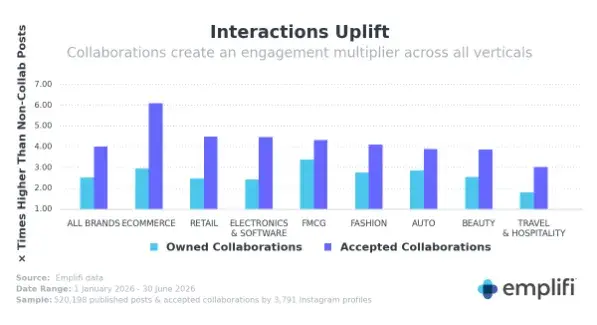
Emplifi analyzed roughly 520,000 Instagram posts from 3,791 brand profiles during the first half of 2026. More than 73% of the brands used Instagram's collaboration feature, and collaborative posts generally produced more sharing and reposting than standard brand posts.
The strongest format was the accepted collaboration: a creator publishes the post and invites the brand to join it. In ecommerce and retail, these posts delivered more than five times the amplification of non-collaboration posts. Brand-published collaborations also improved performance, but did not match the creator-led approach.
Why creator-led distribution has an advantage
Creators continuously learn the formats, opening hooks, and language that their own audiences respond to. That knowledge matters especially for Reels, where attention is won quickly and platform-native execution shapes distribution. The brand enters a proven creator context instead of forcing the creator into brand-account conventions.
Follower count alone is not a reliable selection method. Research showing that follower count ranked last among brand selection criteria even while influencing fees supports evaluating creative fit and audience relevance separately from reach.
Change the brief and the measurement plan
Brands should define required claims, prohibited language, product evidence, and the desired action, then leave room for the creator to shape the expression. Measure shares, saves, profile visits, affiliate sales, and new engagement with the brand account alongside views.
The study does not mean every creator post will outperform. Its sample covers January through June 2026, and results vary by category and partner fit. It does show that the identity of the publisher is a performance variable, not merely an operational detail.