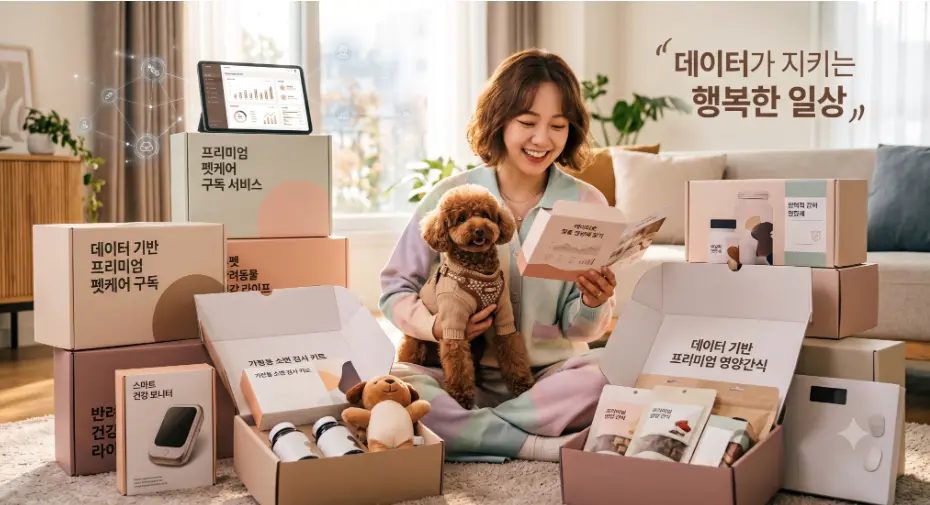
Korea's pet market has evolved well past simple pet-supply retail into a full "petconomy" layered with premium products. Fashion platforms are launching matching outfits for dogs and their owners, pet-delivery services are competing on speed with data-driven logistics, and health-tech startups are lowering the barrier to at-home pet diagnostics. Cute, emotionally engaging content is now table stakes for pulling pet owners in.
The Real Question: Why Do New Customers Leave?
The harder question is what happens next — why hard-won new customers fail to stick around instead of churning. Because pets can't give direct feedback, pet owners rarely switch a product once it works, creating an unusually strong lock-in effect: get the early relationship right, and it tends to last.
It's Not CAC, It's Proving LTV
As customer acquisition costs rise, brands need to prove customer lifetime value (LTV) with data on the back end and lock customers in with sophisticated tracking — designing the "landing" phase with the same rigor as the "acquisition" phase. Three practical strategies stand out.
1. Combine traffic boosting with AEO. When launching a new app, drive high volume through communities and reward media where genuine pet owners gather, then narrow targeting to users who took a meaningful action — adding to cart, requesting a sample pack — rather than simply those who saw an impression.
2. Integrate O2O data. Pair mobile geo-targeting with offline touchpoints like vet clinics or pet parks. Capture the ad ID (ADID) of users exposed to a digital out-of-home (DOOH) screen, then retarget them with mobile sample-pack ads — an "O2O loop" that connects offline exposure to online conversion in a single data flow.
3. Filter out fraudulent traffic. Pet commerce has a distinctively regular purchase cycle. Use cohort analysis to distinguish media that only drives clicks (fraud) from media that drives real subscription payments and retention — in real time.
What This Means for Marketers
The question this raises extends well beyond pet brands: "Are we designing our media mix around actual LTV trends and purchase cycles?" Too many organizations still pour budget into acquisition-stage creative while neglecting the tracking and cohort design that drives retention and repeat purchase.
Worth studying closely: narrowing targets by "meaningful action" rather than raw impressions, and evaluating media by retention contribution rather than click volume through cohort filtering. Win customers with emotional content, then keep them with data. The stronger the lock-in effect in your category, the more valuable it is to invest in early acquisition and churn-prevention design.
If your brand needs a tracking and retention strategy built around real LTV data, Best Partner's services can help — get in touch to start the conversation.