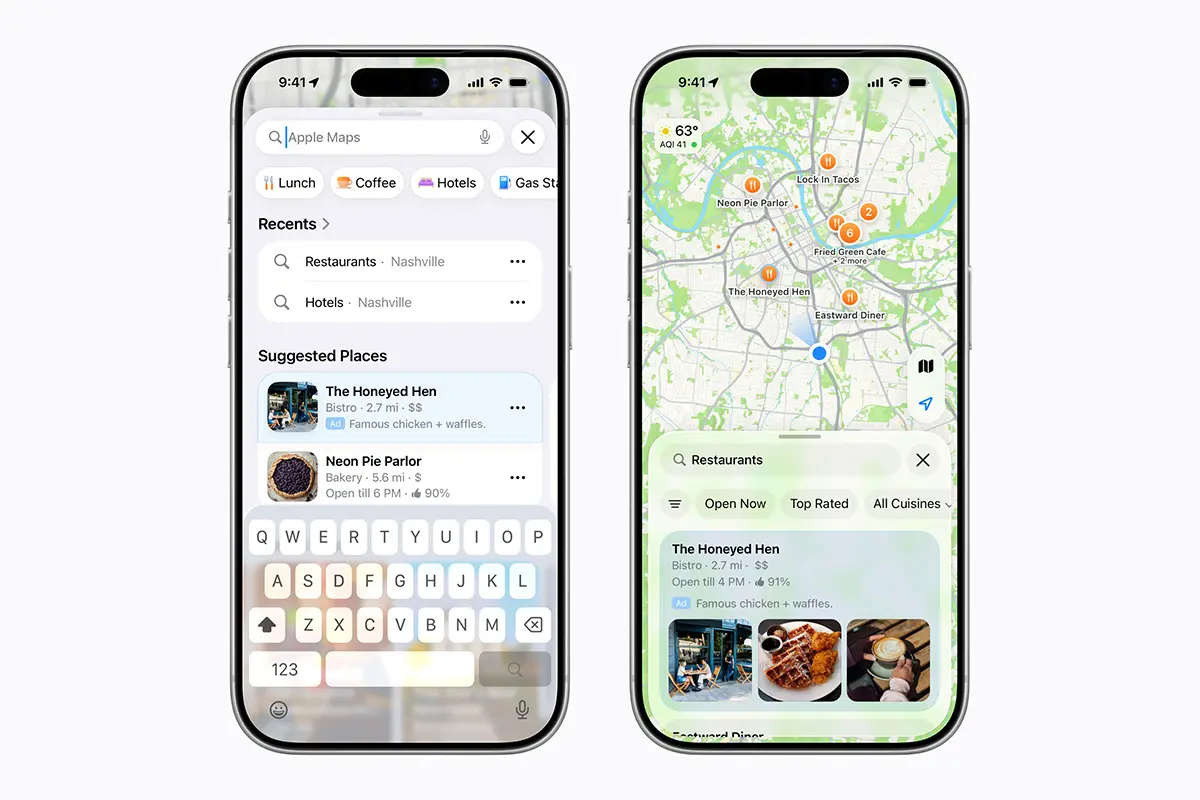
Ahead of launching advertising on Apple Maps, Apple has published its ad guidelines — and the headline is how much stricter they are than competing platforms. Apple states it will not permit ads from certain categories at all, and reserves the right to reject or remove any ad it judges necessary.
What's Banned Outright
The guidelines name political advertising, home repair, gambling, adult content, and alcohol, tobacco, and illegal drugs as categories that are excluded from the start — not merely subject to heavier review, but blocked as a category. That's a stronger stance than simply tightening moderation; it signals Apple is prioritizing platform trust over expanding ad inventory.
A Closed, Curated Approach to Launch
The policy is part of the Apple Business platform announced back in March. Apple plans to begin showing location-based ads in Maps search results and place-discovery screens in the US and Canada this summer, paired with advertiser vetting and ongoing content review meant to protect the user experience and brand safety.
In other words, Apple is entering advertising while keeping tight control over where, whose, and under what standard ads appear — a deliberately closed and selective model, in contrast to competitors built around open ad ecosystems.
What Marketers Should Prepare For
Location-based search is attractive precisely because it captures high purchase-intent traffic, and Apple Maps ads could open a new acquisition channel for location-based offline businesses. But brands in or near the banned categories — political, gambling, alcohol, adult content — should check guideline fit before investing any planning time.
Apple's explicit right to reject or remove ads also means creative and landing experiences need to clear a platform review bar. In a channel with strict vetting, creative clarity, policy compliance, and brand safety will determine performance more than in more permissive ad networks. Since the US and Canada launch first, marketers targeting those markets should treat the early, lower-competition window as an opportunity — while budgeting for review lead times.
If you need help evaluating a new ad channel against your brand's category and compliance profile, Best Partner's services can help, or get in touch.