Amy’s Kitchen, the maker of frozen and canned prepared foods, has launched a national campaign that challenges the idea that ultra-processed foods are the cheaper choice. Its ultra-processed food marketing leans on education rather than fear: the brand received Non-UPF Verified certification from the Non-GMO Project for nearly 90% of its catalog and is using the campaign to explain what that means.
Shoppers worry, but don’t know the definition
A Talker Research survey of 2,000 Americans, commissioned by the brand, found:
- Nine in 10 respondents eat ultra-processed food without knowing it.
- Half aren’t confident they know the difference between processed and ultra-processed foods.
- Nearly half believe frozen foods are as unhealthy as, or worse than, chips and cookies.
For a brand built largely on frozen food, that last point is the core problem to solve.
Reframing the price argument
An analysis commissioned by the brand and conducted by Lindsay Allen, Ph.D., a health economist at Northwestern University’s Feinberg School of Medicine, associated a diet high in ultra-processed foods with $359,836 in additional lifetime economic burden. With grocery inflation possibly reaching 2.7% due to fuel costs, Amy’s positions minimally processed food as the better long-term bargain.
Campaign structure: from installation to cart
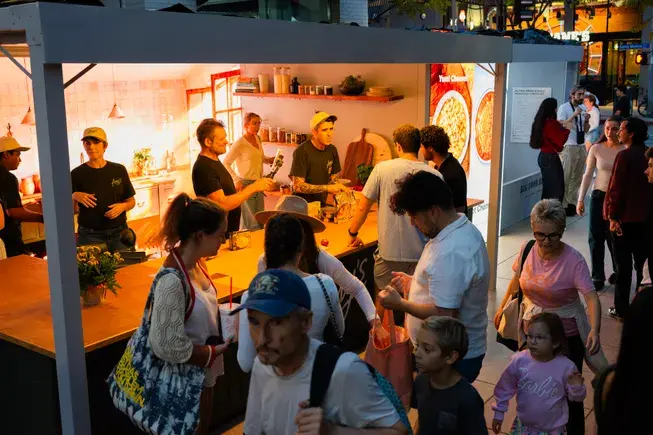
- Launch: A 40-foot installation at Santa Monica’s Third Street Promenade in early October, with “End the Era of Ultra-Processed Food” projected onto the Clock Tower Building.
- Timing and audience: Five weeks through Nov. 15, targeting health-conscious consumers aged 24 to 44.
- Digital: Meta and programmatic display ads, plus MikMak retargeting with add-to-cart links to retailers.
- In-store: From Oct. 15, in-store digital ads at select Whole Foods Market locations and Amazon DSP targeting, supported by freezer and floor clings, shelf talkers and print materials explaining the certification.
Lessons for CPG marketers
- Certification needs explanation. Research how shoppers misread a claim, then write shelf copy that resolves that confusion.
- Commissioned research fuels earned media, but disclose that the brand paid for it to protect credibility.
- Reframe price as total cost. Premium products can offer a different math. For value messaging tactics, see Applebee’s CMO on Restaurant Value Marketing.
- Connect ads to the shelf. Link media exposure to add-to-cart and in-store education. Sampling-led growth is covered in Brand Relaunch Lessons From Mr. Pibb, 2026’s Fastest-Growing Brand.