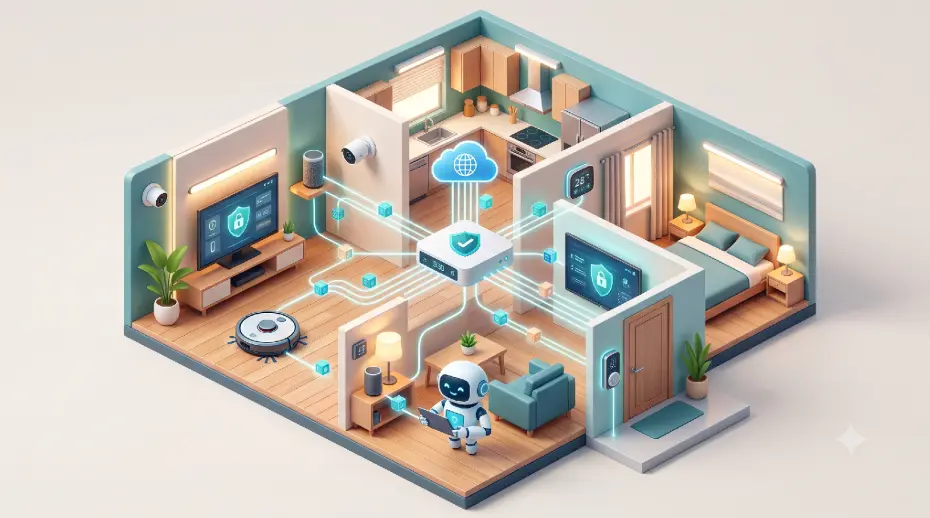
AI appliances are mainstream in Korea. Opensurvey’s AI Home Appliance Trend Report 2026 puts usage at 51.0% for household appliances and 39.1% for kitchen appliances. But as adoption grows, so does anxiety about privacy — shifting AI home appliance marketing from features to trust.
Rising anxiety behind the excitement
- Consumer concern about AI appliances rose from 45.1% to 52.2% in one year.
- Among people who have used AI appliances, 55.4% worry about data leaks and voice and video collection — higher than non-users.
The market’s center of gravity has moved from enthusiastic adopters to cautious adopters, with fear of losing control to in-home cameras and sensors emerging as the biggest barrier.
How manufacturers make security visible
LG Electronics: LG Shield and PbD certification
LG applies its LG Shield security system to devices such as its RONi robot vacuum, encrypting collected data and storing keys separately. When cleaning ends, a door on the dock closes automatically to physically block the camera. The design earned Privacy by Design (PbD) certification from Korea’s Personal Information Protection Commission.
Samsung Electronics: Knox Matrix and Matter 1.5
Samsung’s blockchain-based Knox Matrix lets connected devices check each other’s security status, and SmartThings became the first in the industry to adopt a Matter 1.5 camera standard, enabling third-party security cameras to connect under standardized guidelines.
Three security messages marketers should use
1. Make reassurance tangible
Lead with what consumers can see: automatic camera covers, on-device processing and official certifications.
2. Return control through open standards
Closed ecosystems can look like data hoarding. Highlighting Matter 1.5 or Thread 1.4 interoperability signals that consumers stay in control.
3. Speak to caregiving households
Households with young children have the highest AI appliance usage at 63.8%, and families caring for elderly parents show higher acceptance of premium pricing. “Protects your family’s privacy while caring for them” is the strongest purchase driver.
Security is customer experience
Data incidents carry growing costs — see Korea Recommends ₩100,000 Per User Over Coupang Data Breach. On why transparency about AI builds trust, read Influencer Marketing Has an AI Trust Problem.
Action items
- Put certifications and physical safeguards above the fold on product pages.
- Explain data handling after purchase, since experienced users worry most.
- Test messaging with caregiving households first.