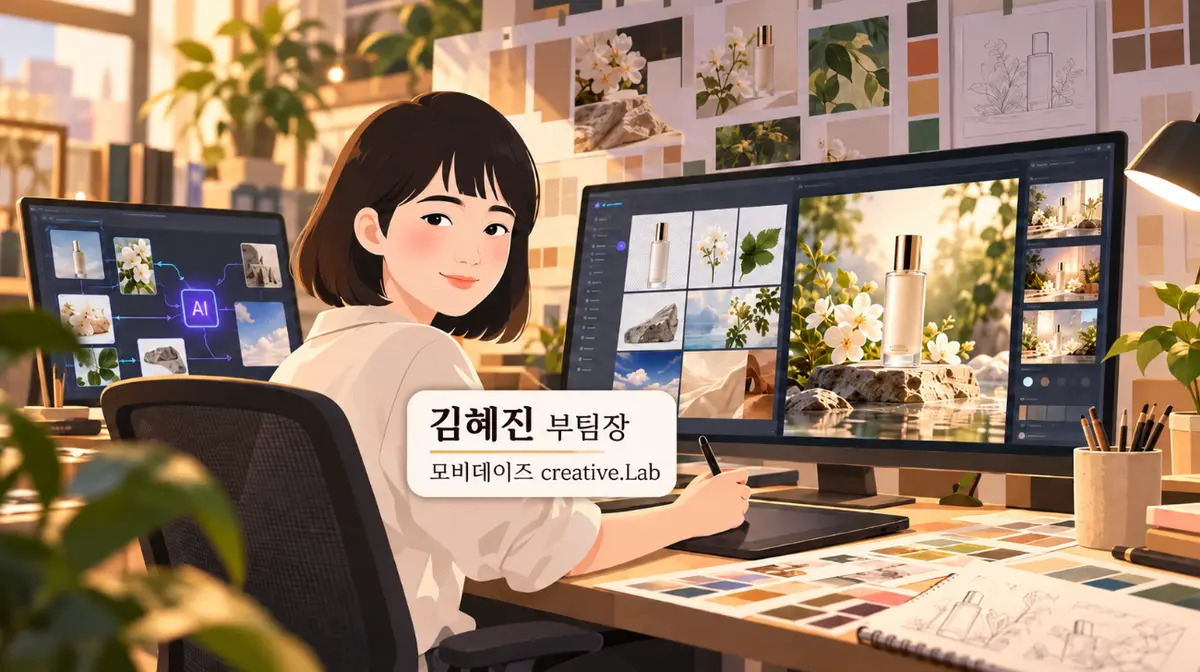
AI is now the default in ad creative production. Kim Hye-jin, a 14-year designer and deputy team lead at creative.Lab inside Korean ad-tech firm Mobidays, told Mobiinside that “there are almost no cases where we don’t use AI in day-to-day work.” Yet deciding what makes a good result, she says, is still a human job.
How the team changed in a decade
When she joined in 2016, everyone was a graphic designer and there were no sub-teams. Today the group is split into graphics, video and copy. As ad creative expanded from single images to video and copy, the expertise split too.
What AI handles and what people handle
AI has sharply cut the time spent on tasks that used to drag: cutting out subjects, generating missing backgrounds for cropped images, creating objects that once lived only in the imagination, and producing composite shots that look professionally staged.
Banners generated end to end by AI, including text, still look obviously AI-made. So her approach is to use AI for source material and handle text and anything that needs clean finishing by hand. That, she says, is how to produce high-quality ads.
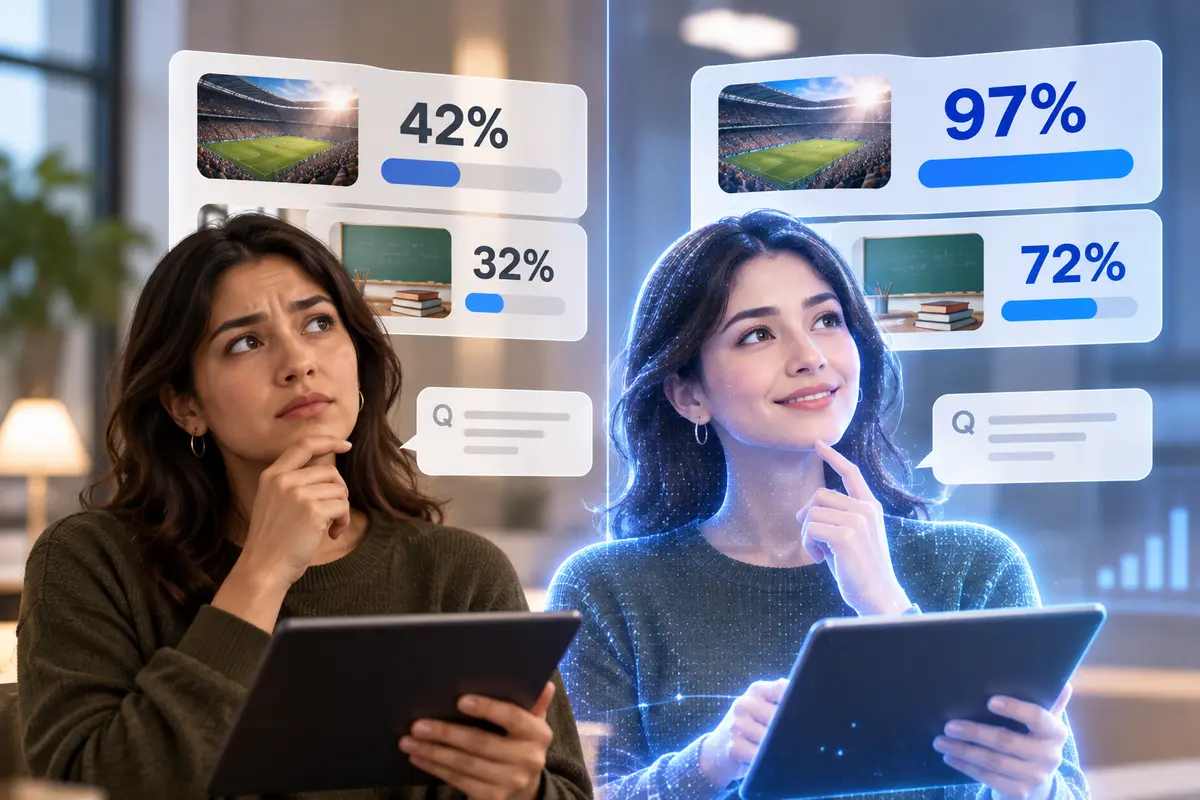
Using AI doesn’t guarantee good work. The ability to judge whether a generated image works, whether it looks off, and what still needs fixing has become more important.
The standard that hasn’t changed
Good creative still connects to the brand and moves people. Not a hook disconnected from the brand, but an ad that is unmistakably the brand while being funny, surprising, cute, relatable or desirable.
She also stresses collaboration. When planners, marketers or clients describe what they want vaguely, designers should point out what’s unclear first. That speeds up direction and reduces revisions.
AI as a teammate
Company AI workshops and study groups helped her team test tools and find the ones that fit real work. In five to ten years, she expects AI skills to be a baseline, with designers managing AI like teammates whose strengths and weaknesses they know.
What marketers should take from this
Split production into AI sources and human finishing
Use AI to generate backgrounds, objects and composites in volume, and keep copy layout and brand elements with people. For an agency that cut workflow time with in-house AI, see Building an In-House AI Platform at an Ad Agency.
Write down your review criteria
Define what to check in AI output, such as brand colors, tone and telltale artifacts like distorted hands or text, so quality decisions don’t vary by reviewer.
Write sharper briefs
When AI makes sources fast, the bottleneck shifts to knowing what you want. Clear references and emotional goals cut revision rounds. For a lean, AI-native marketing team model, see How Liquid Death Is Building an AI-Native Marketing Organization.