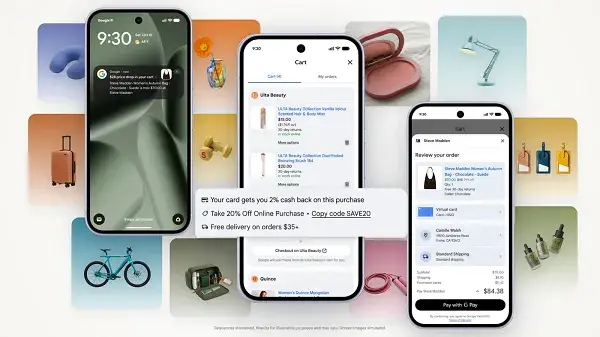
Agentic commerce — AI agents that search, compare and even pay on a shopper’s behalf — is starting to show up in real sales. Naver, Korea’s largest search platform, says transaction value through its shopping AI agent has grown 82% since the agent launched in June, and conversations rose 60% as of September. Naver is now piloting delivery-date recommendations and in-agent payments. Google Cloud calls this shift the “Invisible Shelf”, where buying decisions happen out of the shopper’s sight, and OpenAI has launched Instant Checkout inside chat.
From ranking on a results page to making the agent’s shortlist
Stores used to compete for the top of search results and ad slots. AI shopping agents instead pick a handful of products — or go straight to checkout. To make that shortlist, a product has to be readable, understandable and trustworthy to an AI.
4 ways to get agentic commerce ready
1. Turn product attributes into structured data
Skip vague copy like “a great lightweight jacket.” Write “320g, water-resistant, spring/fall outdoor jacket,” with material, size, weight and use case as discrete values. Agents match shopper constraints against attributes one by one.
2. Build agent-readable product pages
- Put key information in text, not only in images.
- Use tables and lists for specs and contents.
- Add Product, Offer and Review schema markup.
- Keep the product feed and the page (price, stock, variants) identical.
- Make sure you aren’t blocking AI crawlers.
3. State the reason to choose
Agents explain their picks. Spell out who the product is for — “for long-distance runners who prioritize cushioning” — so it matches the queries it should win.
4. Manage trust signals
Review quality and freshness matter more than volume. Monitor third-party reviews and community mentions, publish clear return and exchange policies, and keep what’s said about you elsewhere consistent with your actual product data.
Takeaways
- GEO is now table stakes. Generative engine optimization has to reach down to the product level. For what actually drives AI visibility, see Two GEO Experiments Rewrite the AI Visibility Playbook.
- Start with your feed. If rewriting every page is too much, fix attributes and feed consistency for your best sellers first.
- Learn each agent’s rules. Meta is working on its own standard, covered in Meta Is Building an Agentic Commerce Protocol for Muse, so check how each platform’s agent finds and ranks products.