GEO. AEO. LLM optimization. AI search optimization. Every few weeks a new acronym gains traction on LinkedIn and shows up in an agency deck. The people using those words are the ones selling, not the ones buying.
Fractl surveyed 343 U.S. marketing decision-makers, and the gap shows up clearly in the numbers.
The headline: 81% still say SEO
- 81% still refer to their internal AI search visibility strategy as SEO.
- 70% would search for either "AI search optimization" (46%) or simply "SEO" (24%) when looking for help online.
- C-suite marketers use "GEO" (28%) and "AEO" (17%) at roughly three times the rate of individual contributors (9% and 3%).
- The No. 1 vendor red flag was excessive buzzwords without clear explanation (36%).
- Marketers allocate 24% of search or content budgets to AI search visibility on average.
Half the industry is still looking up the vocabulary
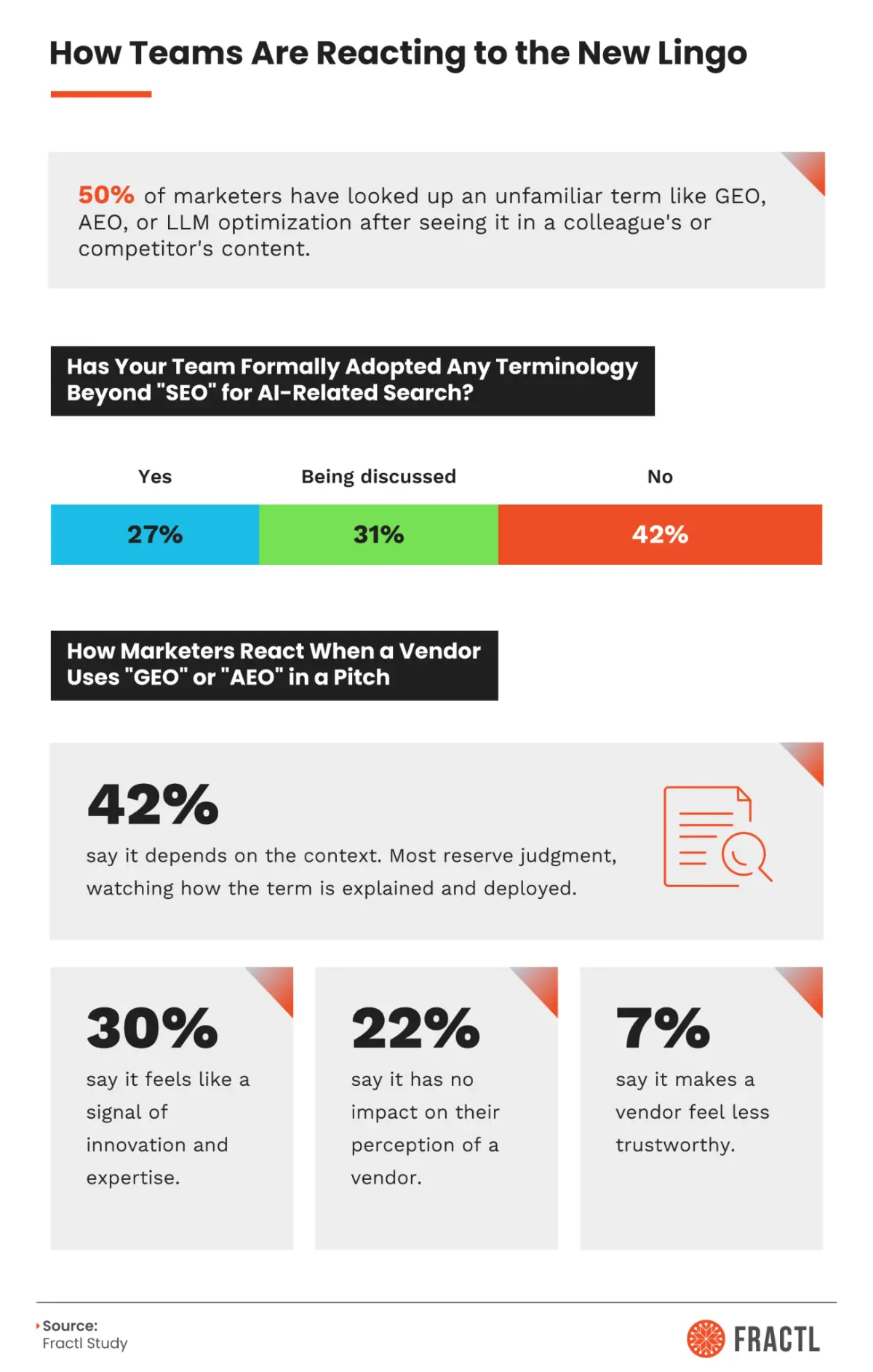
Half of marketers said they researched a term they did not know after seeing a peer or competitor use it. Only 27% of teams have formally adopted a term beyond SEO, while 42% decided against it and 31% remain undecided.
The seniority split is the interesting part. Senior leaders adopt new terminology more often (36% of directors and C-suite say their teams moved beyond SEO), but they are also the most likely to report looking up unfamiliar terms (56% of C-suite). Executives are interested in the category before their organizations have a shared operating model for it — asking about GEO because it appeared in a board deck, while SEO, content, PR and analytics teams are still working out what changes in execution.
The budget already moved
Vocabulary is unsettled; funding is not. Up to 82% have committed at least some budget and 43% allocate more than 20%. That is the clearest sign AI search moved from experimentation into planning.
The teams investing most are the ones closest to measurement. SEO and performance marketing allocate a higher share than content and brand teams, because they notice shifts in impressions, rankings, traffic quality, attribution paths and assisted conversions first.
The top challenge is pace, not measurement
Speed of change (28%) ranked first, ahead of measuring performance in AI-generated results (17%), identifying which platforms to prioritize (15%) and the absence of industry standards (13%).
Platform focus is fragmented: ChatGPT leads at 34%, followed by Gemini (16%), Claude (6%) and Copilot or Bing AI (5%). Only 1% named Perplexity despite its visibility in SEO circles, and 14% have not picked a target platform at all.
Case studies beat acronym fluency 4:1
Case studies with measurable, verifiable results were the top credibility signal at 34%, followed by clear methodology (22%) and team expertise or track record (15%) — 71% combined. Terminology fluency came in at 9%.
The red flags reinforce it: buzzwords without explanation (36%), no case studies or trackable results (21%), vague or unsubstantiated performance claims (20%), and repackaged SEO services with new AI branding (16%).
AI search is inside the vendor discovery loop
The marketers being pitched AI visibility services are already using AI tools to evaluate the companies pitching them. Two-thirds have personally used ChatGPT, Perplexity or Gemini to research a marketing vendor. Adoption is highest among the groups that influence search investment: SEO specialists (89%), performance marketers (84%) and C-suite leaders (81%).
AI search tools and peer recommendations now tie as the first stop when researching AI search partners, at 34% each. Google Search, LinkedIn and trade media follow at 22%; review platforms like G2 and Clutch sit at 8%.
What to do instead of winning the naming debate
Do not let the acronym carry the pitch. Use the term where it helps, but define it through the work — how AI search changes discovery, brand citations, third-party authority, content structure and measurement — then connect back to language buyers already use: SEO performance, visibility, authority, qualified traffic, revenue influence.
Make the methodology visible. Show which prompts were tested, where your brand and competitors appeared, and which sources shaped the answer. A structured way to separate on-site from off-site diagnosis is in A Nine-Point GEO Audit Checklist — Split On-Site From Off-Site.
Avoid both extremes. Do not dismiss AI search because traffic has not collapsed, and do not chase every answer engine separately. Start where AI search already influences your category, audit the prompts your buyers run, and look for the recurring sources, citations and entity signals shaping those answers. The distinction between being mentioned and being cited is covered in Earning AI Citations Takes Three Phases — Being Mentioned Is Not Being Cited.
The opportunity is not owning the term. It is making AI search easier to understand, budget for, and act on.