Game development is changing fast. Developers must ship higher-quality work in less time, and their responsibilities no longer end at launch — user acquisition, monetization, and live operations are now part of the job. Making a game well is no longer enough; how you operate and grow it afterward matters just as much. Unity chose Seoul to preview this AI game development workflow shift first.
Seoul as the stage for a global first
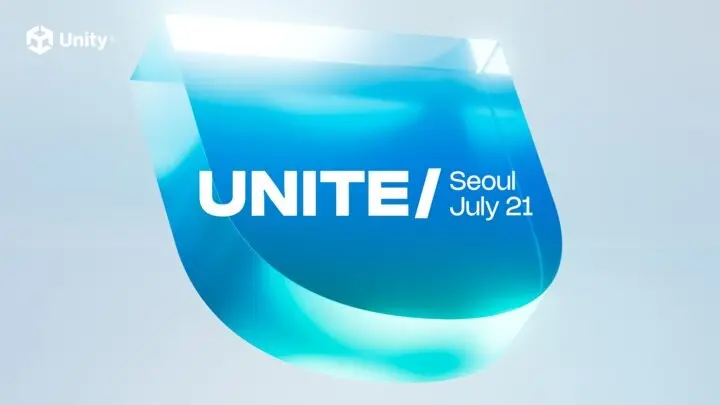
Unity Technologies Korea hosted Unite Seoul 2026 on July 21, from 10am to 6pm, across Coex's Grand Ballroom, ASEM Ballroom, and Auditorium. Notably, Unity's global CEO and senior executives attended in person, giving the event symbolic weight as the first stop of the global Unite series — meaning technology and news debuting for the first time anywhere in the world were unveiled in Seoul first.
AI reshapes the development workflow
AI was unmistakably the keynote's central theme. The Unity AI Assistant, Generator, and development cases built on an MCP server were showcased, alongside discussion of restructuring development and publishing around AI. Supercent's real-world implementation was featured as a case study, illustrating how AI is moving from a supporting tool to a core axis of the production pipeline.
Real development cases and technical sessions
Domestic and international studios shared concrete results. Hypergryph presented its experience building a data-centric rendering framework for "Arknights: Endfield," while Smilegate detailed how it proactively applied CoreCLR to its MMORPG "Road Nine." URP updates and graphics optimizations in Unity 6.6 and 6.7 were also covered. The full program spanned roughly 50 technical sessions plus hands-on training and fireside chats — dense enough for developers to apply directly.
Monetization and global growth strategy
Sessions targeting post-launch growth were prominent too. Unity Vector and Ads, Offerwall, Unity IAP, and D2C monetization strategies were introduced, alongside performance data and roadmap plans for a machine-learning-based user acquisition platform — a clear signal of Unity's direction toward weaving development, publishing, and operations into a single continuous flow.
What this means for marketers
The message for marketing practitioners is clear: as a game-development tool company works to integrate user acquisition (UA) and monetization platforms directly into the dev workflow, the line between "build, acquire, and monetize" in game marketing will blur further. As live-ops data and ad performance become linked from the earliest stages of development, marketers need to be involved in growth design from the planning phase rather than stepping in only after launch.
The spread of AI workflows is also accelerating both the speed of content production and the sheer volume of experiments. As marketing teams face more experimentation across creative A/B testing, live events, and D2C channel expansion, building data-driven decision-making capability and a tight dev-marketing collaboration structure early will become a genuine competitive advantage.
If your team needs support connecting game growth strategy with development and live-ops data, Best Partner's services can help, or get in touch to discuss your roadmap.