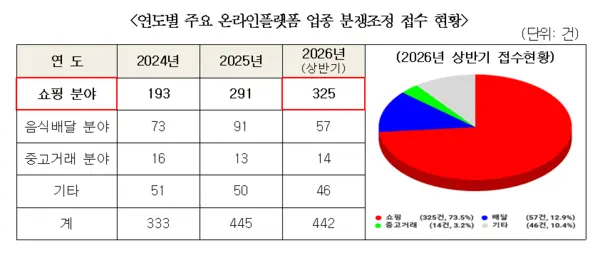
Disputes involving online platforms reached 442 cases in the first half of this year, 2.2 times the 200 recorded a year earlier. Their share of all fair-trade disputes rose from 18.4% to 28.3%.
Where and about what
By sector, open marketplaces — Coupang, Naver, Gmarket and peers — accounted for 325 cases, or 73.5%. The complaints cluster into three types.
Account suspension
The most damaging for a seller, because trading stops entirely.
Return liability
A question of who absorbs the cost. Individually small, cumulatively margin-eroding.
Inflated advertising charges
Unexpected ad billing comes up repeatedly.
The Korea Fair Trade Mediation Agency advised sellers to maintain authenticity documentation and records of returns and advertising activity on an ongoing basis, and to seek relief through its dispute mediation system and call center when harmed.
What sellers should actually do
The advice assumes the burden of proof sits with the seller. Gathering documents after an account suspension means gathering them while trading is already halted. Three systems are worth maintaining continuously.
- An authenticity archive — purchase invoices, authenticity certificates and supply chain records, organized by product line and ready to submit.
- Return reason and fault records — keep your own, rather than relying on platform screens, since access to platform data can be limited once a dispute begins.
- Advertising execution logs — activity under automated bidding and expansion settings is especially hard to reconstruct later. Capture or export monthly.
For a live example of an ad billing dispute, see Twenty Orders and Still a "New Customer"? Coupang Eats Faces Ad Billing Dispute, and for how marketplaces pivoted toward seller acquisition, Korea's Open Marketplaces Shift From Chasing Buyers to Growing Sellers.