Competing Without Building a Giant Model
On June 22, 2026, Japan's Sakana AI officially launched its "Fugu" model. Sakana means "fish" in Japanese; Fugu means "pufferfish" — a name meant to evoke many fish schooling together to form one large, free-moving intelligence out of many individual AIs.
Fugu challenges the direction the industry has taken so far. Most of the field has poured astronomical training budgets into the question of who can build the single biggest, smartest model. Sakana AI asks a different one: can you stand alongside world-class models without building a giant LLM of your own?
A Conductor, Not a Single Genius
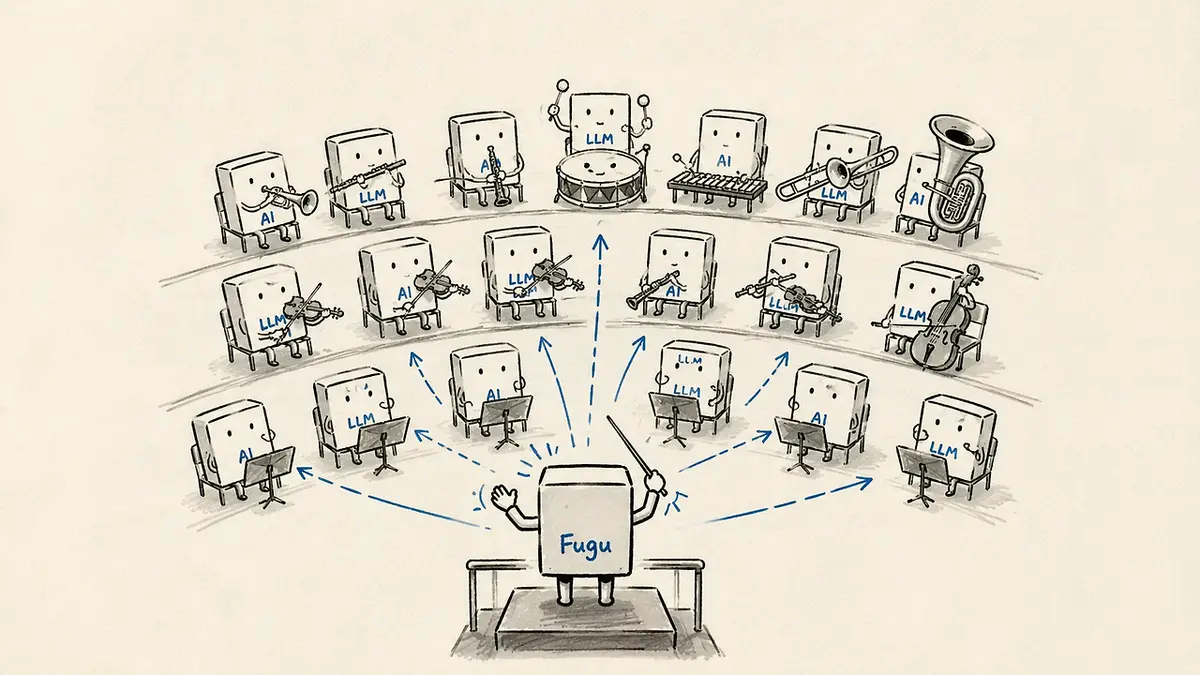
The core of Fugu is AI orchestration. Rather than the "single genius" structure of ChatGPT, Claude, or Gemini — one huge brain handling everything — Fugu acts as a conductor, calling in whichever AI fits the moment. Simple questions get handled directly and fast; complex ones get routed to whichever AI is better suited to the task.
Work splits across three roles: a Thinker that sets the problem-solving direction, a Worker that executes tasks like coding, and a Verifier that checks the accuracy of the result. Notably, Fugu can clone itself multiple times and redeploy the copies as teammates when needed. The result is a lightweight conductor orchestrating several models instead of one heavy brain — with the added strength of not being locked into any single vendor, since models can be swapped.
Performance Claims and Real Limits
Sakana AI says its higher-tier "Fugu Ultra" scored on par with Anthropic's Claude 5 and Mythos Preview on demanding coding, reasoning, and science benchmarks.
Those numbers deserve a skeptical read. Most of the published performance data relies on Sakana AI's own benchmarks rather than independent verification, and some of the models used for comparison aren't publicly available — making this closer to separate measurement than a direct head-to-head. Early users have also reported slow response times and performance that falls short of expectations in real use.
Smart One vs. Smart Many
Sakana AI frames the risk of depending on a single vendor as a matter of "AI sovereignty" — the ability to switch flexibly between models. It's a new direction: even a company without the capital to train a frontier model of its own can build a competitive solution by intelligently combining models that already exist.
What Marketers Should Take From This
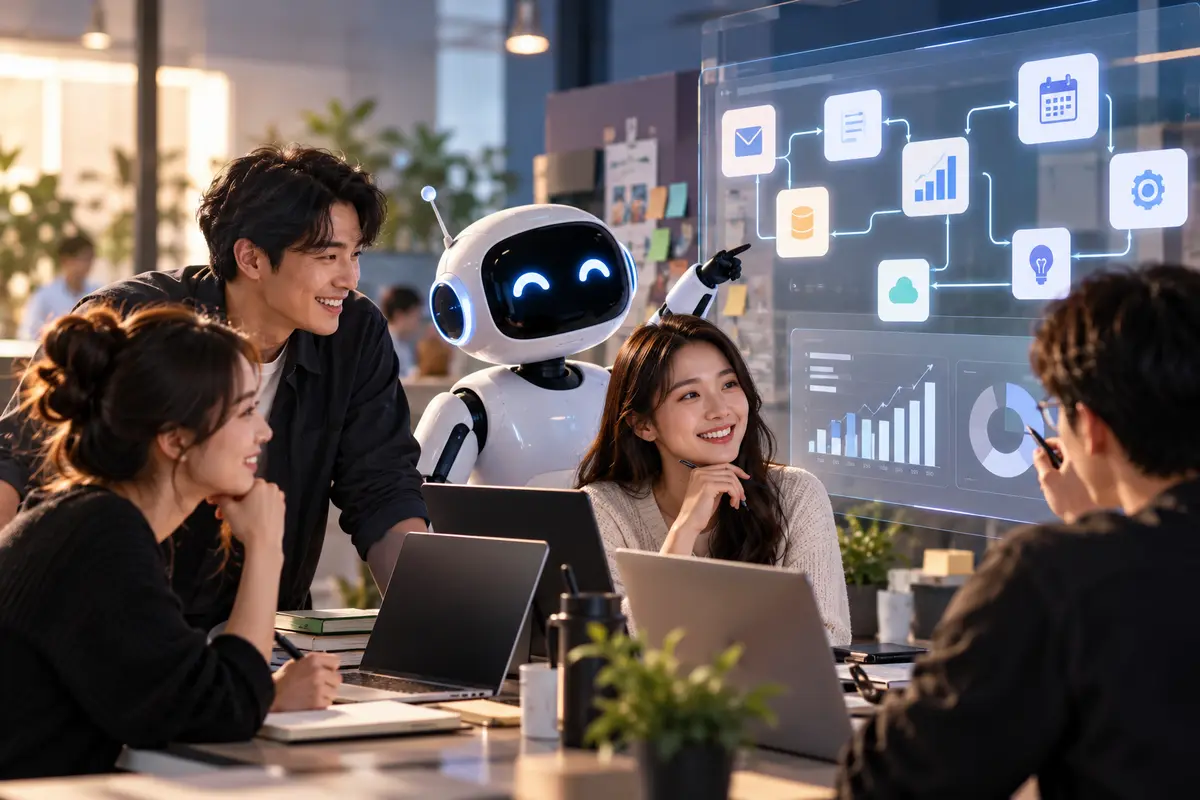
This has real implications for marketers using AI tools. Most organizations today default to picking one AI and routing everything through it. Fugu's orchestration model suggests a more realistic edge: a workflow that assigns content generation to one model, data analysis to another, and verification to a third — matching the best tool to each task. Designing a flexible structure that isn't locked to a single vendor is also useful risk management.
Just as important is not taking a vendor's self-reported benchmarks at face value. As Fugu shows, flashy numbers can hide a lack of independent verification or a real gap in day-to-day performance. Before adopting a new AI tool, pilot it against your team's actual tasks and verify the results yourself.
To design an AI-ready marketing workflow, explore Best Partner's services or get in touch.